“The Drilling Rig nos proporcionó una verdadera solución integral. Su equipo seleccionó el equipo, el compresor y las herramientas de perforación adecuados para nuestro proyecto, y el servicio de ingeniería fue rápido y profesional desde el presupuesto hasta la entrega”.”
Best Rig Setup for Agricultural Water Supply Projects
Three mistakes. That’s usually all it takes.
I’ve seen farm owners spend six figures on irrigation infrastructure, haul a shiny new water well drilling rig onto a property, burn through fuel, labor, and patience for two weeks straight—only to discover the machine was never designed for the geology sitting beneath their boots in the first place. The aquifer wasn’t the problem. The rig selection was.
Índice
Costly mistake.
And yet it happens over and over again.
Here’s the ugly truth: most failed agricultural water well drilling projects don’t fail because of bad water prospects. They fail because somebody bought equipment based on a brochure instead of drilling conditions.
I’ve heard it countless times.
“We bought the biggest rig available.”
Okay. But why?
Bigger doesn’t automatically mean better. Sometimes it means heavier transport permits, higher diesel consumption, slower mobilization, and a machine that’s completely overkill for a 120-meter irrigation well.
The Water Situation Farmers Can’t Ignore Anymore
But something has changed over the last few years.
Groundwater isn’t behaving the way many farmers remember from twenty years ago. Wells that used to produce comfortably are being deepened. Pump settings are being adjusted. In some regions, contractors are chasing water farther downhole every season.
Not ideal.
According to the USDA’s 2023 Irrigation and Water Management Survey, 212,714 farms irrigated 53.1 million acres using roughly 81 million acre-feet of water, and groundwater from on-farm wells supplied 54% of irrigation water applied to open-field acreage. The average well depth reached 241 feet. That’s not a small number anymore. It’s a signal. (USDA NASS)
Then there’s the bigger picture.
A 2024 Reuters report covering a major groundwater study found widespread and accelerating groundwater depletion across global aquifers, particularly in agricultural regions where irrigation demand remains intense. Researchers reviewed data from approximately 170,000 monitoring wells and found groundwater declines accelerating in many areas. (Reuters)
What does that mean in practical drilling terms?
Deeper targets.
Higher air demand.
Longer rod strings.
Less room for mistakes.
A Water Well Rig Isn’t a Rig—It’s a System
From my experience, this is where newcomers get burned.
They obsess over mast height and drilling depth specs. Meanwhile, veteran drillers are asking completely different questions.
What’s the compressor output?
How fast can the breakout system handle rods?
Can the mud circuit stay clean in sticky clay?
Will the DTH hammer stay productive below the weathered zone?
Different conversation entirely.
A professional water well rig setup for agricultural projects normally includes:
Component
Purpose
Recommended Configuration
Equipos de perforación
Borehole construction
Hydraulic DTH and mud-capable rig
Compresor de aire
Rock penetration
17–25 bar system
Bomba de lodo
Clay and unconsolidated formations
High-volume circulation
Drill Rods
Power transmission
Heavy-duty threaded rods
Drill Bits
Formation penetration
DTH hammer and tricone combinations
Casing Tools
Well stability
PVC or steel installation system
Water Testing Equipment
Yield verification
Flow and drawdown testing
Simple table. Expensive lessons.
Because if one piece of that chain is undersized, the whole operation starts bleeding money.
Matching Rig Capacity to Real Farm Demand
Yet many buyers still shop by maximum depth.
That’s backwards.
The best water well drilling rig for farms isn’t necessarily the deepest unit in the yard. It’s the machine that consistently produces completed wells at the lowest cost per drilled meter.
Contractors think in penetration rates.
Farmers often think in purchase price.
Those are very different calculations.
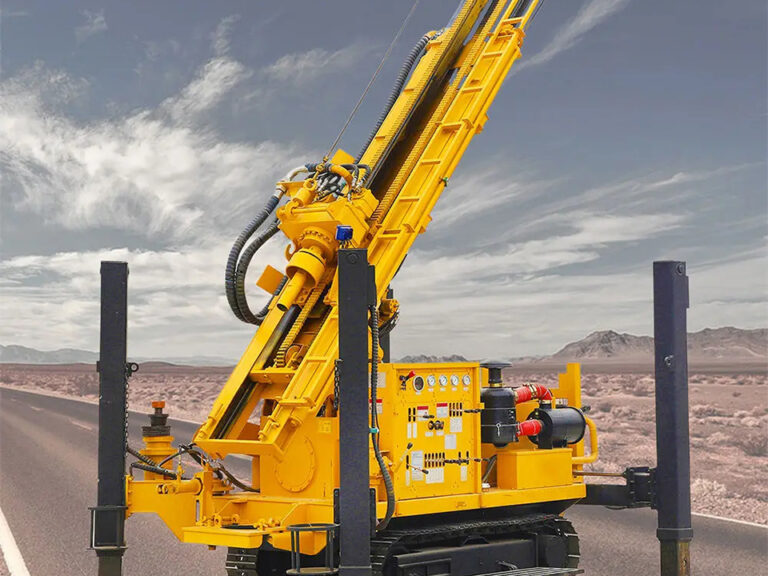
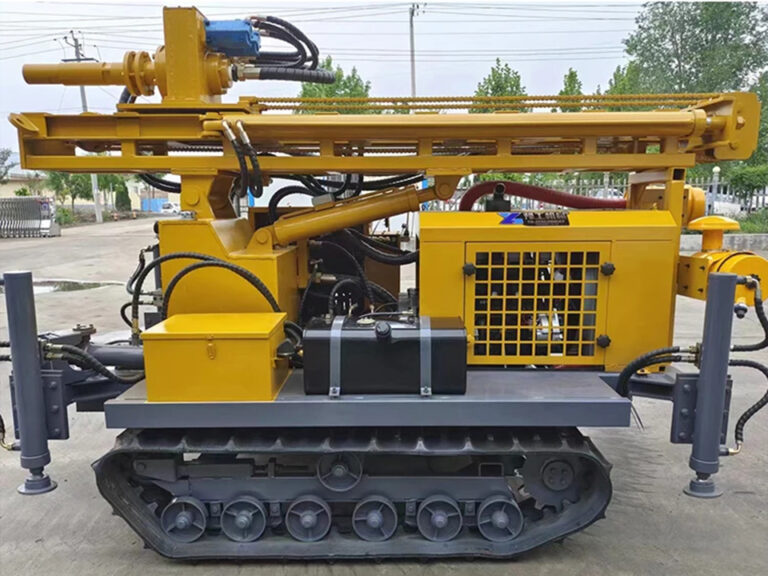
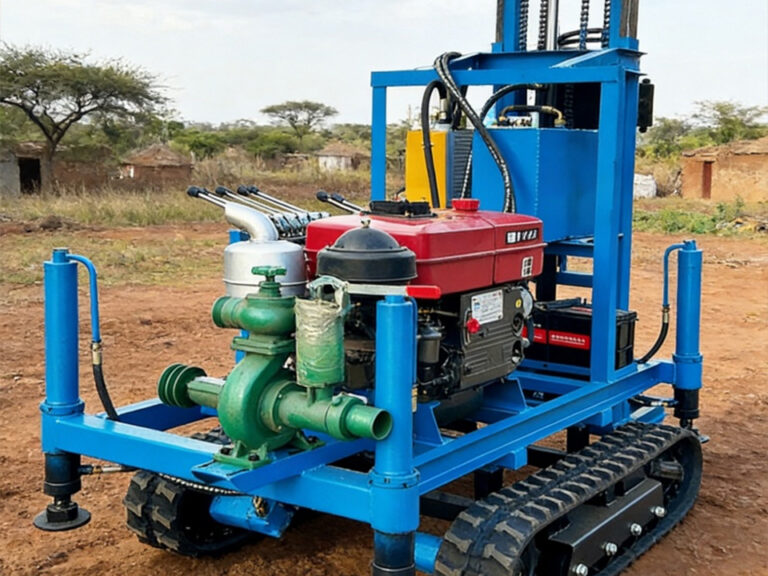
For orchards, livestock operations, and moderate agricultural water supply systems, a compact hydraulic machine such as the Perforadora móvil portátil de pozos de agua de 150 m often delivers excellent mobility without dragging around unnecessary iron.
But—and this matters—if groundwater levels have been trending downward in your region, buying right on today’s depth requirement can become tomorrow’s regret.
I’ve watched operators brag about rotary drilling performance in sandstone and then spend days fighting fractured granite because the setup wasn’t built for high-pressure DTH work. I’ve seen the opposite too—powerful hammer rigs crawling through sticky clay while cuttings turned the borehole into soup.
The rock always gets the last word.
Generally speaking:
Soft Clay and Unconsolidated Ground
Mud management becomes the whole game.
Not horsepower.
Not mast pullback.
Not engine size.
If your drilling fluid program is weak, the borehole will remind you very quickly.
Mixed Agricultural Formations
This is where versatile rigs earn their reputation.
Clay.
Gravel.
Weathered rock.
Hard rock.
Sometimes all before lunch.
Machines capable of switching drilling methods without turning the site into a maintenance project tend to outperform specialized rigs over the long run.
Hard Rock Aquifers
Now we’re talking compressor territory.
This is where cubic feet per minute and working pressure start separating productive operations from expensive headaches. When drilling fractured granite, basalt, or dense limestone, a properly matched air package can dramatically outperform conventional rotary approaches.
I’ve seen it firsthand.
The penetration-rate difference can be shocking.
What Smart Contractors Are Watching Right Now
Here’s something many equipment buyers still underestimate.
Water access is becoming a moving target.
The groundwater study reported by Reuters found accelerating declines across many aquifers worldwide, while researchers noted the trend is especially common in dry agricultural regions.
That changes how experienced contractors think.
They aren’t just planning for this season.
They’re planning for the next ten.
So when somebody asks me how to choose a water well drilling rig for agriculture, I don’t immediately ask about today’s well depth.
I ask where the water table might be in five years.
Very different question.
Cost Per Meter Beats Purchase Price Every Time
Everybody wants the cheapest quote.
Nobody wants the cheapest outcome.
A rig that costs 20% more but drills faster, mobilizes easier, consumes fewer consumables, and finishes more rural water well drilling projects every year will usually outperform the bargain machine financially.
Not sometimes.
Usually.
And once labor, downtime, compressor rental, bit wear, trucking costs, and maintenance enter the equation, sticker price becomes a surprisingly small piece of the overall picture.
That’s something the sales brochures rarely mention.