Blog
Wydajność i wybór
Sprawy, zgodność z przepisami i eksport
Case Study: Municipal Borehole Programs with Multi-Rig Fleets

Multi-rig borehole programs fail less from “bad luck” than from weak fleet discipline, shallow supervision, sloppy siting, and procurement that rewards the cheapest rig package instead of the most repeatable drilling system.
Which Drilling Mud Fits Your Rig, Formation, and Well Goal

Most buyers pick the rig first and treat drilling mud like a side issue. I think that’s backward. Mud choice affects hole stability, cuttings transport, development quality, crew error tolerance, and the real cost of the well.
Mud Rotary or DTH: Which Drilling Method Fits Your Jobs

Most buyers compare rigs. Smart buyers compare failure modes. Mud rotary wins in unconsolidated formations and larger-diameter water wells; DTH wins in hard rock and straight-hole penetration. The real question is not which method looks stronger on a brochure. It is which method survives your geology, your water target, and your cost structure.
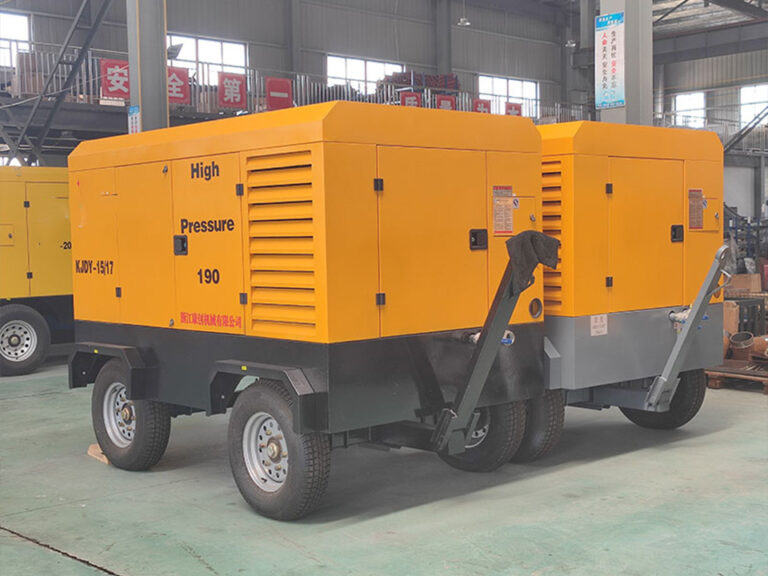
How to Read Compressor Curves Before Buying a DTH Package

Most buyers compare DTH packages by nameplate pressure and brochure flow. That’s a lazy filter. The smarter move is to read the compressor curve, map the pressure losses between discharge and hammer, and verify whether the machine still has a real operating window after the site, piping, altitude, and duty cycle punish it.
Continuous-Duty vs Nameplate Ratings in Drill Compressor

I’ll say it plainly: a drill compressor that looks strong on paper can still embarrass a dealer in the field. The gap usually lives between the nameplate and the sustained output after temperature, pressure, and real duty cycle start biting.
Component Compliance: Valves, Regulators, and Electrical Parts

Most machine compliance failures do not start at the machine level. They start inside the box: a regulator with the wrong rating, a valve with weak traceability, a power supply carrying the wrong mark, a control unit built outside the approved configuration. This article explains how serious buyers audit subcomponent compliance before the machine is loaded.
How to Validate a Declaration of Conformity Before Importing

A Declaration of Conformity is not proof. It is a legal claim. This guide shows importers how to test that claim, spot fake or weak paperwork, and avoid taking on manufacturer-level liability by accident.
Case Study: Deep Agricultural Wells with Mid-Range Air Packages

Deep agricultural wells are where equipment theory gets mugged by geology, fuel burn, and downtime. This case study breaks down how a mid-range air package performs in a commercially realistic farm-well scenario, and why many buyers under-spec air long before they notice they’ve done it.
Case Study: 6-Inch Wells in Mixed Overburden and Fractured Rock

Mixed ground is where drilling packages get exposed. This case study shows why a 6-inch well moving from unstable overburden into fractured rock punishes weak airflow, lazy bit selection, and brochure-level thinking far faster than a clean single-formation job ever will.
DTH Hammer Compatibility: How to Validate Rig-Air Matching

Most DTH hammer compatibility problems are not “hammer problems.” They are system problems: pressure drop, bad air volume assumptions, wrong backhead or shank logic, weak rig feed, and supplier claims built on brochure conditions instead of field conditions.
How Casing Design Determines Rig Class, Bit Size, and Airflow

Most drilling mistakes start before the rig arrives. They start on paper, when buyers treat casing as an afterthought instead of the geometry that controls borehole diameter, annular seal space, drilling method, compressor demand, and ultimately rig class.
When Higher CFM Hurts Efficiency in Water Well Drilling Jobs

Many buyers still assume the safest answer is to oversize the air package. I don’t. In real water well drilling jobs, excess CFM can punish fuel economy, weaken compressor matching, and distort the economics of a borehole long before it improves penetration.