“The Drilling Rig gave us a true one-stop solution. Their team matched the right rig, compressor, and drilling tools for our project, and the engineering support stayed fast and professional from quote to delivery.”
How to Evaluate Warranty Terms from Overseas Equipment OEMs
I’ll say it plainly: most buyers read warranty terms too late.
After the deposit.
After the machine lands.
After the rotary head starts whining like a dry bearing at 160 meters and the supplier suddenly asks for “more video, dear friend.”
Table of Contents
That’s the moment when the buyer discovers the ugly little truth behind overseas equipment warranty documents: a warranty isn’t a promise of safety. It’s a map of who pays when something goes wrong. And in heavy equipment — drilling rigs, compressors, hydraulic crawlers, DTH rigs, mine machines — the person who pays is often the person who didn’t read the exclusions carefully.
It hurts. Badly.
The Warranty Line in the Quotation Is Usually the Weakest Part of the Deal
I’ve seen buyers fight hard over a $700 discount and then accept “12 months warranty” with no start date, no parts list, no claim procedure, no freight rule, and no written diagnosis timeline. That’s not negotiation. That’s theatre with a calculator.
But it happens every week.
A supplier sends a quotation. The buyer checks price, engine model, drilling depth, air pressure, hole diameter, shipping cost, maybe payment terms. Warranty? One line. “Warranty: 12 months.”
Looks normal.
It isn’t.
Twelve months from when? Factory dispatch? Invoice date? Bill of Lading date? Destination port arrival? First commissioning? First engine hour? If a rig spends 38 days on the water, 9 days in customs, and another 15 days waiting for inland trucking, then a “12 months from shipment” warranty has already burned nearly two months before the machine even bites rock.
And don’t tell me that’s a small detail. In drilling, two months can be a season.
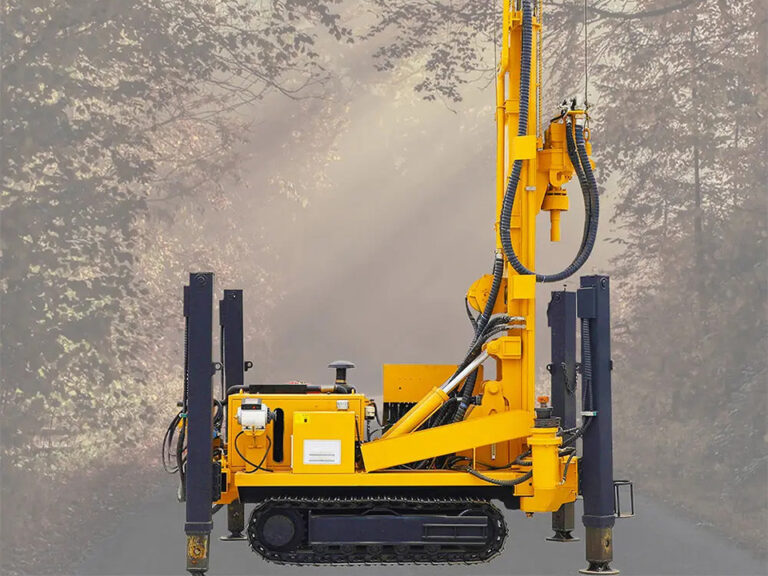
For a buyer considering machines like a crawler mine drilling rig for demanding rock drilling work, the warranty start date is not paperwork decoration. It’s money. It decides whether a failed hydraulic pump in month eleven is covered or dismissed with one polite sentence from the factory.
“Warranty expired.”
That’s the whole email.
Downtime Is the Real Price, Not the Machine Price
The invoice price is only the first number. The real number shows up when the rig stops and the crew stands around pretending to be patient.
According to Siemens’ 2024 report, The True Cost of Downtime, the world’s 500 largest companies lose almost $1.4 trillion annually through unplanned downtime, equal to around 11% of their revenues. That’s big-company data, sure. Not a village well contractor. Not a small mining team in West Africa. But the logic travels very well: when equipment stops, the pain spreads faster than the fault code.
Idle compressor.
Idle rig.
Idle truck.
Idle operator.
Angry client.
And maybe one lost borehole contract that would’ve paid for three spare-parts kits.
Here’s the ugly truth: a cheap overseas equipment warranty can look fine until one $90 sensor becomes a two-week delay because nobody knows the part number, the supplier’s engineer is busy, and the “free replacement” still needs DHL, customs clearance, import duty, and someone local who knows which wire goes where.
That’s why I frankly believe OEM warranty terms should be evaluated like a cost item, not like a courtesy.
Cost Area
Weak Warranty Behavior
Stronger Warranty Behavior
Warranty start date
Starts from factory shipment
Starts from commissioning or destination arrival
Response time
“Fast reply”
24-hour reply, 72-hour technical diagnosis
Parts support
“We can provide”
Spare parts list, part numbers, stock status
Freight
Buyer pays everything
Freight rules stated before order
Exclusions
Broad and vague
Specific and tied to evidence
Claim process
Informal WhatsApp messages
Photos, video, serial number, hours, maintenance log
Local repair
Not mentioned
Allowed under supplier guidance
Downtime loss
Usually excluded
Still excluded, but buyer understands risk
“Improper Operation” Is the Favorite Escape Hatch
But here’s where it gets slippery.
Many warranty documents contain reasonable exclusions: drill bits, hammers, rubber seals, filters, belts, lubricants, hydraulic oil, hoses, and other consumables. Fine. Nobody expects a DTH button bit to live forever after chewing through abrasive formation.
The problem is the soft wording.
“Improper operation.”
“Harsh working environment.”
“Unsuitable working condition.”
“Damage caused by geology.”
What does that mean? A drilling rig works in mud, dust, vibration, heat, cold, impact load, bad roads, overburden, fractured rock, and sometimes an operator who learned by watching his uncle. That’s not an unusual environment. That’s the job.
So if an overseas equipment warranty excludes “harsh conditions” without defining the boundary, the supplier can reject almost anything. Hydraulic cylinder seal leaking? Harsh conditions. Controller failure? Dust. Feed motor issue? Operator error. Air system problem? Wrong use.
Convenient.
Too convenient.
For equipment like a KG726/KG726H ground drilling rig, warranty language needs to separate normal field stress from real abuse. A broken part caused by no lubrication is different from a casting defect. A burnt motor caused by wrong voltage is different from a bad factory connection. A cracked weld caused by overloading the mast is different from poor welding penetration.
Details matter.
Tiny ones.
Response Time Is Mostly Sales Language Unless It Has Stages
“24-hour online support” sounds comforting.
I don’t trust it by itself.
A salesperson replying “we are checking” is not the same as an engineer diagnosing a hydraulic schematic, confirming pressure readings, identifying the valve block, checking stock, approving the claim, and arranging shipment. Those are different steps. Different people. Different delays.
Reuters reported in 2024 that Toyota repeatedly halted production at its Mexico plant after supplier labor shortages and other operational issues disrupted output, including equipment and materials problems in the supplier network: Toyota repeatedly halted Mexico plant after suppliers hit by worker shortage. If a giant automotive system can get squeezed by parts, labor, and technical disruptions, what makes a small drilling buyer think a vague overseas warranty will magically move faster?
It won’t.
Usually.
A useful warranty response clause should look more like this:
Stage
Weak Wording
Better Wording
First reply
“Fast support”
Written reply within 24 hours
Technical check
“Engineer will review”
Diagnosis within 72 hours after full evidence
Claim decision
“Depends on situation”
Accept/reject/need-more-info within 5 working days
Parts confirmation
“We have parts”
Stock status and lead time stated
Dispatch
Not mentioned
In-stock warranty parts dispatched within 3–7 working days
Remote support
“Online service”
Video call, wiring diagram, hydraulic schematic, test checklist
That’s not too much to ask. It’s basic.
Especially with a crawler hydraulic rock drill for mining and quarry work, where the machine is not doing polite warehouse duty. It’s taking impact, dust, compressor load, rotation pressure, feed pressure, and operator decisions all day.
A nice warranty sentence won’t fix a rig. A process might.
Parts Support Is Where the Real Suppliers Separate Themselves
I’d rather buy from a supplier with a plain warranty and strong parts discipline than from one with a beautiful warranty document and no idea where the pressure sensor is stored.
This is not theory.
A rig usually doesn’t stop because of one dramatic movie-scene failure. It stops because of ordinary little things: a solenoid valve, hydraulic hose joint, pressure gauge, relay, controller board, oil seal, bearing, chain, coupling, filter, sensor, or a weird fitting that nobody local carries.
One small part.
One dead jobsite.
The U.S. Federal Trade Commission warned companies in 2024 about warranty practices that may harm repair rights, stating that restricting repair can violate the law: FTC warns companies to stop warranty practices that harm consumers’ right to repair. That’s consumer-facing law, not a direct drilling-rig import rule. Still, the lesson applies: if the manufacturer controls parts, repair access, and technical information too tightly, the buyer becomes trapped after purchase.
Ask these questions before payment:
Can you send the 12-month recommended spare parts list?
Do you have part numbers for seals, filters, belts, gauges, relays, sensors, hoses, valves, and pumps?
Which parts are in stock now?
What’s the lead time for non-stock parts?
Can local mechanics repair under your video guidance?
Will third-party filters or hydraulic hoses void the warranty?
Do you provide wiring diagrams and hydraulic schematics?
Is there any controller password, diagnostic lock, or software restriction?
That last one matters. Some buyers discover too late that “after-sales support” means the supplier still controls the machine’s brain.
Not ideal.
Freight: The Part Is Free, the Pain Is Not
Here’s a sentence buyers hate hearing:
“The part is free, but freight is paid by buyer.”
That can be fair. Sometimes.
But it must be known before the deposit leaves your account. A $120 valve shipped by air may cost more in freight and customs friction than the part itself. A heavy hydraulic pump, rotary motor, gearbox, or air-end component? Different story. Now you’re not arguing about warranty. You’re arguing about who carries the weight of international logistics.
And nobody sounds friendly during that argument.
Warranty Cost Item
What Buyers Must Clarify
Replacement part
Covered or buyer-paid?
International courier
Supplier, buyer, or shared?
Customs duty
Usually buyer-paid
Return of defective part
Required or not? Who pays?
Local labor
Covered or excluded?
Technician travel
Covered or excluded?
Downtime loss
Almost always excluded
Wrong diagnosis cost
Who takes the hit?
Air freight upgrade
Who approves it?
The dirty little detail: most international equipment warranty terms exclude downtime loss.
Honestly, I don’t think that’s always unfair. A factory can’t insure every contractor’s lost revenue from one failed part. But the buyer needs to understand this clearly. If downtime loss is excluded — and it almost always is — then parts speed becomes the real warranty.
Not the certificate.
Claim Evidence: Don’t Send a Complaint, Send a Case File
I’ve seen warranty claims die because the buyer sent one shaky video and a message saying, “Machine no work.”
That’s not a claim.
That’s a panic signal.
A stronger claim looks boring, and boring is good:
Machine model
Serial number
Engine hours
Delivery date
Commissioning date
Failure date
Jobsite condition
Operator description
Photos from three angles
Short videos, not one 6-minute mess
Maintenance records
Oil and filter change record
Fault code
Failed part close-up
Pressure readings
Voltage readings
Timeline of what happened
You want the supplier’s engineer to have no excuse to ask basic questions one at a time across four days.
For deeper DTH machines like a KT12 diesel DTH deep-hole mining drilling rig, the evidence should include working parameters too: hole diameter, hammer size, air pressure, air volume, rock hardness, drilling depth, rotation pressure, feed pressure, lubrication condition, compressor model, and whether the operator was drilling with enough flushing air.
Because yes — if the compressor is wrong, the warranty discussion gets ugly fast.
Very fast.
My Personal Red-Flag List for OEM Warranty Terms
I don’t need a lawyer to smell a weak warranty. I need ten minutes and the exclusion section.
Red Flag
Why It Bothers Me
What I’d Do
“12 months warranty” only
Too vague to use
Ask for full written terms
Starts from factory shipment
Buyer loses time during transport
Push for commissioning/date-of-arrival wording
“All hydraulic parts excluded”
That guts the machine warranty
Demand defect coverage clarification
No spare parts list
Future downtime waiting to happen
Request list and prices before order
“Fast response”
Means nothing
Ask for response stages
Buyer pays all freight
Free part may still cost too much
Estimate freight before buying
No claim process
Disputes become emotional
Require evidence checklist
No English manual
Operator-error risk rises
Ask for manual and service videos
No serial tracking
Wrong parts become likely
Require model/serial/parts code system
The biggest red flag?
Ambiguity.
Not short warranty. Not even limited warranty. Ambiguity. Because when a failure happens, unclear language always favors the side holding the replacement part.
Usually the OEM.
How I’d Negotiate Before Paying the Deposit
Don’t ask, “Do you have warranty?”
That’s too easy.
Ask uncomfortable questions. Politely, but directly.
“Please confirm the warranty start date in writing.”
“Is the warranty counted from shipment, arrival, commissioning, or first use?”
“Are hydraulic pumps, motors, cylinders, valves, sensors, controller, and engine accessories covered for manufacturing defects?”
“Which parts are excluded as consumables?”
“Who pays international freight for warranty parts?”
“What is your diagnosis time after receiving full evidence?”
“Do you keep critical parts in stock?”
“Can you send a 12-month spare parts list with prices?”
“Can a local mechanic repair the machine under your guidance?”
“Will local hoses, filters, or lubricants void warranty?”
“What documents do you require for a claim?”
“Can you provide hydraulic and electrical diagrams?”
Weak suppliers get cloudy here.
Strong suppliers get specific.
That’s useful. The warranty conversation becomes a supplier test, not just a document review.
Sample Warranty Wording I’d Actually Accept
This isn’t perfect legal drafting. But in the real machinery trade, it’s already better than 80% of what buyers receive.
“The warranty period shall be 12 months from commissioning date or 18 months from Bill of Lading date, whichever comes first. Manufacturing defects in major components shall be covered, excluding normal wear parts, consumables, damage caused by improper operation, unauthorized modification, lack of maintenance, incorrect voltage, insufficient lubrication, or use beyond rated working conditions. Supplier shall provide initial response within 24 hours, technical diagnosis within 72 hours after complete evidence is submitted, and dispatch confirmed warranty parts within 7 working days if available in stock.”
Would every OEM accept it?
No.
Good. Now you’ve learned something before sending money.
FAQs
What are OEM warranty terms?
OEM warranty terms are the written rules that explain what an original equipment manufacturer will repair, replace, reject, or exclude after selling a machine, including the warranty period, covered components, claim evidence, response time, spare parts responsibility, freight cost, repair limits, and downtime exclusions.
In overseas machinery trade, those terms matter more than the friendly sales message. A vague warranty can look fine during negotiation and become almost useless when a hydraulic pump, controller, gearbox, valve block, or engine accessory fails far from the factory.
How do I evaluate warranty terms from overseas equipment OEMs?
To evaluate warranty terms from overseas equipment OEMs, check the warranty start date, covered components, exclusions, claim steps, technical response time, spare parts availability, freight responsibility, repair authorization, documentation support, and whether the supplier provides manuals, diagrams, videos, and a recommended parts list before shipment.
Don’t judge the warranty by length alone. A 12-month warranty with clear parts support may be stronger than an 18-month warranty full of vague exclusions. The real test is whether the OEM can diagnose the failure and move the correct part quickly.
What equipment warranty exclusions should buyers watch for?
Equipment warranty exclusions are clauses that remove certain failures, costs, parts, or jobsite conditions from warranty coverage, often including wear parts, consumables, improper operation, poor maintenance, unauthorized repair, third-party parts, electrical damage, hydraulic damage, unsuitable working conditions, and freight or labor costs.
Some exclusions are normal. Drill bits, filters, seals, and lubricants won’t usually be covered forever. The risky exclusions are broad ones like “harsh environment” or “improper use” when the supplier doesn’t define what those words actually mean.
Who pays freight for warranty parts in international equipment purchases?
Freight responsibility for warranty parts is the rule that decides whether the supplier, buyer, or both sides pay international courier fees, customs duty, return shipping, urgent air freight, local handling, and related logistics costs when a covered part must be replaced.
Many buyers misunderstand this. “Free warranty part” doesn’t always mean free delivery. The OEM may provide the part at no charge while the buyer still pays DHL, customs, duty, and local technician labor. Ask before paying the deposit.
Why is OEM parts support more important than warranty length?
OEM parts support is more important than warranty length because most equipment downtime depends on whether the supplier can identify, stock, price, and ship the correct replacement part quickly, not simply whether the warranty document says 12 months or 18 months.
A long warranty with poor parts discipline is weak protection. In drilling rigs, downtime often comes from small items — sensors, seals, hoses, gauges, relays, valves, couplings, bearings, and filters. If nobody can identify the part, the warranty clock doesn’t help.
What should I ask before buying overseas drilling equipment?
Before buying overseas drilling equipment, ask for written warranty terms, component coverage, exclusion details, warranty start date, response-time rules, freight responsibility, spare parts list, operation manual, maintenance schedule, serial-number tracking, repair authorization, and confirmation that local service won’t automatically void coverage.
This isn’t being difficult. It’s risk control. If a supplier can’t answer these questions before payment, don’t expect sudden clarity after the machine is sitting dead on a jobsite.
Your Next Step: Treat the Warranty Like a Machine Part
Don’t treat OEM warranty terms as a polite afterthought.
Read them like a part number.
Check the start date. Circle the exclusions. Ask about freight. Demand a spare parts list. Push for response stages. Get the claim evidence requirements before the machine ships. And when the supplier says, “Don’t worry, we support you,” smile — then ask them to put it in writing.
Because once the rig stops, the warranty is no longer marketing.