“The Drilling Rig gave us a true one-stop solution. Their team matched the right rig, compressor, and drilling tools for our project, and the engineering support stayed fast and professional from quote to delivery.”
The Risks of Parallel Compressors on DTH Water Well Sites
The Cheap Fix That Can Become the Expensive Problem
Two compressors look smart.
On a DTH water well site, especially where the contractor already owns one small machine and does not want to buy a larger DTH drilling compressor, the idea feels practical: connect another compressor, combine the airflow, feed the hammer, and keep drilling.
But field air is not spreadsheet air, and this is where many buyers fool themselves. A 22 kW screw compressor plus a 55 kW screw compressor does not behave like one engineered high-volume drilling compressor. A worn 185 CFM unit and a newer 380 CFM unit do not magically become a stable 565 CFM air package. And two pressure gauges showing similar numbers at idle tell us almost nothing about how the system behaves when a 4-inch or 5-inch DTH hammer starts cycling at depth.
So what fails first?
Table of Contents
Usually not the part the buyer expected.
I have seen the same pattern in contractor conversations again and again: the buyer focuses on purchase price, the operator complains about penetration rate, the mechanic complains about oil carryover and water, and nobody wants to admit the real problem is the air system architecture. The rig gets blamed. The hammer gets blamed. The bit gets blamed. Sometimes the geology gets blamed. But the actual bottleneck is a dual compressor setup that was never designed as a controlled, balanced, protected compressed-air system.
That is the hard truth. Parallel compressors for drilling can work, but only when the system is engineered, isolated, drained, controlled, and maintained like a pressure system — not tied together like two garden hoses.
Why DTH Drilling Is Brutal on Air Supply
DTH drilling is unforgiving because the hammer does not merely “use air.” It depends on air for impact energy, cuttings removal, hole cleaning, cooling, and stability at the bit face.
A rotary mud rig can sometimes limp through poor fluid control. A DTH hammer cannot hide bad air for long. If air pressure falls, impact energy drops. If volume is weak, cuttings stay in the hole. If water and oil enter the line, hammer performance changes. If pressure swings violently, the bit stops working like a controlled tool and starts behaving like an angry piece of steel at the bottom of an expensive hole.
Here is the problem with parallel compressors: the DTH hammer does not care how many compressors are on the surface. It only cares about stable pressure, usable flow, clean air, and sustained delivery at depth.
The U.S. Department of Energy’s compressed air guidance treats compressed air as a full system — compressor package, aftercooler, receiver, dryer, filter, distribution piping, pressure-flow control, condensate drain, and point-of-use equipment — not as a single machine with a hose attached. That systems view matters because drilling contractors often ignore the middle pieces: check valves, isolation valves, moisture separation, line sizing, receiver volume, control logic, and pressure drop.
And pressure drop is not academic. In DTH drilling, a small pressure loss at the surface can become a large loss in production because hammer energy, flushing velocity, and cuttings transport are all tied to actual air delivered downhole.
A Simple Risk Map for Dual Compressor Setups
Risk Area
What Happens on Site
Why It Matters for DTH Drilling
Common Warning Sign
Unequal loading
One compressor carries most of the work while the other idles or cycles
Higher fuel burn, faster wear, poor use of available CFM
One unit runs hot; the other unloads often
Backflow
Air moves from one compressor line into the other
Can stress valves, contaminate lines, and destabilize pressure
Pressure rises in the idle unit’s discharge line
Condensate carryover
Water enters shared headers and hoses
DTH hammer loses efficiency; corrosion risk rises
Water blowing from tool line or hammer
Control instability
Machines fight each other’s load/unload bands
Pressure swings instead of steady delivery
Hammer sound changes rhythm under load
Maintenance complexity
Two engines, two oil systems, two service histories
More failure points on commercial contracts
One machine always “needs a small repair”
False CFM confidence
Nameplate numbers are added together without derating
Buyer overestimates usable air at depth
Slow penetration despite “enough” CFM
Unequal Loading: The Silent Killer in Parallel Compressors
Unequal loading is the first risk I look for.
In theory, two compressors share demand. In practice, one compressor often becomes the “boss” because its pressure setting, response speed, check valve condition, engine health, or unloaded pressure band causes it to take load earlier. The second machine may sit near standby, cut in late, or cycle too often.
That sounds harmless until you calculate the cost.
If one compressor runs loaded for hours while the other floats near unload, the site is not getting clean “combined capacity.” It is getting a messy mixture of full-load operation, part-load waste, hot discharge air, pressure fluctuation, and duplicated maintenance exposure.
Compressed Air Best Practices has long argued that efficient multi-compressor systems usually need proper sequencing, with fixed-speed compressors either fully loaded or off and one suitable trim unit handling variable demand. That principle was written for industrial compressed air rooms, but the logic hits harder on drilling sites because DTH air demand is aggressive and continuous.
The site version is rougher. Dust. Heat. Bad fuel. Long hoses. Improvised manifolds. Operators adjusting pressure by sound. A mechanic who says, “Just open this valve a little more.”
I do not trust that setup on a serious commercial drilling contract.
Backflow Risk: When One Compressor Starts Feeding the Wrong Direction
Backflow is not just a theoretical engineering note. It is the ugly thing that happens when air follows pressure difference instead of the contractor’s business plan.
A check valve is supposed to allow air to move one way and stop reverse flow. In a parallel compressor setup, each compressor discharge line should be protected so one machine cannot push air backward into another machine’s system. Quincy Compressor’s 2024 guidance on connecting two compressors specifically recommends check valves on each discharge line to prevent air from flowing from one compressor into the other during breakdown or imbalance.
But here is where I get blunt: a check valve is not a business strategy.
It can stick. It can leak. It can be installed in the wrong location. It can be underrated. It can be contaminated by oil, rust, scale, or wet air. And even when it works, it does not solve poor control logic, bad pressure bands, or insufficient receiver volume.
OSHA’s compressed-air rules exist because compressed air is stored energy, not “just air.” OSHA 1926.803 sets strict pressure-rate requirements for work under compressed air, and while that regulation is not written specifically for DTH drilling compressors, it reminds us of the bigger point: pressure changes must be controlled, monitored, and treated seriously.
NIOSH has also documented hazards from rapidly filled compressed-air cylinders, noting that fast filling generates heat and can leave users with lower pressure after cooling. Different application, same physics lesson: compressed air systems can look stable for a moment and then behave differently under heat, cooling, flow, and pressure cycling.
On a drilling site, that behavior can turn into unstable hammer output.
Condensate Management: The Dirty Water Nobody Prices Into the Quote
Water ruins clean theories.
Compressing air creates heat. Cooling air drops moisture. Moisture becomes condensate. In a single well-designed compressor package, aftercoolers, separators, drains, filters, and sometimes dryers manage that problem. In a dual-compressor field setup, condensate becomes harder to predict because each machine has its own discharge temperature, oil condition, duty cycle, separator efficiency, and drain behavior.
Now combine them into one header.
Where does the water collect? Which line slopes downward? Is there a low-point drain? Is the manifold higher than the outlets? Are operators draining receivers on schedule? Is the site humid? Is the second compressor cycling so much that it never stabilizes thermally?
Nobody wants to answer these questions because the cheaper quote looks better without them.
But DTH hammers do not like dirty air. Water and oil mist can reduce performance, accelerate internal wear, and create inconsistent impact behavior. In deep or abrasive formations, that inconsistency can look like a geology problem: slow penetration, stuck cuttings, poor cleaning, bit wear, unstable returns.
And then the customer asks why the job is behind schedule.
The answer may be sitting in the air line.
Control Instability: Two Machines Fighting for One Hammer
Control instability is where the “two compressors equal more air” logic finally collapses.
Imagine one compressor set to load at 16 bar and unload at 18 bar. The second loads at 15.5 bar and unloads at 17.5 bar. Now add hose loss, manifold restriction, temperature change, different engine response, and the violent demand pulses of a DTH hammer.
Stable? Hardly.
The DOE and Compressed Air Challenge sourcebook explains that compressed air controls match supply to demand, and poor control can create wide pressure swings. Their fact-sheet material describes control ranges that may vary from 2 to 20 psi depending on system design and control precision. In a workshop, that may waste electricity. On a DTH site, it can change hammer behavior at the hole bottom.
And that is why I dislike casual parallel compressor setups for water well drilling. A hammer wants firm, repeatable air. A sloppy dual setup gives it arguments.
Single Large Compressor vs Parallel Compressor Setup
Decision Factor
Properly Sized Single DTH Compressor
Parallel Compressor Setup
Pressure stability
Usually stronger if correctly sized
Depends on sequencing, valves, receiver volume, and controls
Maintenance workload
One engine/package to manage
Two machines, two service histories, more inspections
Backflow risk
Lower in normal single-output configuration
Higher unless each line is correctly protected
Condensate behavior
Easier to manage and diagnose
More complex due to mixed temperatures and duty cycles
Fuel efficiency
Often better under stable load
Can be poor if one machine cycles or both run inefficiently
Emergency flexibility
Lower redundancy if the unit fails
One unit may limp the site along if the other fails
Upfront cost
Higher
Lower if the contractor already owns one compressor
Commercial drilling risk
Lower when matched to hammer and depth
Higher when improvised without controls
Where the Provided Compressor Links Fit — And Where They Do Not
The internal compressor pages below are useful, but they should not be sold as a magic answer to every DTH air problem. That is exactly how bad projects start.
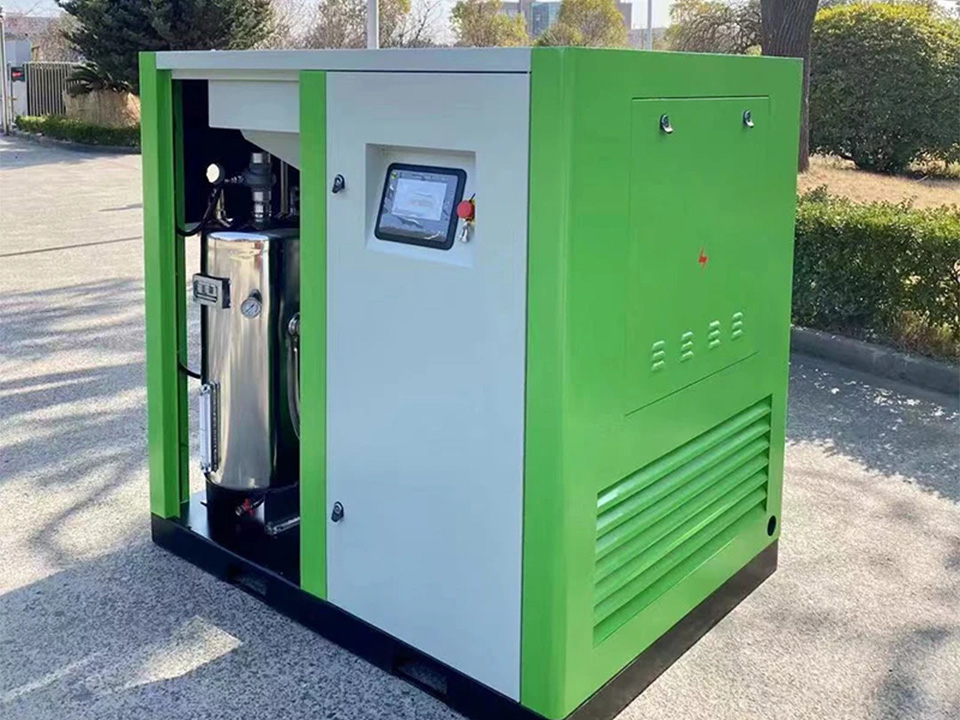
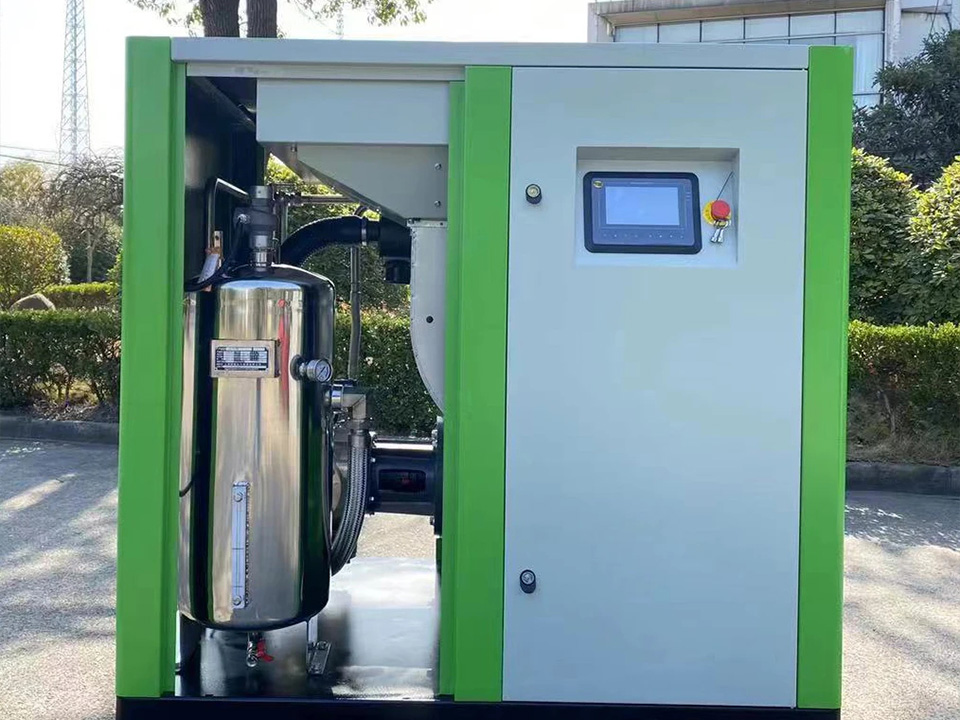
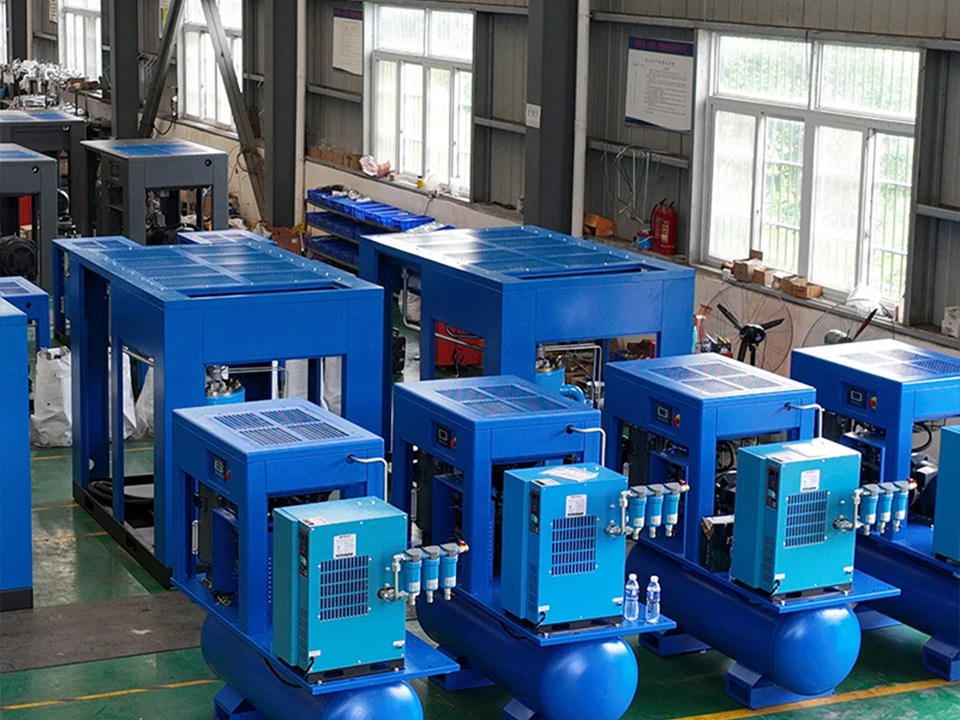
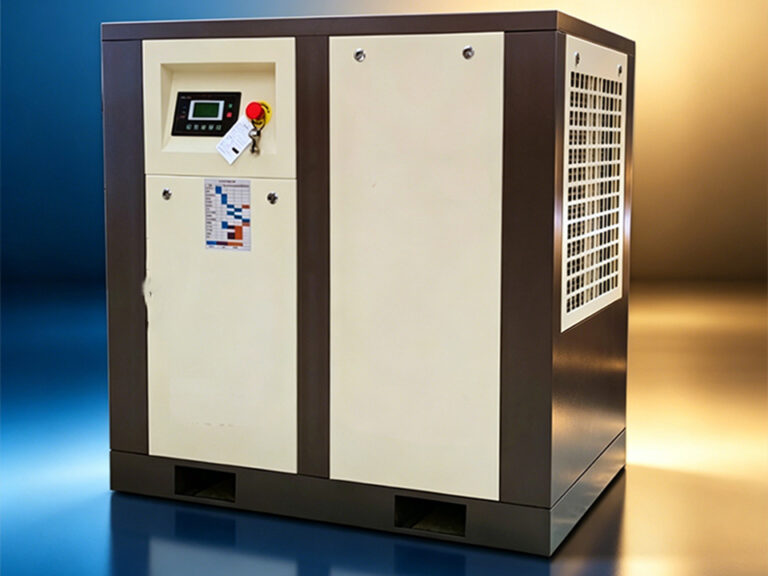
For small auxiliary air, workshops, light pneumatic tools, or non-DTH tasks, a compact unit such as a 7.5 kW 10HP 8 bar portable lubricated screw air compressor can make sense. But I would not position that class of machine as a serious DTH hammer supply source for commercial water well drilling.
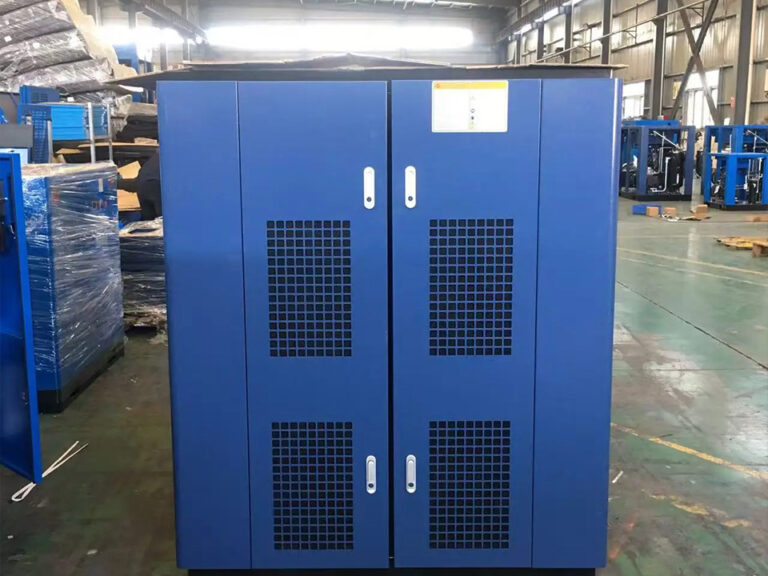
A mid-range industrial unit like the BK22-10G 22 kW industrial screw air compressor belongs in a different conversation: plant air, support air, smaller pneumatic demand, or controlled site utilities. If a buyer asks whether two small shop-style screw compressors can replace one drilling compressor, the honest answer is: maybe for limited surface tasks, not for deep DTH production.
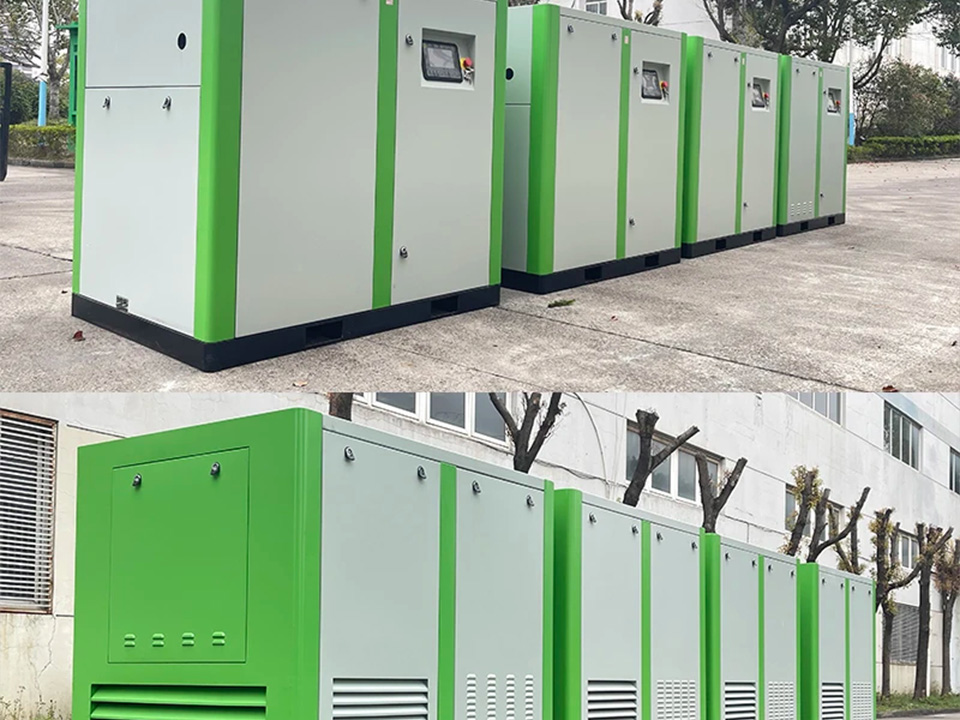
For heavier continuous-duty compressed-air demand, a 55 kW energy-saving portable stationary screw compressor is closer to the kind of equipment buyers should evaluate, especially when duty cycle and stable air delivery matter. Still, capacity must be matched to hammer size, hole diameter, depth, altitude, and formation.
The BK55-8G 55 kW direct-drive oil-injected screw air compressor may also fit industrial compressed-air demand, but the sales conversation must be honest about pressure, flow, receiver design, filtration, aftercooling, and whether the unit is configured for drilling-site abuse.
My rule is simple: do not sell “compressor horsepower.” Sell usable air at the hammer.
The 2024 Cost Reality: Downtime Is No Longer Cheap
In 2024, Reuters reported that equipment shortages and rising costs were pushing major energy-construction project costs higher, with Kiewit Energy stating that new LNG plant construction costs had increased 25% to 30% over five years and some equipment supply times had stretched dramatically. That is not a water well drilling case, but it reflects the broader contractor reality: equipment delays, replacement uncertainty, and downtime now hurt more than they did before.
A drilling contractor working under a fixed-price borehole contract does not have the luxury of theoretical savings. If a parallel compressor setup causes one lost day, extra diesel, hammer damage, or a failed hole, the “cheap” decision becomes expensive fast.
Let us put rough numbers on it.
If a crew costs $300 to $800 per day in wages and logistics, diesel costs $100 to $400 per day, and lost production delays a paid job by one to three days, the contractor can burn through the savings from a used second compressor quickly. Add a stuck hammer, damaged check valve, emergency hose replacement, or missed customer deadline, and the math turns ugly.
Not dramatic. Just real.
When Parallel Compressors Can Make Sense
I am not saying parallel compressors are always wrong.
They can make sense when the setup is engineered properly, the compressors are similar in capacity and pressure rating, each discharge line has correct non-return protection, manual isolation valves are installed, receiver volume is adequate, pressure bands are deliberately staged, condensate drains are planned, and the operator understands how to monitor load behavior.
That is a long sentence because the requirement list is long. See the problem?
For temporary emergency backup, shallow drilling, support air, or low-risk jobs, dual compressors can be acceptable. For deep DTH water well drilling with a commercial deadline, hard rock, and a customer expecting production, I prefer one correctly selected compressor package almost every time.
Practical Field Checklist Before Running Two Compressors Together
1. Match Pressure Ratings Before You Talk About CFM
If one compressor is rated for lower pressure, it may become dead weight or a liability. DTH drilling needs pressure and flow together. CFM without pressure is not useful, and pressure without volume does not clean the hole.
2. Install Check Valves and Manual Isolation Valves
Each compressor should have its own discharge protection. Check valves help prevent reverse flow, but manual isolation valves are still needed for service and safety. Do not rely on a check valve as your only isolation device.
3. Stage Load and Unload Settings
Do not set both machines identically and hope they “share.” One machine may need to act as base load while the other trims. The settings should be intentional, recorded, and tested under drilling load.
4. Add Receiver Volume Where Possible
Receiver volume helps reduce short cycling and pressure shock. On DTH sites, it can also smooth demand spikes, though it cannot compensate for a badly undersized air package.
5. Drain Condensate Like It Costs Money
Because it does. Drain receivers, separators, low points, and filters. In humid regions, treat condensate management as part of the drilling plan, not an afterthought.
6. Watch the Hammer, Not Just the Gauge
A gauge can lie by omission. Listen to hammer rhythm, check penetration rate, monitor exhaust, observe cuttings return, and compare compressor load behavior over time.
FAQs
Can two compressors be connected together for DTH drilling?
Two compressors can be connected together for DTH drilling only when pressure rating, flow capacity, check valves, isolation valves, receiver volume, condensate drainage, and control sequencing are properly engineered as one system. Without those controls, the setup may create backflow, unstable hammer pressure, poor load sharing, and higher maintenance risk.
Yes, it is possible. But “possible” is not the same as “commercially smart.” For shallow jobs or emergency backup, parallel compressors may help. For deep hard-rock DTH water well drilling, I would rather size one proper compressor than gamble on two mismatched machines.
What is the biggest risk of parallel compressors on water well sites?
The biggest risk of parallel compressors on water well sites is unstable air delivery caused by unequal loading, backflow, pressure-band conflict, and condensate carryover. These problems reduce DTH hammer efficiency, slow penetration, increase fuel consumption, and can turn a low-cost equipment decision into a high-cost drilling failure.
The dangerous part is that the failure does not always look like an air problem. Operators may blame the bit, the hammer, the rig, or the formation before checking whether one compressor is doing most of the work while the other is cycling badly.
Do check valves solve the backflow problem in dual compressor setups?
Check valves reduce backflow risk by allowing compressed air to move in one direction and blocking reverse flow into another compressor line. However, check valves do not solve poor sequencing, unstable pressure control, condensate buildup, wrong pipe sizing, weak receiver capacity, or mismatched compressor performance.
I treat check valves as necessary, not sufficient. If a supplier says, “Just install two check valves and it will be fine,” I immediately want to see the rest of the system design.
Is one large DTH drilling compressor better than two smaller compressors?
One properly sized DTH drilling compressor is usually better than two smaller compressors when the job requires stable pressure, continuous airflow, clean delivery, and predictable maintenance. A single matched package reduces control conflict, simplifies condensate handling, and gives the hammer a steadier air supply.
There are exceptions. Two smaller units can offer redundancy and lower upfront cost. But on paid commercial drilling contracts, especially in hard formations, I usually prefer the boring answer: size the compressor correctly from the beginning.
How should buyers choose a water well drilling compressor?
Buyers should choose a water well drilling compressor by matching hammer size, borehole diameter, target depth, formation hardness, altitude, required pressure, airflow, duty cycle, fuel availability, and service support. The correct machine is not the cheapest compressor; it is the one that delivers stable usable air at the hammer.
For DTH drilling, always ask for pressure and flow together. Then ask how the compressor performs under continuous load, not just what the nameplate says.
Final Thoughts: Stop Buying Air Like It Is a Commodity
Parallel compressors can be a clever field solution.
They can also be a trap.
If you are drilling shallow holes, using support air, or building a backup plan, a dual compressor setup may be reasonable with the right valves, controls, receiver volume, and drainage. But if you are bidding commercial DTH water well contracts, the safer question is not, “Can I connect two compressors together?”
The better question is: “What air does my hammer need at depth, for this formation, for this hole diameter, for this contract deadline?”
If you are comparing compressor options for a DTH water well project, send the target depth, borehole diameter, hammer size, local altitude, rock type, and expected daily drilling hours. We can help you match the compressor configuration before a cheap air decision becomes an expensive site problem.