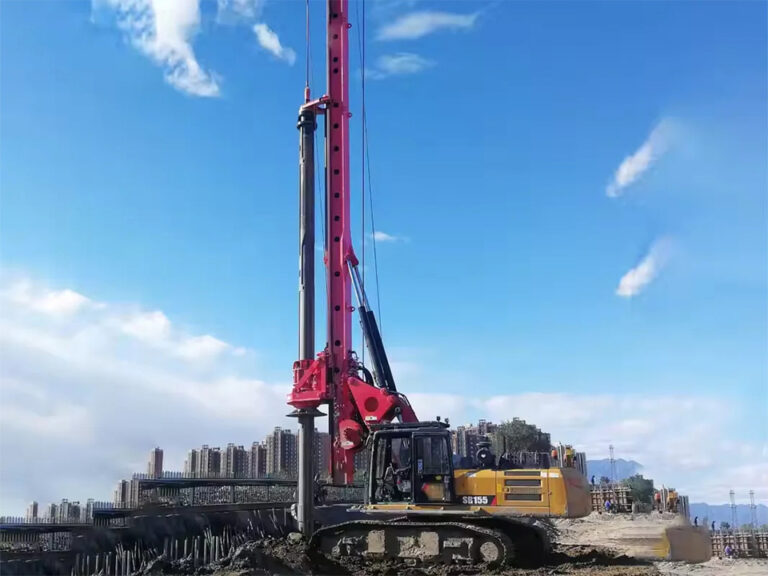
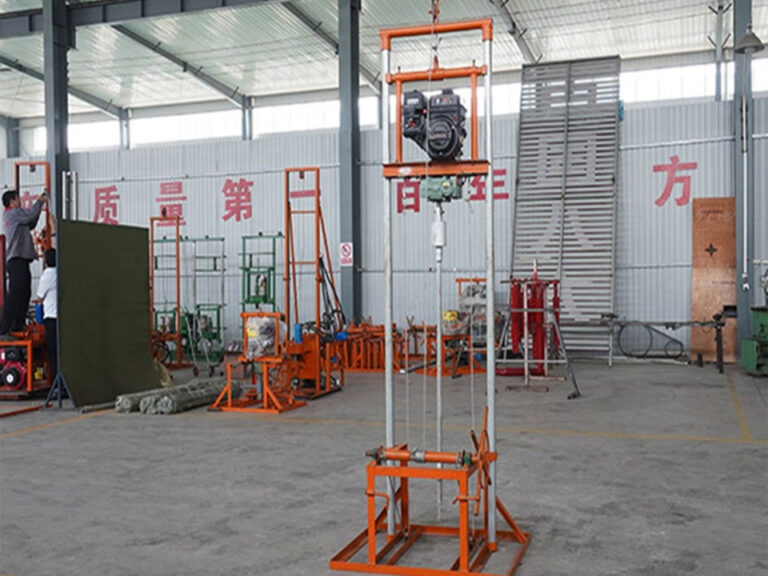
“The Drilling Rig gave us a true one-stop solution. Their team matched the right rig, compressor, and drilling tools for our project, and the engineering support stayed fast and professional from quote to delivery.”
Total Landed Cost for Drill Rigs: Freight, Duties, and Fees
FOB pricing is where bad buying starts
FOB lies.
Table of Contents
I’ve watched procurement teams get hypnotized by a shiny export quote, shave a few grand off the supplier line, and then act stunned when the back end starts bleeding cash through freight spikes, terminal nickels-and-dimes, surprise local handling, broker charges, and the sort of inland haulage headaches nobody bothered to model when the “winner” got picked. It happens. A lot.
And I frankly believe this is where weak buying culture shows itself. Not in negotiation. In math.
What changed in 2024? Plenty. The freight market reminded everyone that “stable” shipping is a fairy tale: Reuters reported that by May 31, 2024, the China-to-North Europe spot rate for a 40-foot container had climbed to $4,615, almost 3.5 times the May 1 level, while China-to-U.S. East Coast hit $6,061 versus $2,772 on May 1; then, a few weeks later, Reuters reported Singapore congestion at its worst since the pandemic, with average cargo offload volume up 22% from January to May and Asia-U.S./Europe rates tripling since early 2024. That’s not background noise. That’s your landed-cost model getting mugged in public by reality. Reuters’ May 31, 2024 report on Red Sea diversions and freight spikes and Reuters’ June 2024 reporting on Singapore congestion say it plainly.
So no, I don’t rank drill rigs by FOB. I rank them by what it costs to get the machine onto a site, upright, legal, unloaded, and ready to earn.
The landed cost stack buyers pretend is “miscellaneous”
Here’s the ugly truth.
Most of the cost pain doesn’t hide in some exotic tax code twist. It hides in ordinary lines people wave away as “extras” because admitting they matter would wreck the clean little FOB comparison deck they already showed management.
For a drill rig, I break landed cost into seven buckets: machine value, international freight, cargo insurance, duty and customs entry charges, destination terminal and documentation fees, inland transport, and storage or local handling. Miss one bucket and the comparison is crooked before it starts.
The numbers that usually move the decision
But this is where people get lazy. They hear “duty-free” once and mentally stop reading.
For U.S.-bound imports, the tariff treatment for boring or sinking machinery can look friendlier than buyers expect, which is nice—but only if the classification is right, the paperwork is right, and nobody confuses a favorable tariff line with a free import. Customs user fees still exist. MPF still exists. Terminal handling still exists. The bill keeps breathing after the duty line hits zero. The U.S. tariff schedule entry and CBP’s 2024 Federal Register notice are the kind of documents serious buyers should read before anyone throws around the phrase “all in.” The Federal Register notice, for Fiscal Year 2025, lists the MPF minimum at $32.71, the maximum at $634.62, and the manual-entry surcharge at $3.93.
That’s why I don’t let sales language do accounting.
Cost Component
Example Amount (USD)
What Buyers Miss
FOB drill rig price
48,000
The number suppliers want compared
Ocean freight / RoRo / flat-rack
5,800
Mode choice changes everything
Marine insurance (0.3%)
144
Small line, real cash
Import duty
0
Only if classification and origin support it
MPF (0.3464%)
166.27
Still payable even when duty is zero
Destination terminal/docs
900
Often hidden in “local charges”
Inland haulage to site
2,400
Port-to-yard is not port-to-project
Storage/local handling
1,100
One delay and this grows fast
Estimated landed cost
58,510.27
FOB fantasy is gone
A $48,000 FOB rig that lands above $58,000 is not some weird exception. It’s normal. And if a competing supplier packs smarter, routes cleaner, or simply quotes destination charges with fewer fairy tales, the “more expensive” machine on page one can become the cheaper asset on your balance sheet.
Insurance, duty, and fees are not the same thing
I know that sounds obvious. It isn’t, apparently.
From my experience, buyers mash insurance, customs duty, broker fees, demurrage risk, inland haulage, terminal handling, and unload labor into one swampy line called “logistics.” Then they wonder why the post-arrival invoices feel abusive. They aren’t abusive. They’re just itemized.
What 2024 exposed about freight, storage, and billing
Ports punish drift.
Not slowly, either. One missed sailing, one customs snag, one broker question that sits unanswered for forty-eight hours, and suddenly your free-time clock starts hissing like a bad hydraulic line.
UNCTAD’s 2024 rapid assessment and Reuters’ early-2024 reporting were a blunt warning: disruption in the Red Sea and other chokepoints was reshaping shipping networks, and rerouting around Africa was stretching voyages, squeezing schedules, and pushing costs higher across the chain. Reuters reported in January 2024 that carriers were suspending Red Sea restart plans and rerouting around the southern tip of Africa, which raised voyage costs; UNCTAD framed the issue as a broader threat to the free movement of goods and interconnected supply chains. UNCTAD’s rapid assessment and Reuters’ January 2024 coverage of rerouting delays weren’t academic reading—they were a buying memo in disguise.
And then there’s transit time. Buyers love unit price because it fits in one cell. Time doesn’t. Time leaks everywhere—financing, site mobilization, rented support gear, labor scheduling, and, yes, storage.
The World Bank’s logistics work found that, on average across potential trade routes, 44 days elapse from the moment a container enters the export port until it leaves the destination port, and that stretch accounts for 60% of the total time it takes to trade goods internationally. That figure should terrify anyone treating freight as a side note. Forty-four days. Average. The World Bank’s LPI 2023 release is the polite version; I read it as a warning label for anyone buying heavy equipment on thin timing margins.
And billing? Don’t get me started.
In February 2024, the Federal Maritime Commission published its final rule on detention and demurrage billing practices, saying invoices need identifiable information and tying the charge more directly to failure to pick up cargo or return equipment on time. That doesn’t magically erase bad bills. But it does tell you something important: even regulators knew the billing mess had become serious enough to police. The FMC announcement is worth reading even if you’re not a lawyer—especially if your team keeps paying DN/DM invoices without asking who, exactly, should’ve been billed and why.
How I would compare drill rig quotes in the real world
I’d start with the ugly stuff first.
Packed dimensions. Gross weight. Whether the mast ships folded, detached, or half-disassembled. Whether rods, tools, pumps, compressors, and spares are truly in scope—or kicked into a second shipment that will mysteriously “only cost a little extra later.” That phrase usually means trouble.
But I wouldn’t stop at the machine spec. I’d ask where the unit lands, how it lands, what happens if berth windows slip, who pays if the box gets rolled, what local charges are capped, what charges are “as incurred,” and whether inland delivery means port city, dealer yard, or final site. That last one gets buried all the time. And it matters all the time.
Because the cheapest quote usually isn’t the cheapest rig. It’s the least-complete story.
FAQs
What is total landed cost for a drill rig?
Total landed cost for a drill rig is the full cash cost of getting the machine from the supplier’s side to the final operating site, including freight, insurance, customs charges, terminal fees, inland haulage, storage, and local handling that never appears in a bare FOB quote. That’s the real procurement number. Not the brochure number.
What is the difference between FOB price and landed cost?
FOB price is the seller’s export-side price to the named port, while landed cost adds the shipping, insurance, customs processing, destination charges, inland transport, and delay-driven expenses required to put the rig where you can actually use it. In plain English: FOB is the teaser; landed cost is the invoice trail that hits your business.
Can a drill rig be duty-free and still expensive to import?
Yes—a drill rig can fall under a favorable tariff treatment and still become an expensive import because customs user fees, terminal handling, brokerage, demurrage risk, storage, and inland delivery don’t disappear just because the duty line looks friendly on paper. U.S. customs fee schedules still impose MPF limits and related charges even when the headline duty result is not the main problem.
How do I calculate landed cost for imported drill rigs correctly?
The right method is to standardize the commercial basis first, then add machine value, freight, insurance, customs charges, terminal fees, inland haulage, and storage exposure so every supplier is measured on one like-for-like model instead of a pile of mismatched assumptions. If a seller won’t give you packed dimensions or destination-charge logic, I’d treat the quote as incomplete on sight.
What is the biggest hidden landed-cost risk in 2024-style shipping conditions?
The biggest hidden risk is delay compounding into cost creep, where rerouting, congestion, missed sailings, and slow pickup turn a manageable shipment into storage, detention, rescheduling, and inland-delivery overruns that were never budgeted when the FOB number got approved. That pattern showed up repeatedly in 2024 freight reporting as rates jumped, congestion deepened, and schedules slipped.