الهندسة واختيار المعدات
تعرّف على كيفية اختيار أجهزة الحفر وضواغط الهواء ومعدات الدعم المناسبة مع إرشادات هندسية عملية للأداء والملاءمة والتحكم في التكلفة.
الأداء والاختيار
القضايا والامتثال والتصدير
Best Rig Configuration for Hard Rock Borehole Programs

Hard rock borehole drilling is not won by buying the biggest rig on paper. It is won by matching torque, feed force, hammer size, air volume, compressor pressure, rod handling, and geology before the first meter is drilled.
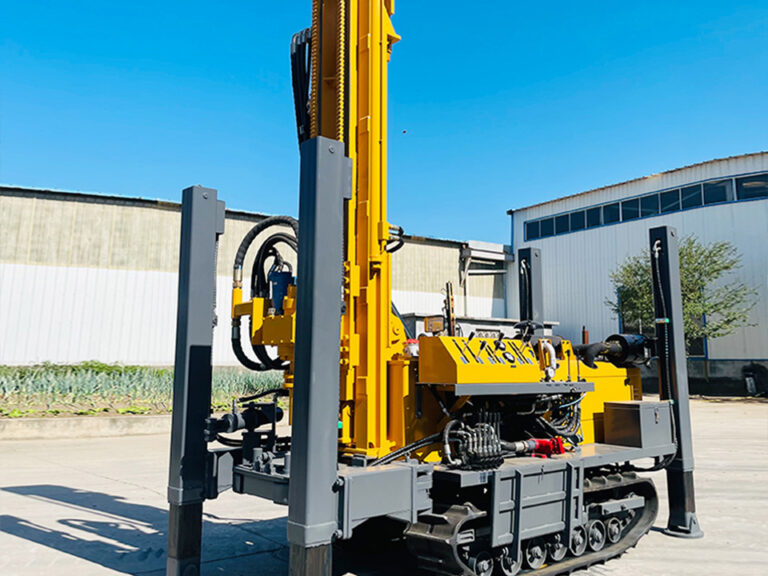
Rig Stability and Outrigger Design for Safer Field Operations

A hard look at drilling rig stability, hydraulic outriggers, ground contact, setup discipline, and the structural design choices that separate a field-ready drilling rig from a machine that only looks strong in a catalog.
Mast Height, Rod Handling, and Pipe Capacity: What Matters

A hard-nosed buyer’s guide to drilling rig mast height, rod handling, pipe capacity, and the hidden productivity losses buried inside weak rig specifications.
How to Choose Rig Mobility for Rural, Urban, and Mining Sites

Rig mobility is not about picking the biggest machine. It is about whether the drilling rig can legally, safely, and profitably reach the site, work there, and leave without turning transport into a hidden cost center.
Labor Cost per Meter: Crew Benchmarks for Rig Buyers

Rig buyers often compare drilling depth, engine power, and purchase price. That is too shallow. This guide shows how labor cost per meter changes when crew size, setup time, mud work, and real field output are included.
How Many Crew Members Does a Water Well Rig Really Need

Most water well rigs don’t need a big crew. They need the right crew. This article breaks down the real manpower math behind 150–200m portable rigs, manual rod handling, automatic rod handling, mud support, casing work, and the payroll mistakes buyers quietly make.
Which Drilling Mud Fits Your Rig, Formation, and Well Goal

Most buyers pick the rig first and treat drilling mud like a side issue. I think that’s backward. Mud choice affects hole stability, cuttings transport, development quality, crew error tolerance, and the real cost of the well.
Mud Rotary or DTH: Which Drilling Method Fits Your Jobs

Most buyers compare rigs. Smart buyers compare failure modes. Mud rotary wins in unconsolidated formations and larger-diameter water wells; DTH wins in hard rock and straight-hole penetration. The real question is not which method looks stronger on a brochure. It is which method survives your geology, your water target, and your cost structure.
DTH Hammer Compatibility: How to Validate Rig-Air Matching

Most DTH hammer compatibility problems are not “hammer problems.” They are system problems: pressure drop, bad air volume assumptions, wrong backhead or shank logic, weak rig feed, and supplier claims built on brochure conditions instead of field conditions.
How Casing Design Determines Rig Class, Bit Size, and Airflow

Most drilling mistakes start before the rig arrives. They start on paper, when buyers treat casing as an afterthought instead of the geometry that controls borehole diameter, annular seal space, drilling method, compressor demand, and ultimately rig class.
Diesel vs Gas Engines for Remote Drilling Operations

Diesel dominates remote drilling for a reason—but not always. Here’s the real trade-off between torque, fuel logistics, uptime, and cost.
What Borehole Diameter Do You Need for Common Casing Plans?

Most drilling failures don’t start at the rig—they start on paper. Borehole diameter vs casing size is where projects quietly go wrong.