“The Drilling Rig gave us a true one-stop solution. Their team matched the right rig, compressor, and drilling tools for our project, and the engineering support stayed fast and professional from quote to delivery.”
Export Packaging Standards for Rigs, Hammers, and Compressors
Bad crates lie.
A supplier sends clean loading photos. The buyer relaxes. Six weeks later, someone opens the container and finds bent guards, rusty threads, cracked gauges, missing spares, or a crawler rig that shifted because the “packing team” treated heavy machinery like furniture.
Table of Contents
Nice photo. Bad job.
Export packaging standards are not about making cargo look respectable at the factory gate. They’re about proving—when claims start—that the rig, DTH hammer, compressor, rods, tools, documents, and lifting points were protected with a method, not hope.
A container is not a showroom. The World Shipping Council reported 576 containers lost at sea in 2024 out of more than 250 million containers transported, which is low statistically but still enough to remind exporters that ocean freight is rough, wet, unstable, and full of handling risk. (worldshipping.org)
So no, “wooden crate included” is not enough.
The Packaging Standard Nobody Wants to Discuss: Accountability
The real standard is not “thick wood.” It’s traceability.
Who packed it? Which crate number? Which parts went inside? Which lifting points were marked? Which rust protection was used? Which photos were taken before the crate closed?
Most buyers ask, “Is it packed well?”
I’d ask: Can you prove how it was packed after the buyer files a claim?
Because once cargo reaches Mombasa, Callao, Jebel Ali, Durban, Santos, or an inland yard with a rough forklift driver, the argument gets ugly. Factory blames the port. Forwarder blames handling. Buyer blames the supplier. Insurance asks for photos. Suddenly everyone becomes a packaging expert.
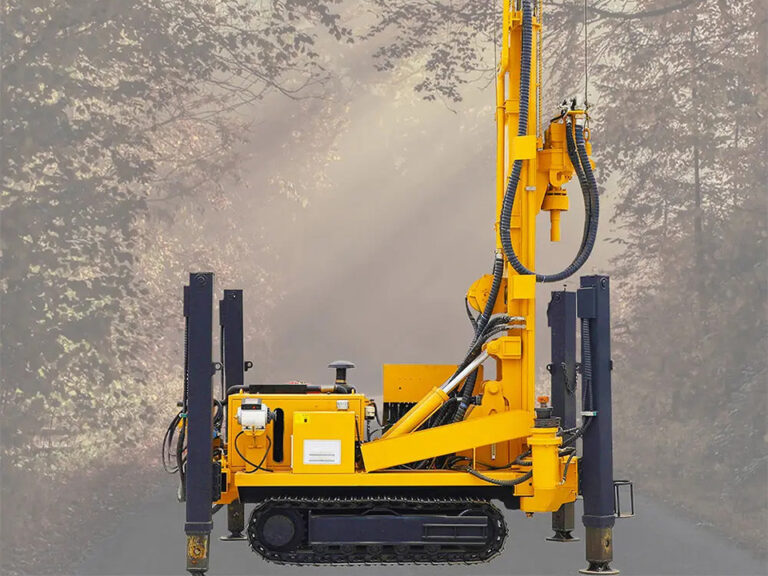
For a heavy-duty diesel engine rotary DTH drilling rig, export packaging should cover the crawler frame, mast support, hydraulic cylinders, engine bay, control box, hoses, fittings, exposed paint, loose tools, and DTH accessories. Not one layer of plastic. Not two random straps.
If the supplier cannot show inside-the-crate photos before closing, the packaging file is incomplete.
Period.
ISPM 15 Is Not a Stamp Decoration
Some factories treat ISPM 15 like decoration.
Wrong mindset.
ISPM 15 exists because untreated wood packaging can move pests across borders. USDA APHIS states that regulated wood packaging material used to support, protect, or carry cargo must be treated and certified under ISPM 15. The same standard is used for exports to meet importing-country requirements. (aphis.usda.gov)
That sounds boring until the shipment gets held.
A missing mark, hidden mark, cut-off mark, or unmarked dunnage under the rig can create customs delay, re-treatment cost, extra port storage, or buyer frustration. The machine can be perfect. The wood can still become the problem.
I frankly believe this is one of the most underestimated mistakes in machinery export crating. Not because ISPM 15 is hard. It isn’t. The problem is last-minute sloppiness.
Someone trims a board. Someone swaps a pallet. Someone adds raw timber blocks under the frame.
Then compliance disappears.
What ISPM 15 Should Cover in Heavy Equipment Export Packaging
Packaging Item
ISPM 15 Concern
Practical Export Rule
Common Failure
Wooden crate panels
Solid wood may require compliant treatment
Use marked, treated wood where required
Mark hidden, missing, or unreadable
Wooden pallets
Direct contact with customs inspection
Stamp must remain visible after loading
Pallet replaced at last minute
Dunnage under rig frame
Often forgotten because it is “temporary wood”
Treat and mark if regulated
Unmarked blocks trigger inspection
Internal blocking timber
Still part of wood packaging material
Document and photograph before closing crate
Buyer cannot prove compliance later
Plywood or processed wood
Often exempt depending material and thickness
Confirm destination rules before assuming
Supplier mixes plywood with raw blocks
Rigs Need Blocking, Not Hope
The biggest rig-packaging sin is movement.
Not rust. Not scratches. Movement.
A crawler rig has weight concentration, mast leverage, track friction, hydraulic lines, cylinders, tanks, guards, and small protrusions that always seem to find the weakest part of the crate. If the machine shifts inside a container, even slightly, damage starts.
A gauge breaks. A hose fitting bends. A radiator guard takes a hit.
London P&I warned that heavy machinery may be covered by timber packing that hides proper lashing points, and that securing the timber casing is useless if the machine inside remains the moving mass. (londonpandi.com)
For a factory-direct Kaishan KT5H down-the-hole drill rig, the packaging plan should respect crawler load, mast angle, control cabinet position, DTH drilling components, and lifting at destination. “Drive it in and tie it down” is not a plan. It’s a gamble.
Drilling Rig Shipping Packaging Checklist
A serious drilling rig shipping packaging plan should include:
Base blocking under structural frame points, not weak sheet metal.
Wheel or track chocking to stop forward and backward movement.
Mast support brackets if the mast is folded or laid down.
Hydraulic cylinder protection with rod covers, grease, or anti-rust film.
Battery isolation and fuel/oil handling according to carrier rules.
Control panel waterproof wrapping with desiccant where needed.
Visible lifting-point labels with arrows and load notes.
Container floor load review, especially for concentrated crawler weight.
Before-close photos proving blocking and lashing.
After-loading photos from front, rear, sides, and container door.
Some factories hate this level of detail.
Good.
That’s the point.
Hammers and Bits: Small Cargo, Expensive Damage
The little parts cause the nastiest arguments.
A DTH hammer is dense, machined, threaded, oily, and expensive enough to start a dispute but small enough for careless packing. One damaged thread. One missing sub. One bit box smashing against a hammer body for 35 days.
That’s enough.
For hammers, the best export packaging for drilling rigs and compressors is not just “put accessories in a wooden box.” Hammer bodies need oiling, thread protectors, separation, model labels, and a packing list that doesn’t read like a mystery novel.
When suppliers ship a diesel hydraulic rotary second-hand mining drilling rig, accessory packaging becomes even more sensitive. A used rig already has wear. Buyers expect that. But missing spares, mixed hammer parts, dented threads, unlabeled hoses, and toolboxes full of random metal kill trust fast.
A supplier’s accessory packing list tells you more about their after-sales culture than their brochure does.
Compressors Hate Moisture More Than Salespeople Admit
Compressors hate moisture.
People talk about frames and engines, but the hidden killers are condensation, panel seepage, radiator damage, gauge shock, intake contamination, and cheap wrapping that traps water instead of blocking it.
Small stain. Big warning.
Allianz Commercial reported that machinery damage/failure accounted for 1,860 shipping incidents globally in 2024, while fire incidents reached 250, up 20% year-on-year. Not every case came from bad packaging, but the message is clear: machinery risk during transport is real. (commercial.allianz.com)
Compressor export packaging should include:
Intake and exhaust sealing.
Panel waterproofing.
Desiccant bags inside protected cavities where suitable.
VCI film or anti-rust oil on exposed steel.
Rubber hose bend protection.
Shock protection around gauges and filters.
Clear “do not stack” and “lift here” marks.
Radiator fin protection.
Spare filter packaging in sealed cartons.
For an integrated blasting drilling rig from a China factory, don’t use one generic packing logic for everything. The rig needs movement control. The compressor needs moisture and vibration control. DTH accessories need thread and corrosion control.
Same shipment. Different enemies.
Corrosion Protection for Export Shipping
Rust is the claim nobody respects until the buyer zooms in.
Corrosion protection for export shipping is not “wrap it in plastic.” Sometimes plastic makes things worse because condensation gets trapped, especially when cargo moves from factory humidity to port heat to ocean temperature swings to inland storage.
The better approach depends on transit time, route, storage days, humidity, exposed machined surfaces, and transport method.
Practical Corrosion-Control Matrix
Component
Risk Level
Protection Method
Inspection Evidence
DTH hammer body
High
Anti-rust oil, VCI wrap, thread caps
Close-up photo before boxing
Drill rods
High
Bundled spacing, oiled threads, end protectors
Bundle photos + count sheet
Hydraulic cylinder rods
High
Grease/VCI sleeve, physical guard
Rod close-up before wrapping
Compressor control panel
Medium-High
Moisture barrier, desiccant, sealed cover
Panel wrapped photo
Rig frame
Medium
Paint check, touch-up, drainage clearance
Final exterior photo
Tool box/spares
Medium
Sealed cartons, itemized list
Open-box and closed-box photos
Radiator/fan area
Medium
Board or frame guard, no pressure on fins
Protected radiator photo
Corrosion protection for export shipping means using anti-rust oil, VCI materials, moisture barriers, desiccants, sealed cartons, and protected contact surfaces to reduce rust and electrical moisture damage during sea freight, port storage, and inland transport.
Not fancy.
Just correct.
The Documentation Pack Is Part of the Packaging
A crate without documents is not finished.
It’s covered cargo.
CargoNet reported 3,625 cargo theft incidents in 2024, a 27% increase from 2023. Theft is not packaging damage, but it belongs in the same risk family: weak shipment records make loss, mismatch, and claim responsibility harder to prove. (cargonet.com)
So I don’t trust vague packing lists.
“Accessories: 1 set.”
What set? Hammer? Bits? Wrench? Hose? Grease pump? Filter? Seal kit? Manual? Coupling?
That kind of packing list starts arguments.
Document
Why It Matters
Who Uses It
Packing list by crate number
Prevents missing-parts disputes
Buyer, customs broker, insurer
ISPM 15 certificate or supplier declaration
Supports wood packaging compliance
Customs, buyer
Loading photos
Proves condition before departure
Buyer, insurer, supplier
Lashing/blocking photos
Shows internal cargo securing
Insurer, freight forwarder
Lifting-point diagram
Reduces forklift/crane damage
Port handler, buyer
Center-of-gravity marking
Prevents unsafe lifting
Crane operator
Rust-prevention note
Explains oil/VCI/desiccant method
Buyer’s maintenance team
Unpacking instruction
Prevents buyer-caused damage
End user
Send documents before arrival.
Not after the complaint.
Export Packaging Standards by Equipment Type
A rig is not a compressor. A hammer is not a toolbox. Drill rods are not harmless steel sticks.
Each item has its own damage mode. If the supplier packs everything with the same “one crate fits all” mentality, something will suffer.
Usually the small expensive thing.
Equipment Type
Main Packaging Threat
Minimum Standard
Better Standard
Crawler drilling rig
Movement, hydraulic damage, poor lifting
Base blocking, track chocks, waterproof controls
Full lashing photos, mast support, labeled lifting points
Crate-number mapping, photo evidence, QR-coded list
Used mining rig
Pre-existing wear disputes
Condition photos before packing
Video inspection + damage map + signed pre-shipment record
Thick wood is only useful when the inside logic is right. If the machine can shift, if unmarked dunnage causes customs trouble, if exposed threads rust, or if the compressor panel sweats inside cheap wrapping, the crate is just a wooden coffin for a future dispute.
How to Pack Heavy Machinery for Export Without Fooling Yourself
Start with the claim.
Imagine the buyer already complained: bent gauge, rusty hammer thread, missing bit, scratched paint, forklift hole, hydraulic leak, crushed radiator fin, control panel moisture, wrong crate number, or customs delay because the wood mark is missing.
Now work backward.
That is how to pack heavy machinery for export.
Step 1: Measure the Real Load
Brochure weight is not shipment weight. After spare parts, rods, toolboxes, oils, brackets, wooden base, steel straps, and accessories are added, the gross weight changes. Mark the crate weight in kilograms. Mark the center of gravity if the machine is awkward.
Don’t make the crane operator guess.
Step 2: Identify Weak Contact Points
Don’t let blocking press against hoses, guards, radiator fins, filters, plastic tanks, electrical panels, or exposed fittings.
A crate can be strong and still damage the cargo inside.
Step 3: Choose Crate, Skid, or Bare-Machine Securing
Not every machine belongs inside a full crate. Some crawler rigs are better shipped as secured bare units with sensitive parts protected, while hammers, bits, electrical parts, filters, manuals, and tools need sealed cartons or crates.
CMA CGM describes heavy equipment and industrial machinery as cargo requiring specialist handling, especially when dimensions exceed standard container limits. (cma-cgm.com)
So stop pretending “wooden case” is always the premium answer.
Sometimes it hides bad securing.
Step 4: Build a Photo Record Before Closing
The outside photo is mostly marketing.
The inside photo is evidence.
Show blocks, braces, wrapped cylinders, thread caps, labels, crate numbers, ISPM 15 marks, lashing points, and the machine before plywood hides everything.
Step 5: Send Unpacking Instructions Before Arrival
Buyers damage cargo too.
Someone cuts the wrong strap. Someone lifts from a weak guard. Someone removes a mast support too early. Someone uses forklift forks under the wrong frame area.
Then the supplier gets blamed.
Send the unpacking guide early, with photos.
The Hard Truth About Cheap Packaging
Cheap packaging is rarely cheap.
It’s deferred payment.
A supplier saves $180 on wood, $45 on desiccant, $30 on thread protectors, and $12 on labels. Then one hydraulic rod rusts, one hammer thread gets dented, one compressor gauge breaks, and the buyer demands free parts by air freight plus a discount on the next order.
Where did the savings go?
Gone.
The worst packaging usually comes from companies obsessed with loading-photo performance: clean crate, big logo, plastic wrap shining under workshop lights. But inside, the hammer rubs against bits, rods have weak end protection, the hydraulic cylinder rod is exposed, and nobody photographed the blocking before closing.