“The Drilling Rig gave us a true one-stop solution. Their team matched the right rig, compressor, and drilling tools for our project, and the engineering support stayed fast and professional from quote to delivery.”
Container Loading Plans That Reduce Damage and Handling Risk
I’ve watched a buyer open a container and go silent.
Not angry first. Silent. That’s worse, actually, because the damage wasn’t spectacular enough for an easy insurance story, yet it was ugly enough to poison the whole deal: rubbed paint on the mast, a hydraulic hose scuffed raw, one toolbox corner smashed into a guard plate, and everybody suddenly pretending they “need to check with logistics.”
Bad loading kills trust.
Table of Contents
And here’s the part some exporters don’t like hearing: a machine can be well-built, correctly tested, photographed beautifully in the factory yard, and still arrive looking second-hand because the container loading plan was treated like warehouse labor instead of engineering work. Why spend months selling a rig, then let the final 90 minutes decide whether the buyer thinks you’re professional?
The First Accident Happens Before the Ship Moves
But nobody writes that on the claim form.
They write “damage during transport,” which sounds clean, distant, almost nobody’s fault. In reality, a lot of machinery damage starts while the cargo is still inside the factory gate: wrong loading direction, weak timber under a heavy crawler frame, loose drill rods thrown into empty space, and straps placed where they photograph well—not where the load actually wants to run when the truck brakes hard.
A container isn’t a quiet storage box. It’s a steel drum with doors. It gets lifted, jerked, twisted, stacked, parked, inspected, baked under port sun, and sometimes dragged through a supply-chain argument that nobody budgeted for.
The FMCSA cargo securement rules make a blunt point that applies far beyond road transport: securement, working load limits, blocking, and bracing are part of controlling cargo movement, not decorative extras. The agency says those requirements apply broadly across transported commodities, including securement systems using blocking and bracing.
So no, “we used straps” doesn’t impress me.
What a Serious Container Loading Plan Actually Controls
A good container loading plan controls five things before stuffing begins:
Risk Area
Weak Loading Habit
Better Container Loading Plan
Weight distribution
Put the heaviest unit wherever it fits
Map axle weight, container floor load, and center of gravity before loading
Movement
Strap over the frame and hope
Use blocking, bracing, lashing points, wedges, and anti-slip material
Contact damage
Let attachments touch painted surfaces
Separate steel-to-steel contact with timber, rubber, foam, or custom brackets
Unloading
Pack accessories wherever space remains
Create a staged unloading sequence with visible labels and access clearance
Port-side delay
Missing photos, dimensions, or packing notes
Keep loading photos, container seal photos, item list, and center-of-gravity notes
Yet buyers still compare machines only by horsepower, drilling depth, compressor match, and price. I get it. Specs are easy to read. But if you’re comparing a KG726 / KG726H ground drilling rig with another supplier’s machine, the loading plan should sit right beside the quotation—not hidden until the day the container doors close.
“Container Stuffing” Is a Cute Phrase for a Dangerous Job
Stuffing. What a bad word.
It makes the job sound like someone is filling a cupboard, when the real task is closer to controlled force management: steel mass, fork pockets, crawler tracks, mast geometry, accessories, hose routing, crate marks, timber compression, and destination unloading capacity all fighting for space inside one narrow box.
From my experience, the worst load plans usually look efficient in photos. Everything is tight. No wasted room. The salesman smiles. Then the buyer needs two forklifts, a cutting tool, three nervous workers, and a very expensive afternoon to remove the machine without damaging it.
TT Club has warned that two thirds of cargo damage claims are caused or made worse by poor packing practices, including weak load distribution, poor cargo securing, inaccurate documentation, and cargo-description errors. That’s the boring stuff. That’s also where money leaks out of a shipment. (ttclub.com)
I frankly believe exporters undercharge for proper loading work and then overpay later in complaints, discounts, spare-part giveaways, and reputation damage.
Heavy Equipment Container Loading Has Four Hidden Failure Points
1. Center of Gravity Gets Treated Like a Guess
A rig standing calmly on concrete can become a bully inside a container.
Put a mast-heavy machine into a box, add vibration, road braking, crane handling, weak dunnage, and a few degrees of tilt, and suddenly the “stable” machine has opinions. It leans. It creeps. It loads one timber block harder than expected. Then one strap carries work it was never meant to carry.
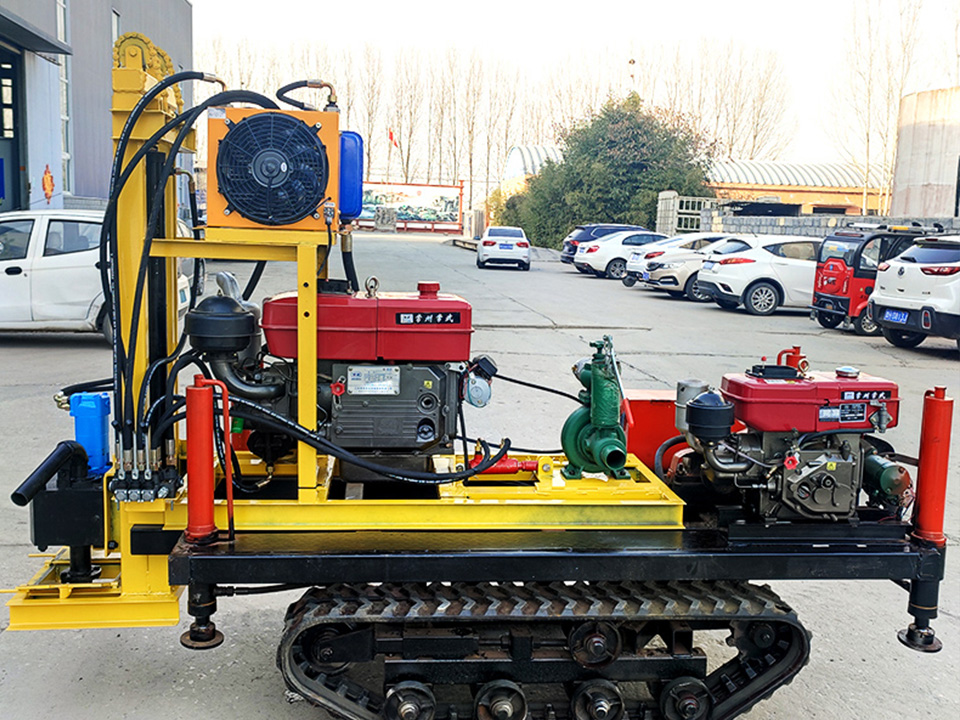
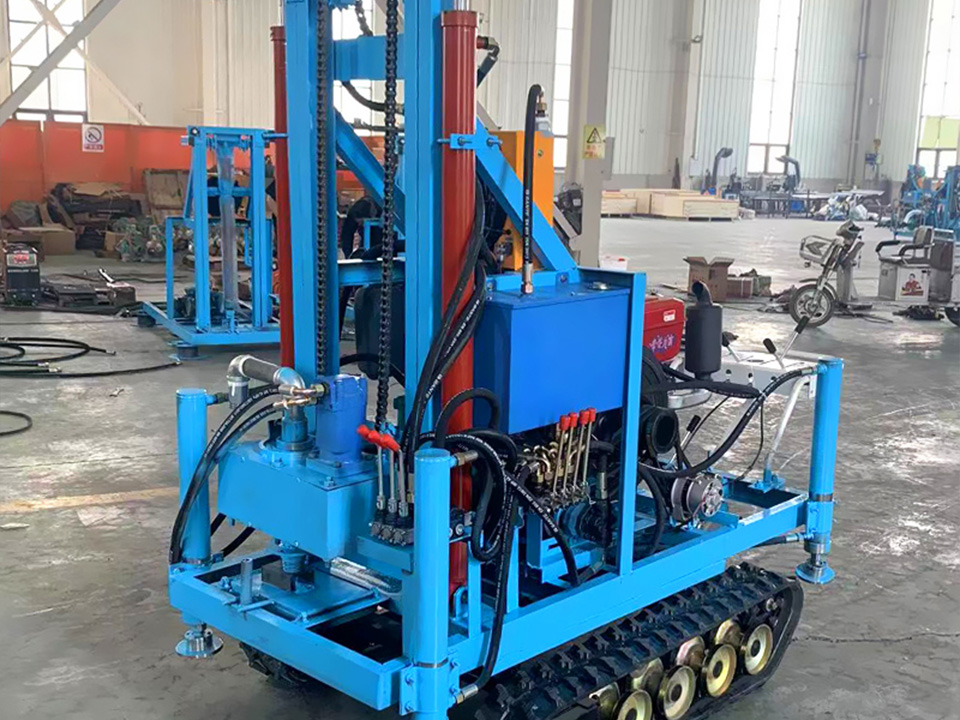
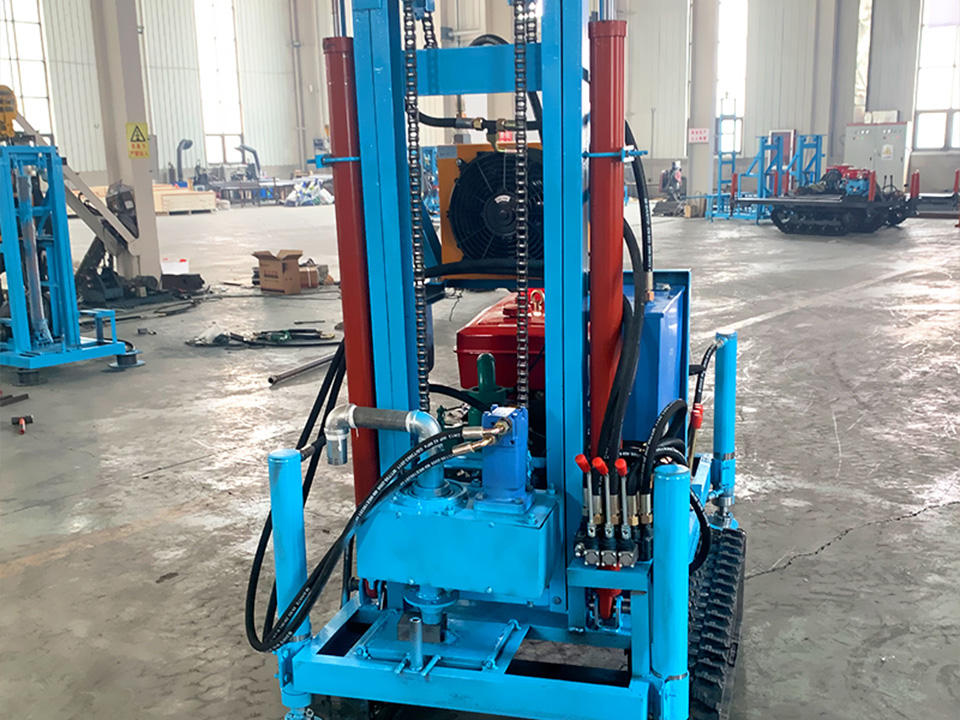
For equipment such as a KG910A crawler hydraulic rock drill, the crawler base may look forgiving, but tracks still need directional blocking. Steel track pads can bite, shift, rub, and punish a container floor if the weight path is lazy.
People call them “accessories” because they aren’t the main machine. Inside a moving container, that word becomes dangerous. A 20 kg steel part doesn’t need a long travel distance to dent a cover plate or crack a plastic gauge. It only needs one hard brake and a little room to gather speed.
Pack accessories like cargo, not leftovers.
3. Paint Protection Gets Laughed Off
“Only scratches.”
I hate that phrase.
Paint damage is not just vanity on export machinery; it is the buyer’s first visible clue about how the supplier handles details, and if the customer sees rubbed paint, exposed steel, rusty edges, or hydraulic fittings scraped during transport, the mental discount starts before the engine even turns over.
4. Unloading Is Ignored Until It Hurts
A load can be brilliant for the factory and stupid for the buyer.
If the machine faces the wrong way, if the lifting points are buried, if the accessory crates block forklift access, if the buyer has a small yard and only one rough-terrain forklift, your beautiful loading density becomes their unloading trap.
A compact unit like the KT11S drilling equipment and core drilling rig should be positioned with unloading sequence in mind, not just container space. And for heavier mining-style equipment like the KT12 diesel DTH mining drilling rig, the whole plan needs stricter thinking: support points, lashing angle, crawler blocking, mast clearance, and destination handling gear.
Documentation Is Not Bureaucracy. It’s Ammunition.
However, paperwork only looks boring until somebody asks who caused the damage.
In February 2024, the U.S. Federal Maritime Commission published its final rule on detention and demurrage billing practices, requiring clearer invoice information and creating a tighter relationship between charges and the failure to pick up cargo or return equipment on time. (fmc.gov) The rule became effective in 2024, with related Federal Register material listing May 28, 2024 as the effective date for the final rule.
Now, does a drilling rig exporter need to become a maritime lawyer? No.
But when a container sits because the consignee can’t unload safely, customs wants clarification, the port asks for access, or the buyer claims damage, your loading records become leverage. Not “nice to have.” Leverage.
The Photo Set I’d Demand Before Paying Balance
I would ask for these images every time:
Photo Type
Why It Matters
Empty container floor and wall condition
Shows pre-loading container damage or contamination
Machine before loading
Confirms paint, guards, hoses, panels, and accessories condition
Forklift or ramp loading moment
Shows handling method and machine orientation
Blocking and bracing close-ups
Proves the cargo was restrained, not just placed
Accessory packing photos
Prevents “missing parts” and internal collision disputes
Final door-open photo
Shows final arrangement before closing
Seal photo
Connects the loaded condition to the shipped container
And yes, I know some suppliers think this is too much.
Fine. Then explain the scratch later. Explain the missing crate. Explain why the buyer’s first WhatsApp message after arrival is a photo of damage instead of a second inquiry.
Ocean Loss Gets Headlines. Internal Damage Gets Invoices.
People love the dramatic stories—containers falling into the sea, storms, vessel fires, viral photos from port disasters.
But for heavy equipment buyers, the more common headache is less cinematic: the container arrives, the seal matches, the paperwork clears, and the machine inside has been chewing itself for weeks.
The World Shipping Council reported 576 containers lost in 2024 out of more than 250 million containers transported, equal to about 0.0002% of containers moved. It also noted that 2024 losses rose from the record-low 221 containers lost in 2023, but remained below the 10-year average. (worldshipping.org)
That number tells us something important, but not what lazy people think it tells us.
It does not mean cargo damage is rare. It means total container loss is rare. Internal damage can happen quietly, inside a perfectly delivered container, with no news story and no heroic insurance adjuster.
And theft pressure is real too. CargoNet reported record-breaking cargo theft activity across the United States and Canada in 2024, with 3,625 reported incidents and a 27% increase from 2023; its Q1 2024 report alone counted 925 supply-chain risk events, up 46% year over year. (cargonet.com)
For machinery exporters, that means cleaner labels, better handoff records, tighter seal documentation, and fewer vague packing lists. “One set of accessories” is not documentation. It’s a future argument.
Block and Brace Loading Is Where the Truth Shows
Here’s the ugly truth: most bad loading photos expose themselves immediately.
The timber is too thin. The brace is decorative. The strap angle is lazy. The machine sits on a contact point nobody checked. Accessories are wedged into a corner like scrap. The crew took a final door photo, but no one photographed the actual restraint system because—well, there wasn’t much to photograph.
Blocking and bracing are not about filling gaps. They’re about resisting force.
A proper block supports a load path. A brace fights the direction the cargo wants to move. Lashing works with the frame, not against a fragile panel. Anti-slip material reduces movement before the strap has to work. Edge protection stops webbing from getting chewed by steel corners.
Ask one nasty question before closing the doors: if this container brakes hard, tilts, or gets lifted unevenly, where does the machine try to go?
If nobody can answer, the loading plan isn’t finished.
Practical Rules for Export Packaging for Machinery
Use this checklist before loading drilling rigs, compressors, and other heavy equipment:
Loading Decision
Recommended Practice
Failure If Ignored
Machine direction
Face the unit for the safest unloading route
Buyer drags or twists the machine during unloading
Track/wheel blocking
Block both travel directions and side movement
Unit creeps during road or rail vibration
Mast protection
Add padding at rub points and secure folded sections
Paint damage, bent guards, or hose abrasion
Loose accessories
Pack in labeled crates or fixed steel racks
Internal collision damage and missing-part disputes
Hydraulic parts
Cap exposed fittings and protect gauges
Oil leaks, contamination, broken gauges
Documentation
Photograph every stage
Weak claim defense and buyer distrust
This table looks simple. It isn’t.
The hard part is discipline—doing it every shipment, even when the order is small, even when the buyer is pushing for fast delivery, even when the container arrives late and the factory wants the yard cleared before dinner.
How to Load Heavy Equipment in a Container Without Creating a Claim
Start with measurement.
Not vibes. Not “it should fit.” Not the old factory habit of measuring only after the truck has arrived and everyone is already sweating.
Measure overall length, width, height, operating weight, shipping weight, track width, mast folded height, protruding parts, accessory crate count, estimated center of gravity, and unloading method at destination. Then decide whether the machine ships assembled, partly dismantled, skid-mounted, wheel-mounted, or split across cargo zones.
I don’t like “maximum space use” as the first goal.
Maximum safe arrival matters more.
Because a 40HQ container packed to the millimeter can be a fake efficiency win: the exporter saves a little space, then the buyer spends real money on unloading, repair, repainting, and angry emails. That is not optimization. That is cost dumping.
A Better Loading Sequence
Inspect the container condition.
Place floor protection or timber where needed.
Load the main machine first if it controls the center of gravity.
Set wheel, crawler, or skid blocks immediately.
Add side bracing before accessory packing.
Pack accessories in planned zones, not empty corners.
Protect all contact points.
Photograph every stage.
Close with a final item checklist.
Record seal number and container number.
Short list. Long consequences.
OEMs Need to Stop Pretending Packing Is Separate From Quality
And this is where I’ll be blunt.
A buyer does not experience your machine quality in neat categories. They don’t say, “The rig is good, but the loading execution was poor, so I will emotionally separate those departments.” No. They see scratches, dents, broken gauges, bent covers, missing parts, and difficult unloading—and they decide the supplier is careless.
Maybe that’s unfair.
It’s still how buyers think.
A real container loading optimization process should sit inside the factory’s quality system. Loading SOP. Photo checklist. Approved dunnage. Accessory packing standard. Staff training. Container floor inspection. Seal record. Unloading note. Model-specific packing method.
Not one generic method for every machine.
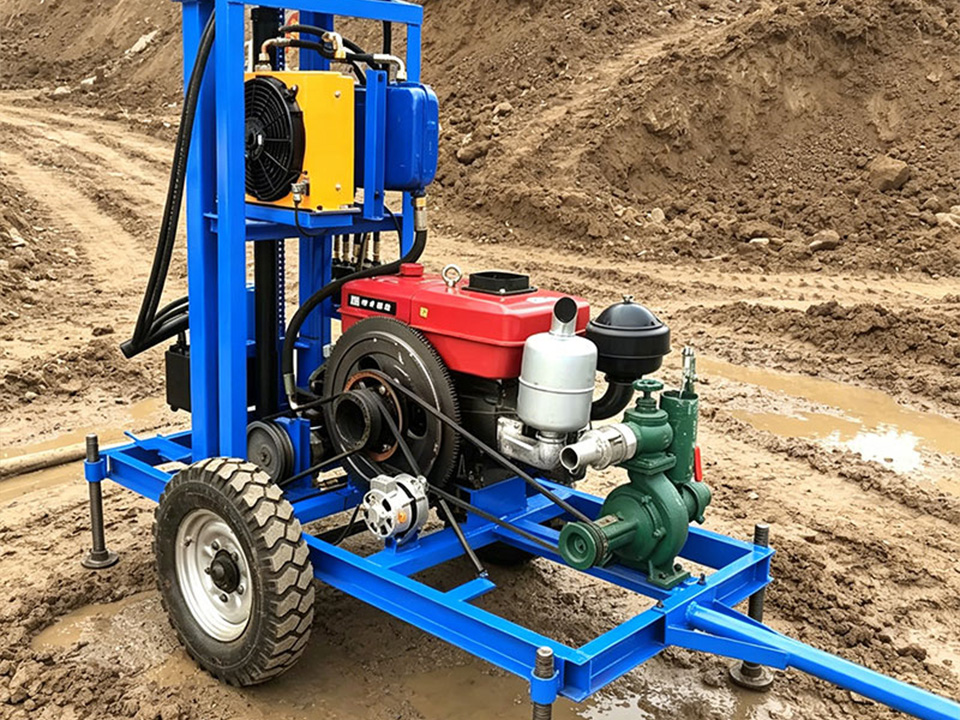
A crawler-mounted rock drill, compact drilling unit, DTH mining rig, and trailer-mounted water well machine all behave differently in a container. Same steel box. Different risk pattern.
FAQs
What is a container loading plan?
A container loading plan is a documented method for arranging, securing, protecting, and unloading cargo inside a shipping container so weight distribution, movement control, handling access, and damage prevention are decided before loading starts. For heavy equipment, it should include dimensions, center-of-gravity logic, blocking, bracing, packing photos, and unloading sequence.
In plain shop-floor language, it tells the loading crew what goes where, what gets blocked, what gets padded, what gets photographed, and how the buyer is supposed to unload the cargo without wrecking it.