“The Drilling Rig gave us a true one-stop solution. Their team matched the right rig, compressor, and drilling tools for our project, and the engineering support stayed fast and professional from quote to delivery.”
How to Choose Rig Mobility for Rural, Urban, and Mining Sites
The Expensive Lie Buyers Tell Themselves About Rig Mobility
Rig mobility kills deals.
I have watched buyers obsess over drilling depth, compressor pressure, hammer size, rotary torque, diesel engine brand, and price per meter—then ignore the one thing that decides whether the rig can actually earn money: can the machine reach the jobsite without legal trouble, recovery trucks, bridge problems, mud, tight streets, or angry local authorities?
That is not theory. That is how money disappears.
A drilling rig may look powerful on paper. But if it needs three trucks, two escorts, road permits, a low-bed trailer, a crane for unloading, and half a day to cross 2 km of soft farm road, then the buyer did not purchase productivity. He purchased friction.
Table of Contents
Rig mobility means the practical ability of a drilling rig to move between transport routes, access roads, working pads, and drilling positions without creating unacceptable cost, safety risk, legal exposure, or downtime.
And here is the ugly truth: many buyers choose the rig before they understand the road.
The World Bank’s Rural Access Index measures the share of rural people living within 2 km of an all-season road, which sounds like a public-development statistic until you realize it is also a drilling equipment filter. If an area lacks dependable all-season access, a heavy truck mounted drilling rig may become a transport problem before it becomes a drilling solution.
So what should a serious buyer do first?
Stop asking, “How deep can it drill?” Ask, “Can it arrive, reposition, drill, and leave—under my market’s transport reality?”
Three Jobsite Worlds, Three Mobility Rules
Rural, urban, and mining sites punish bad rig mobility in different ways. The machine does not fail in the same place. It fails at the gate, on the slope, near the bridge, in the alley, or during relocation between holes.
Rural Sites: Mud, Bridges, Farms, and the Myth of “Any Truck Can Enter”
Rural drilling looks simple from a sales video. A water well rig drives into a village, drills a borehole, and everyone smiles.
But real rural access is usually messier: weak shoulders, seasonal mud, narrow village roads, old culverts, low-hanging power lines, terraces, soft soil after rain, and bridges nobody wants to certify in writing.
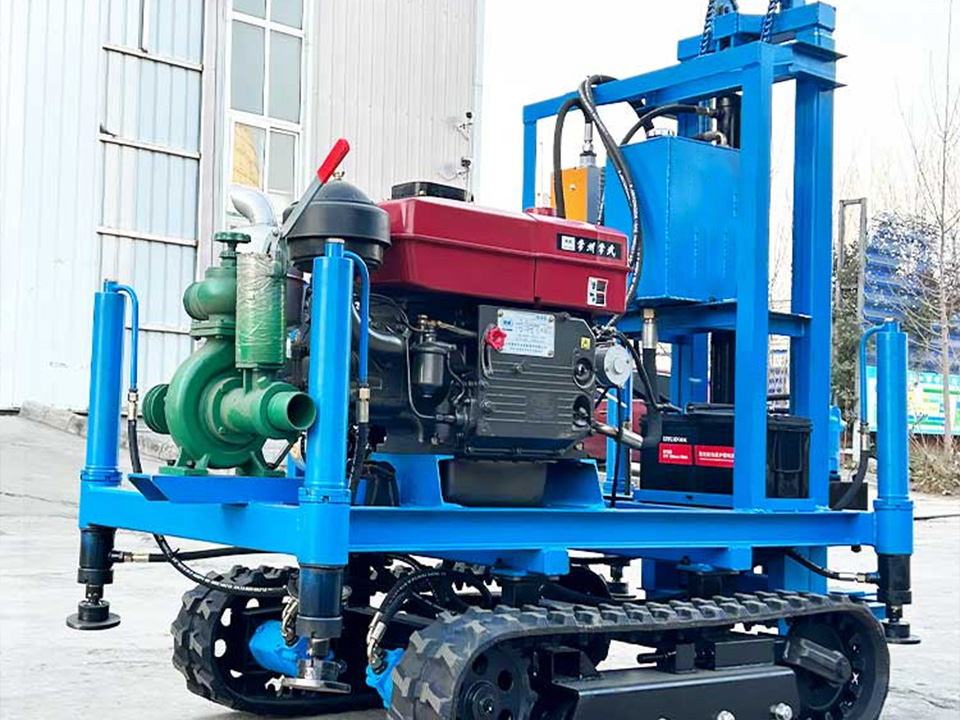
For rural water well and agricultural projects, I usually prefer mobility that reduces dependence on perfect roads. That often points toward compact crawler drilling rigs, trailer mounted drilling rigs, or smaller truck mounted units with realistic axle loads—not oversized machines pretending every road is a highway.
A crawler machine is slower on the road, yes. But on a poor access track, slow is not the enemy. Stuck is.
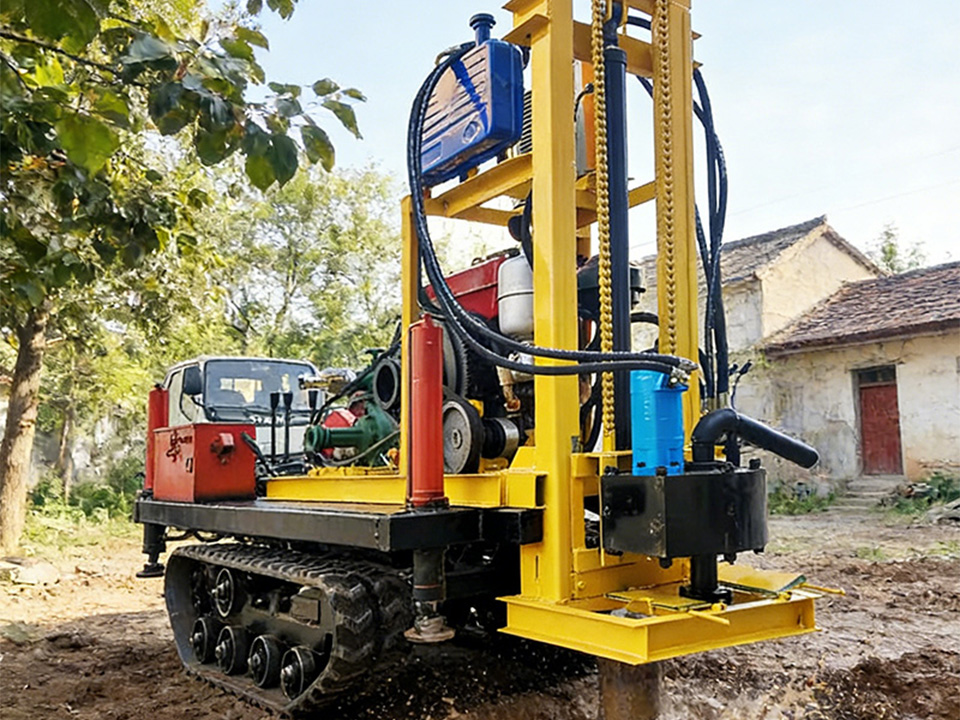
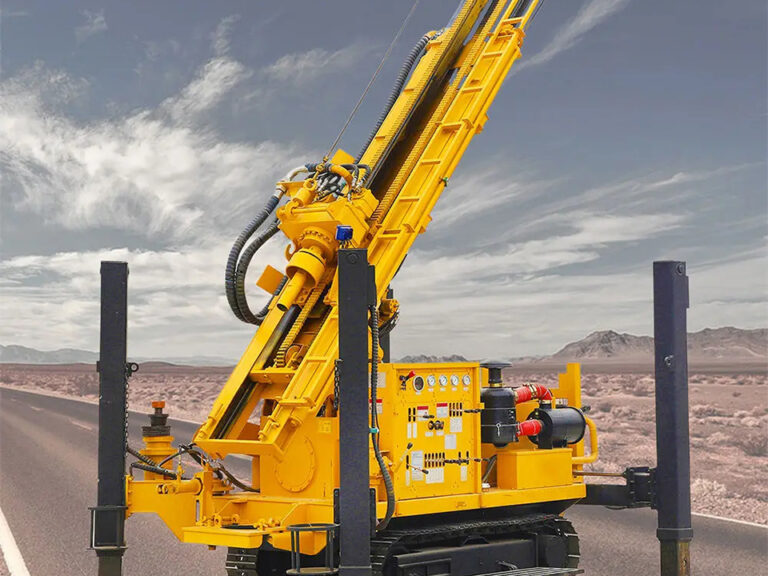
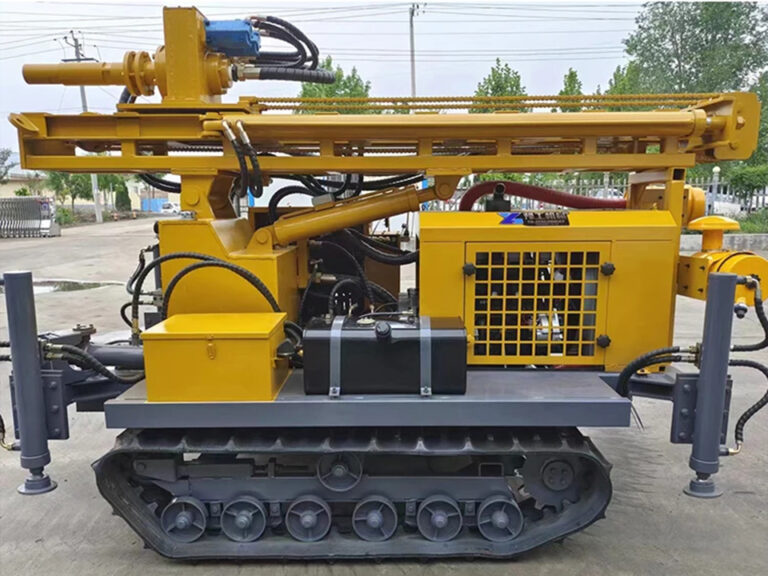
The KG726/KG726H crawler-mounted DTH drilling rig is a useful example of why platform choice matters: it uses a crawler base, has 350 mm ground clearance, 0–2.5 km/h travelling speed, and a climbing capacity listed at up to 30°, which makes the conversation less about highway speed and more about site entry, slope handling, and local repositioning.
Small details matter.
A rural contractor who drills 10 shallow wells across scattered villages may care more about unloading, daily relocation, and repair simplicity than maximum hole depth. Meanwhile, a buyer drilling hard rock in remote terrain may accept slower movement if the machine has enough stability, air demand compatibility, and climbing ability.
Urban Sites: Legal Transport Is the Real Boss
Urban work punishes width, noise, exhaust, weight, turning radius, and paperwork.
A machine may fit technically. But can it turn into the street? Can it pass under cables? Can it park without blocking a business entrance? Can it comply with road restrictions, axle load limits, low-emission zones, municipal working-hour limits, and police requirements for abnormal loads?
This is where many “cheap” rigs become expensive.
In the United States, federal vehicle weight logic is shaped by axle spacing and maximum gross weight rules under the Federal Bridge Formula. The common ceiling of 80,000 lb gross vehicle weight, 20,000 lb single axle, and 34,000 lb tandem axle is not just trucking trivia; it is a reminder that machinery transport is regulated by infrastructure limits, not buyer optimism.
Will your buyer’s country enforce the same numbers? No.
But the principle travels well: if the rig platform creates bridge, axle, escort, or permit problems, the drilling business inherits those problems every time the machine moves.
For urban or peri-urban drilling, I am suspicious of oversized crawler units unless there is a controlled jobsite, proper transport plan, and enough work volume to justify mobilization. A compact truck mounted drilling rig may win if road access is stable and legal. A trailer mounted drilling rig may win where the buyer already owns suitable towing vehicles and needs lower entry cost. A track mounted drill rig may still be better for soft ground or uneven plots, but only if transport into the city is realistic.
Not glamorous. Profitable.
Mining Sites: Mobility Is Safety, Not Decoration
Mining sites are different. They do not reward cute machines. They reward stability, repeatable relocation, controlled gradients, maintenance access, operator visibility, and enough mass to handle drilling forces.
But mass has a price.
The Mine Safety and Health Administration has repeatedly flagged powered haulage and machinery as major causes of serious and fatal mining accidents. In one 2024 MSHA fatality alert, the agency noted that it was the 21st fatality reported that year and the tenth classified as powered haulage. That is why I do not treat mining rig mobility as a brochure feature; I treat it as a safety-control decision.
Another MSHA case from January 2, 2024 described a tractor-trailer haul truck fatality during dumping, and MSHA noted that from 2018 to 2024 mine operators had reported 14 injury accidents involving over-the-road trucks tipping or rolling over while dumping, plus 28 injury accidents involving off-road mine haul trucks tipping or rolling over. That data should make any drilling buyer more cautious about slope, pad preparation, road geometry, and center-of-gravity assumptions.
For mine drilling, a purpose-built crawler DTH rig is usually easier to justify than a general transport-friendly platform. For example, the KT12 diesel crawler DTH mine drilling rig lists 242 kW power, 100–140 mm drilling diameter, 32 m drilling depth, 2800 N·m rotary torque, 0–4 km/h walking speed, and 10,000 kg weight—numbers that clearly point toward mining and rock drilling work rather than casual village mobility.
That does not make it “better” than a lighter unit. It makes it better for a certain kind of site.
And this is where buyers get fooled: they compare platforms without comparing the work environment.
The Mobility Matrix: Crawler, Truck Mounted, Track Mounted, or Trailer Mounted?
There is no universal best drilling rig platform. Anyone who says otherwise is selling inventory, not solving a job.
The right platform is the one that gives the lowest total cost per successful hole after transport, permits, unloading, positioning, drilling, service, fuel, operator time, and recovery risk are counted.
Rig Platform
Best Fit
Where It Fails
Mobility Strength
Commercial Risk
Crawler drilling rig
Mining, quarry, hard rock, uneven rural terrain
Long highway relocation, city restrictions, low-bed transport needs
Strong off-road movement and site repositioning
Transport cost can become high if jobs are scattered
Truck mounted drilling rig
Rural roads, highway-connected water well jobs, fast relocation
Muddy tracks, weak bridges, narrow urban streets
Fast between jobs when road access is good
Legal weight and access limitations can ruin scheduling
Better traction and stability than wheeled platforms
Requires transport support for distant jobs
Trailer mounted drilling rig
Budget-sensitive rural water well work, small contractors
Poor towing vehicles, bad roads, steep terrain
Lower purchase and transport complexity
Can become unstable or slow on rough access routes
Heavy mining DTH rig
Quarry, open-pit mining, blast holes, production drilling
Small farms, villages, urban access
High drilling stability and duty capacity
Overkill if the buyer only needs shallow rural wells
Notice the word “fit.” Not power. Not prestige. Fit.
A KG910A crawler hydraulic rock drill sits in the smaller hard-rock and quarry category, with 90–115 mm drilling diameter, max 25 m depth, 4500 kg weight, 9–13 m³/min air consumption, and 980 N·m rotation torque. Those figures make it more believable for ore, basalt, granite, and quarry work than for deep water well projects requiring larger depth and different circulation planning.
By contrast, the KT11S diesel-powered core drilling rig lists a Cummins 6LTAA8.9-C325 engine, 105–125 mm drilling diameter, 20 m drilling depth, 2800 N·m rotary torque, 15,000 kg weight, 22 km/h speed, and 22° grade ability. That creates a different mobility profile: heavier, more transport-sensitive, and more suitable for buyers who have the work volume and site conditions to justify the mass.
The Five Questions I Ask Before Recommending Rig Mobility
1. What is the worst 2 km before the drill pad?
Forget the highway. Everyone has a highway photo.
Show me the last 2 km. Mud? Sand? broken stone? village lane? slope? river crossing? old bridge? If the rig cannot survive the final approach, the purchase is already compromised.
The 2024 global work on road surface mapping from Mapillary-derived imagery is interesting because it reinforces something field people already know: road surface is not a minor detail. Paved versus unpaved access changes logistics, risk, and passability, especially outside major urban corridors.
So I want photos, GPS pins, slope estimates, rainy-season conditions, bridge width, and turning space. A buyer who cannot provide that information is not ready to choose rig mobility.
2. How often will the rig move?
A rig drilling one mine bench for months can tolerate a difficult mobilization. A rig drilling shallow rural wells across scattered farms cannot.
This is why some buyers lose money with “better” rigs. The machine has more power, more steel, more capability—and worse daily economics.
If your work is scattered, mobility efficiency matters more than maximum drilling capacity. If your work is concentrated, a heavier crawler drilling rig may pay for itself through stability and production.
3. Who owns the transport problem?
This question sounds rude. I ask it anyway.
Does the buyer own a low-bed trailer? Does he have a tractor head? Can he get road permits? Are cranes available locally? Can the operator load and unload safely? Who pays if the machine gets stuck before arrival?
Many suppliers quote the rig. Few quote the real mobilization chain.
And that is why buyers should treat drilling rig platform selection as a business calculation, not a catalog choice.
4. What legal road limits apply?
Every market has some version of weight, width, height, axle-load, bridge, or road-permit control. Enforcement varies. Risk does not disappear just because enforcement is weak.
A buyer moving heavy equipment across public roads needs to know whether the selected platform creates abnormal-load exposure. Even where authorities are flexible, weak bridges and culverts are not flexible.
Steel does not negotiate.
5. Is the terrain harder than the drilling?
Sometimes the borehole is not the hardest part. The approach road is.
This is common in rural Africa, mountainous Latin America, island markets, mining concessions, and agricultural regions where roads change after one rain. A technically capable rig that cannot move efficiently across those realities becomes commercially impractical.
Hard Rules for Rural, Urban, and Mining Rig Platform Selection
Choose Crawler Mobility When the Ground Is the Enemy
Crawler drilling rigs make sense when traction, ground pressure, slopes, and repositioning matter more than road speed. They are strong choices for quarry, mining, hard rock, poor rural access, and uneven sites.
But do not romanticize them. Crawler machines usually need transport assistance for long-distance relocation. Their strength is jobsite mobility, not highway freedom.
Choose Truck Mounted Mobility When Roads Are Reliable
Truck mounted drilling rigs are attractive when the buyer has road-connected jobs, frequent relocation, and predictable access. They can reduce mobilization time and make scattered work more efficient.
But they are vulnerable to weak bridges, urban restrictions, muddy tracks, and narrow access. A truck mounted rig is only as good as the road network beneath it.
Choose Trailer Mounted Mobility When Budget and Simplicity Matter
Trailer mounted drilling rigs can work for smaller contractors, rural water well projects, and lighter-duty applications. The upfront cost may be easier to handle, and the transport system can be simple if the towing vehicle is suitable.
But trailer platforms are not magic. Poor towing discipline, weak brakes, bad roads, and unstable ground can turn “low cost” into daily frustration.
Choose Heavy Mining Mobility Only When the Work Deserves It
Heavy mining rigs should be chosen for production drilling, blast holes, quarry operations, and hard rock projects where stability, drilling force, and duty cycle matter.
They should not be sold into light rural work just because the buyer thinks heavier means stronger. Heavier often means slower, costlier, and harder to move.
The Commercial Test: Can the Rig Make Money After Transport Reality?
Here is my private rule: if the buyer cannot explain how the rig will move between jobs, he has not finished choosing the rig.
A proper rig mobility calculation should include:
Transport distance per month
Road type and seasonal access
Legal width, height, axle load, and gross weight limits
Loading and unloading method
Need for crane, ramps, winch, escort, or permits
Fuel use during relocation
Crew waiting time
Stuck-machine recovery risk
Damage risk to undercarriage, mast, tires, hoses, and compressor lines
Number of holes per mobilization
That last one is brutal.
A heavy rig may be profitable if it drills many holes per setup. It may be a disaster if it moves every two days for small jobs. A compact rig may look underpowered in a brochure but beat a larger unit in real monthly profit if it moves faster, enters more sites, and requires fewer support assets.
FAQs
What is rig mobility in drilling equipment?
Rig mobility is the practical ability of a drilling rig to reach the jobsite, move safely within the working area, reposition between holes, and leave without excessive transport cost, legal restriction, terrain failure, or downtime. It includes platform type, weight, dimensions, ground clearance, traction, road legality, and support equipment needs.
Is a crawler drilling rig better than a truck mounted drilling rig?
A crawler drilling rig is better for rough terrain, slopes, mines, quarries, and soft or uneven ground, while a truck mounted drilling rig is better for road-connected projects that require faster relocation between jobs. The better choice depends on access roads, job frequency, terrain, legal limits, and drilling depth requirements.
What is the best drilling rig for difficult terrain?
The best drilling rig for difficult terrain is usually a crawler or track mounted drill rig with enough ground clearance, climbing ability, traction, and stable weight distribution for poor access roads and uneven pads. Buyers should check slope, mud, bridge capacity, turning space, and recovery options before comparing drilling depth.
When should buyers choose a trailer mounted drilling rig?
Buyers should choose a trailer mounted drilling rig when the project is light to medium duty, road access is acceptable, the towing vehicle is suitable, and budget control matters more than heavy off-road mobility. It can be practical for rural water wells, farms, and small contractors if terrain is not extreme.
Why do mining sites need different rig mobility planning?
Mining sites need different rig mobility planning because machines operate around slopes, benches, haul roads, loaders, blasting zones, and heavy traffic where stability and safety exposure are higher. The rig must handle repeated repositioning, rock conditions, operator visibility, maintenance access, and site traffic rules, not just drilling diameter.
Your Next Steps: Match the Rig to the Road Before You Match It to the Hole
Do not buy drilling mobility from a catalog photo.
Send the supplier the real site facts: road width, bridge limits, rainy-season access, slope, soil condition, drilling depth, hole diameter, compressor plan, transport distance, and how often the rig must move. Then compare crawler drilling rig, truck mounted drilling rig, track mounted drill rig, and trailer mounted drilling rig options against those facts—not against slogans.
If you are choosing a rig for rural water wells, urban projects, quarry work, or mining sites, contact our team with your depth, terrain, access road photos, and target hole diameter. We can help you narrow the platform before you waste money on a machine that drills well but moves badly.