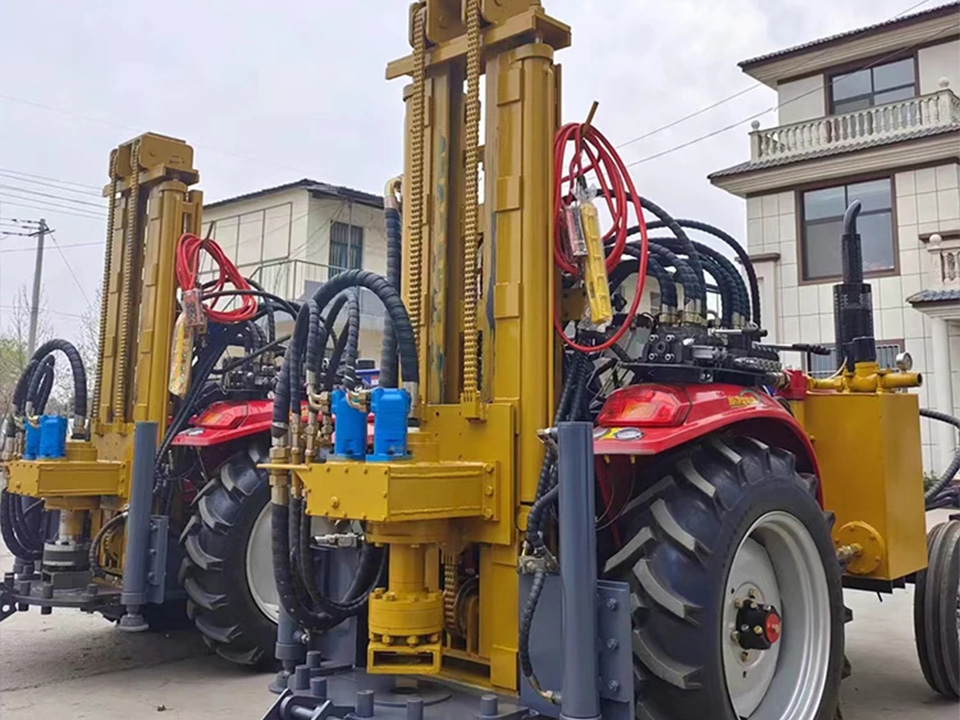
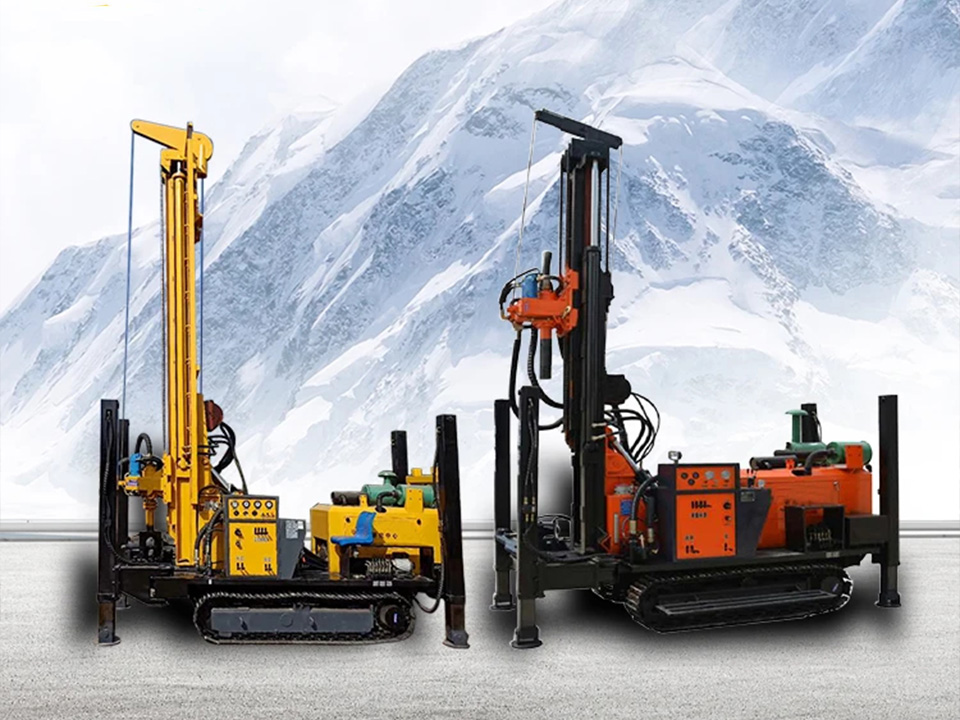
“The Drilling Rig gave us a true one-stop solution. Their team matched the right rig, compressor, and drilling tools for our project, and the engineering support stayed fast and professional from quote to delivery.”
Best Rig Configuration for Hard Rock Borehole Programs
Hard rock punishes optimism.
I have seen buyers obsess over drilling depth, engine power, and paint color while ignoring the three things that actually decide whether a hard rock borehole program makes money: impact energy at the bit, clean cuttings evacuation, and whether the rig structure can keep pressure on the formation without shaking itself loose.
Table of Contents
That is the dirty part of this industry. A hard rock drilling rig is not “suitable for rock” because the brochure says so. It is suitable when the rotary head, feed system, mast, compressor, DTH hammer, drill pipe, crawler frame, and bit face all agree with the geology. Miss one link, and the whole setup becomes a slow, loud, expensive compromise.
So what should a distributor, contractor, or tender buyer actually specify?
The Hard Truth: Hard Rock Boreholes Are Not a Depth Problem
Most hard rock borehole programs fail at the configuration stage, not at the jobsite.
A buyer asks for a 300 m rig. Fine. But the rock does not care that the model name says 300 m. Granite, basalt, quartzite, dolerite, and cemented volcanic formations care about compressive strength, abrasiveness, fracture behavior, water inflow, hole diameter, and whether the hammer is getting enough air to clear the hole.
That is why I distrust generic phrases like “for rock drilling.” They hide too much. A rig that drills 180 m in weathered sandstone may crawl in fresh basalt. A compressor that looks acceptable for shallow work may become useless when the borehole gets deeper, the annular velocity drops, and the cuttings start falling back around the hammer.
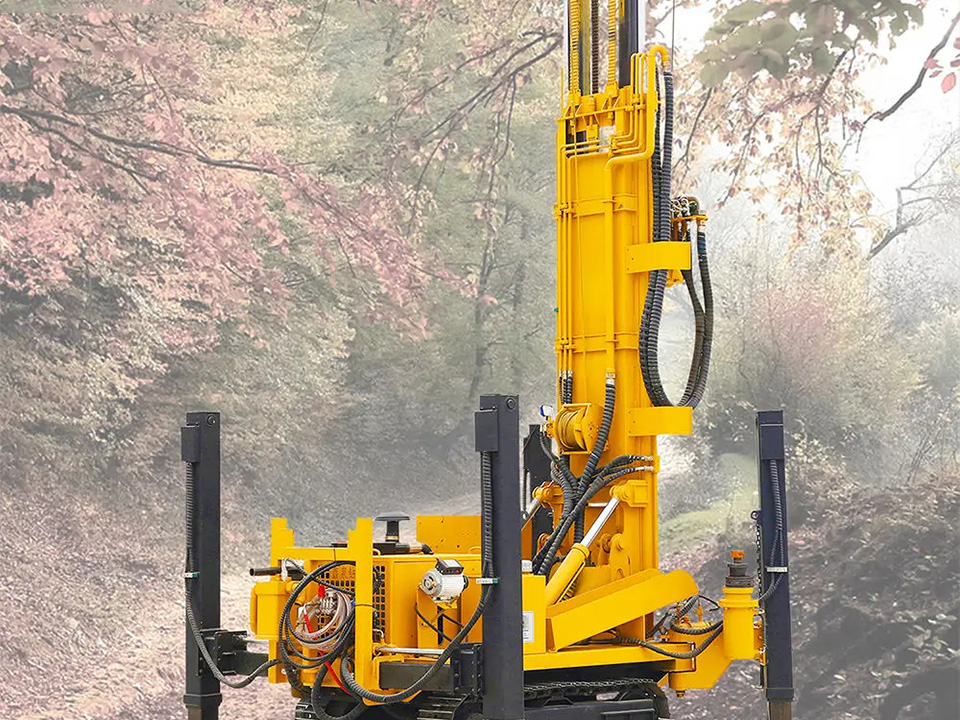
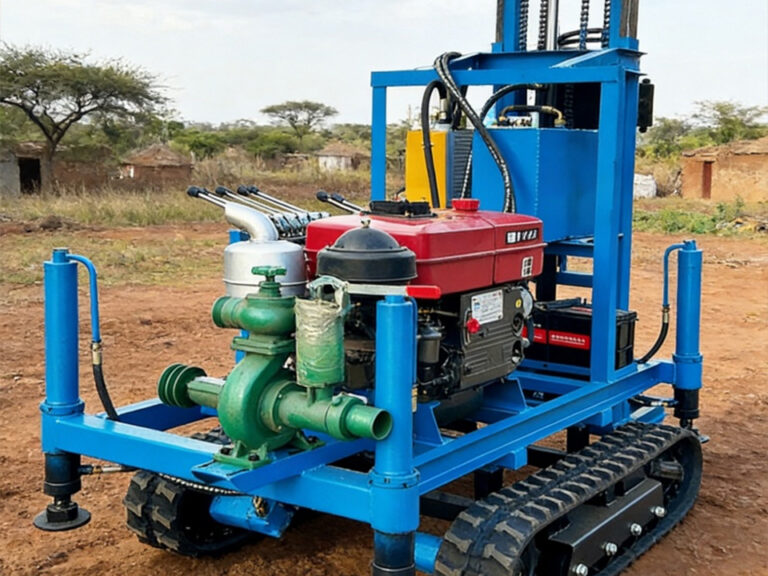
The 300 meter portable diesel water well drilling rig makes sense when the buyer needs a mobile borehole platform for mixed rural water well programs. But when the tender says fractured granite, hard volcanic rock, or deep overburden-to-bedrock transition, I would look harder at frame strength, feed force, hammer compatibility, and the compressor package before talking about price.
Why DTH Usually Wins in Hard Rock Borehole Drilling
Down-the-hole drilling is not fashionable. It is just brutally logical.
In hard rock, a DTH hammer delivers impact energy near the bit, which reduces the energy losses that happen when surface rotation alone tries to grind through abrasive formations. This is why a DTH drilling rig for hard rock is often the better choice for water wells, mining support holes, and high-resistance borehole programs.
A 2024 study on rotary-percussive DTH drilling in weathered granitic rock used drilling process monitoring to profile subsurface geomaterials, showing how DTH drilling data can reflect changes in formation behavior. That matters because hard rock is rarely uniform from top to bottom; the rig has to survive variable resistance, not just a single neat lab value. See the 2024 ScienceDirect paper on digital monitoring of rotary-percussive drilling with DTH hammer.
Here is my unpopular view: if the rock is genuinely hard, many buyers should spend less time negotiating the last 3% of machine price and more time checking whether the air system is undersized by 30%.
Because that mistake is common. Very common.
DTH Configuration Logic
For hard rock boreholes, I normally evaluate the setup in this order:
Configuration Area
What I Check First
Why It Matters in Hard Rock
Buying Risk If Ignored
Hammer size
3.5 inch, 4 inch, 5 inch, 6 inch
Controls impact energy and hole diameter range
Slow penetration, short bit life, unstable hole cleaning
Compressor output
CFM and working pressure
Keeps hammer striking and evacuates cuttings
Re-drilling, stuck tools, fuel waste
Rotary torque
Nm rating under load
Handles bit rotation, friction, and broken rock
Stalling, thread stress, poor hole straightness
Feed force
Pull-down and pull-back capacity
Keeps bit engaged without overloading hammer
Poor penetration or premature tool damage
Mast and frame
Rigidity, lifting system, pipe handling
Controls stability and tool control
Vibration, alignment loss, safety issues
Crawler base
Ground pressure and traction
Keeps rig stable on uneven rural or mine sites
Slow relocation, unsafe setup, lost time
Small rigs can work. Weak systems cannot.
Torque and Feed Force: The Numbers Buyers Pretend to Understand
Torque is not a decoration on the spec sheet. Feed force is not a bonus.
In a hard rock borehole drilling rig, torque must rotate the drill string under load while resisting side friction, broken chips, collaring instability, and imperfect hole cleaning. Feed force must keep the bit engaged against rock without crushing the hammer rhythm or bending the drill string. Too little feed, and the bit skates. Too much feed, and you choke the hammer.
That is why I like to separate “catalog torque” from “usable torque.” The first is what a salesperson quotes. The second is what the rig can keep delivering when the borehole is deep, the compressor is hot, the drill pipe is loaded, and the operator is trying to maintain penetration without abusing the hammer.
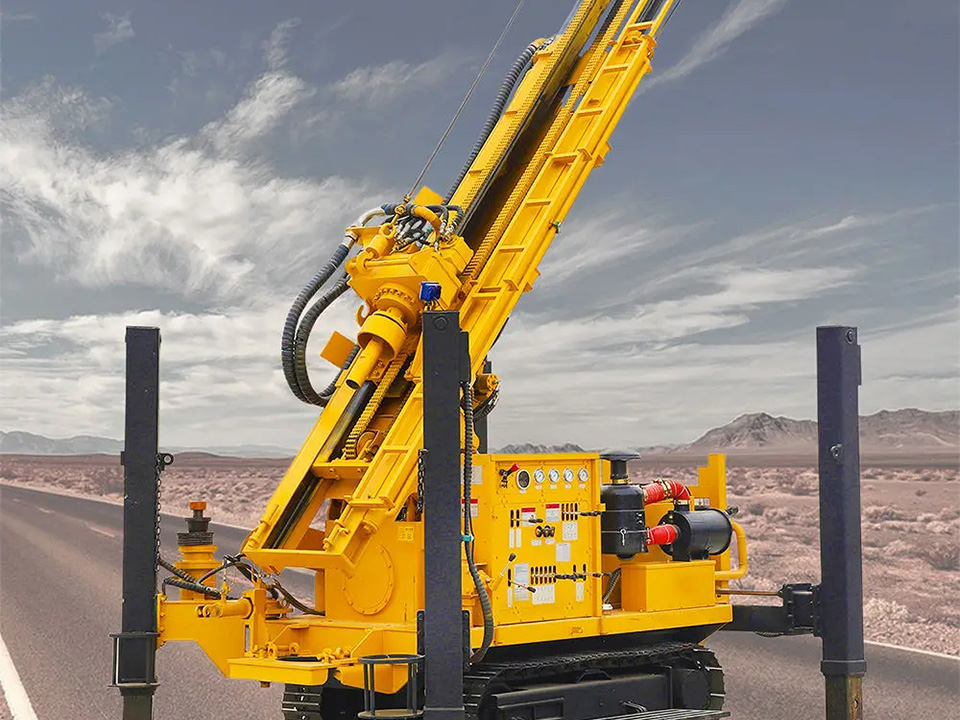
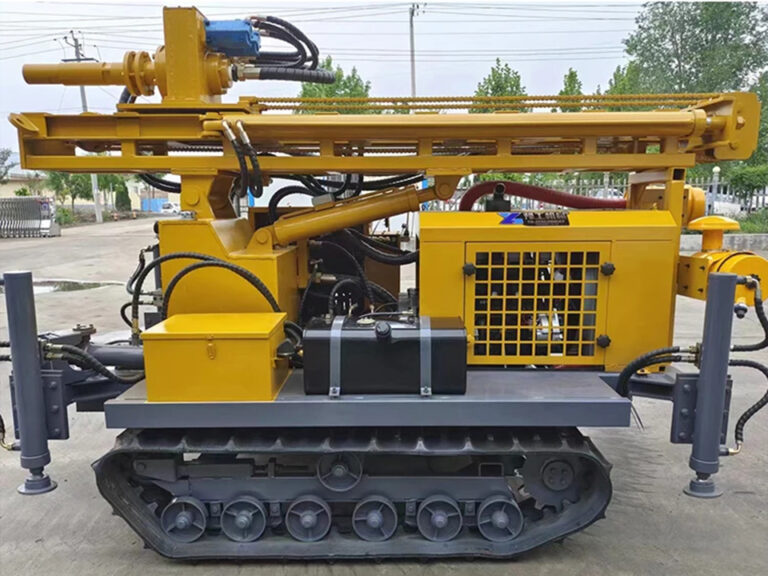
For harder borehole work, the 300m double-cylinder lifting steel crawler rock drilling rig is the kind of platform I would position for buyers who need a stronger crawler base and lifting structure, especially where the geology is less forgiving than normal farmland sediment.
And yes, double-cylinder lifting is not just a nice phrase. On rough rock sites, lifting stability affects rod handling, mast stress, and the operator’s ability to manage tooling safely over long shifts.
Compressor Matching: Where Hard Rock Projects Quietly Lose Money
Air is the hidden invoice.
A hard rock drilling rig can have enough depth rating, enough diesel power, and a decent hammer, but if the compressor cannot supply the required volume and pressure at real working conditions, the rig becomes a fuel-burning noise machine. The hammer loses impact energy. Cuttings stay in the hole. Penetration drops. Bit wear rises.
This is why “air compressor for DTH drilling” should never be treated as an accessory keyword. It is part of the drilling system.
For DTH boreholes, you need enough air volume to carry cuttings up the annulus and enough pressure to keep the hammer operating at the depth and water condition of the job. In simple terms, CFM clears the hole; PSI drives the hammer. In the real world, both collapse when altitude, heat, hose loss, leakage, worn hammer parts, or oversized hole diameter enter the picture.
A buyer may say, “Can we use a smaller compressor first?”
Sometimes. But I would ask a harder question: what does one stuck hammer cost in your country?
Practical Air-System Pairing for Hard Rock Boreholes
Borehole Program Type
Common Rig Direction
Hammer Direction
Compressor Concern
My Buying Opinion
Shallow fractured rock water wells
Compact crawler or portable diesel rig
3.5–4 inch DTH
Moderate CFM, stable pressure
Accept smaller package only if hole diameter is controlled
150–300 m hard rock boreholes
Heavy crawler DTH rig
4–5 inch DTH
High air demand as depth increases
Do not underbuy compressor capacity
Deep rural water supply projects
Diesel crawler or truck-supported rig
5 inch DTH often considered
Pressure stability and fuel cost
Match compressor before quoting final rig price
Mining support or quarry holes
Dedicated crawler DTH rig
4–6 inch depending on hole
Continuous-duty air system
Choose duty cycle over brochure depth
Mixed geology tenders
Flexible rotary + DTH setup
Hammer selected by formation
Compressor reserve needed
Sell a complete solution, not a naked rig
For deeper hard rock water well programs, the 450m 70kW portable diesel water well drilling rig fits the conversation when the buyer needs more depth range. But I would still make the air package the center of the quotation, because 450 m capability without air compatibility is a number, not a working system.
Safety and Compliance: Rock Dust Is Not “Just Dust”
Hard rock drilling creates more than a production problem. It creates an exposure problem.
OSHA’s respirable crystalline silica construction standard applies when worker exposure can reach or exceed 25 μg/m³ as an 8-hour time-weighted average under foreseeable conditions, and OSHA also publishes guidance for drilling-related silica controls. In plain language, stone, concrete, mortar, and rock dust are not harmless background dirt; silica exposure is tied to silicosis, lung cancer, COPD, and kidney disease. Read OSHA’s respirable crystalline silica standard for construction.
This matters for hard rock borehole tenders because professional buyers increasingly care about dust suppression, guarding, operator layout, remote-control options, PPE planning, and maintenance access. They may not ask beautifully. But they notice.
So I would not market a hard rock drilling rig only with “high efficiency” language. I would mention safer operation, stable crawler positioning, dust control planning, and compressor-driven cuttings management. That language sounds more credible to contractors who have actually stood next to a rig all day.
Groundwater Reality: Boreholes Are Infrastructure, Not Holes
A borehole is not a product photo. It is infrastructure.
USGS defines an aquifer as water-bearing rock that can transmit water to wells and springs, and its 2024 domestic well research in California noted that more than 2 million Californians rely on groundwater from privately owned domestic wells. That is a useful reminder for global buyers: borehole performance is tied to geology, water quality, recharge, and long-term operation, not merely drilling depth. See USGS on aquifers and groundwater and the 2024 USGS report on groundwater used for domestic supply.
The World Bank made the same point from a different angle in 2024, describing the Horn of Africa Groundwater for Resilience Project across Ethiopia, Kenya, and Somalia. Its implementation documents also mention resilient borehole and groundwater data training during 2024. That tells me one thing: serious water projects are moving toward better borehole design, better data, and longer service life, not cheap one-time drilling. Read the World Bank article on groundwater in the Horn of Africa.
This is where distributors can win tenders. Not by saying “our rig drills hard rock.” Everyone says that. Win by showing the complete configuration: rig, compressor, hammer, bit, pipe, support truck, spare parts, operating method, and geology assumptions.
How to Choose a Rig for Hard Rock Boreholes Without Getting Fooled
Start with the formation. Then choose the system.
If the buyer gives only target depth and hole diameter, the quotation is already incomplete. I would push for rock type, estimated unconfined compressive strength if available, water inflow, overburden thickness, casing plan, altitude, temperature, daily meter target, local fuel price, crew skill level, and transport conditions.
The 58kW diesel crawler DTH drill rig for mining rock drilling is better framed as a focused rock-drilling machine for mining, quarry, or site-preparation work, not as a generic water-well rig. That distinction helps SEO, but more importantly, it helps buyers trust the recommendation.
My Preferred Hard Rock Borehole Configuration
For most hard rock borehole programs in the 150–300 m range, I would rather sell a properly matched mid-heavy crawler DTH system than an over-promised “deep drilling” package with a weak compressor.
My baseline configuration would look like this:
Component
Preferred Direction
Why I Prefer It
Rig type
Crawler DTH drilling rig
Better stability on rough rural, mining, and hard rock terrain
Drilling method
DTH hammer, with rotary support where needed
Stronger rock-breaking performance in hard formations
Hammer size
4 inch or 5 inch depending on hole diameter
Balanced impact energy and air demand
Compressor
Matched high-pressure screw compressor
Protects penetration rate and cuttings evacuation
Feed system
Strong pull-down and pull-back reserve
Helps manage bit contact and stuck-tool recovery
Mast
Rigid mast with practical rod handling
Reduces vibration and operator fatigue
Drill pipe
Sized to depth, torque, and hammer
Prevents weak-link failures
Bits
Face design matched to rock abrasiveness
Controls wear rate and penetration
Spare package
Mandatory, not optional
Downtime kills remote hard rock projects
The hard truth: the best rig for hard rock drilling is rarely the cheapest rig that can technically reach the target depth. It is the rig package that keeps drilling when the formation becomes abrasive, the compressor gets hot, the operator is tired, and the buyer still expects meters per day.
FAQs
What is the best rig configuration for hard rock borehole programs?
The best rig configuration for hard rock borehole programs is a matched DTH drilling system with sufficient rotary torque, controlled feed force, a rigid crawler platform, properly sized hammer and bit, and a compressor package that delivers enough CFM and PSI for real drilling depth, hole diameter, and cuttings evacuation.
In practice, I would start with the rock type and borehole diameter, then select the hammer, then size the compressor, then choose the rig platform. Buyers who start with depth rating alone usually under-spec the air system.
Is a DTH drilling rig better for hard rock than mud rotary drilling?
A DTH drilling rig is usually better for hard rock because the hammer strikes directly behind the bit, delivering impact energy where the rock breaks instead of relying mainly on surface rotation and drilling fluid circulation. This makes DTH more effective in granite, basalt, dolerite, quartzite, and other high-resistance formations.
Mud rotary still has value in unconsolidated formations, clay, sand, and some overburden sections. But once the program becomes a hard rock borehole job, DTH is often the more convincing method.
How much compressor capacity does a hard rock drilling rig need?
A hard rock drilling rig needs compressor capacity matched to hammer size, borehole diameter, depth, altitude, air loss, and cuttings load; there is no safe universal CFM number. The compressor must maintain both enough pressure for hammer impact and enough air volume to lift cuttings out of the hole.
For distributors, this is where better quotations beat cheap quotations. A rig-and-compressor package should be sold as one drilling system, especially for DTH hard rock boreholes.
Why do hard rock drilling projects suffer low penetration rates?
Hard rock drilling projects suffer low penetration rates when impact energy, bit selection, feed force, rotary torque, compressor pressure, or cuttings evacuation are mismatched to the geology. The visible symptom is slow drilling, but the deeper cause is usually poor system configuration before the rig reaches the site.
In my experience, the most common mistakes are undersized compressors, wrong hammer size, worn bits, excessive feed pressure, unstable rig setup, and buyers treating fractured granite like ordinary sediment.
How should distributors position hard rock borehole rigs for tenders?
Distributors should position hard rock borehole rigs as complete drilling solutions, not isolated machines, by specifying rig platform, hammer, bit, compressor, drill pipe, spare parts, geology assumptions, operating method, and expected application range. This gives buyers stronger evidence than vague claims such as “suitable for rock.”
For tender work, the strongest sales language is specific. Mention basalt, granite, DTH hammer size, compressor pressure, crawler stability, feed force, torque, and service support. That sounds less flashy, but more believable.
Your Next Steps
If you are buying or quoting a hard rock drilling rig, do not start with the machine photo. Start with the borehole program.
Send the target depth, hole diameter, rock type, casing plan, site altitude, daily meter target, and available compressor information. From there, build the configuration around the geology: DTH hammer first, compressor second, rig platform third, and spare parts before shipment.
That is how serious hard rock borehole programs are won. Not with slogans. With matched steel, matched air, and fewer excuses at the jobsite.