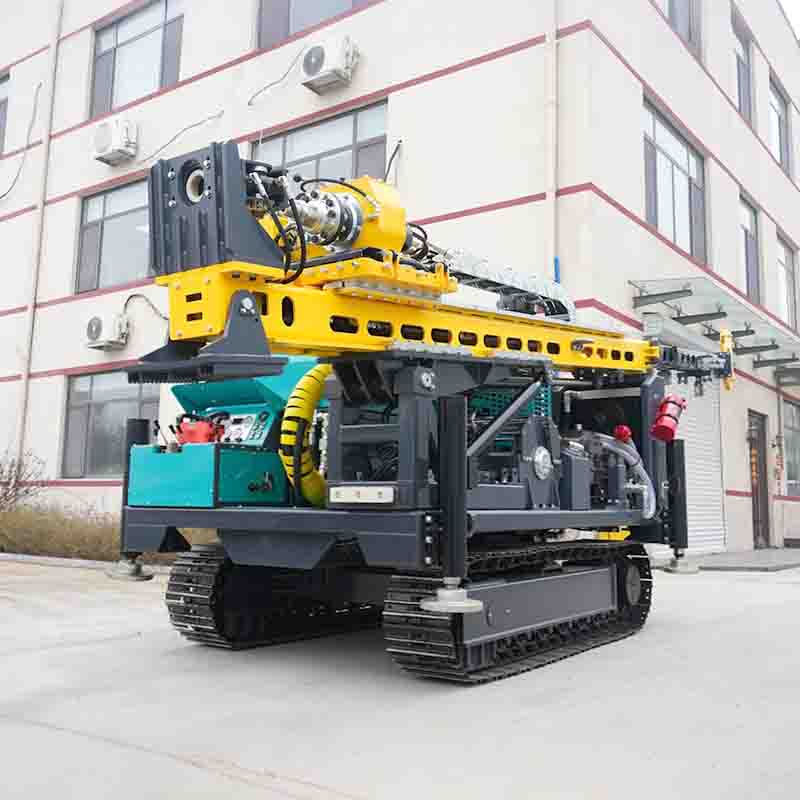
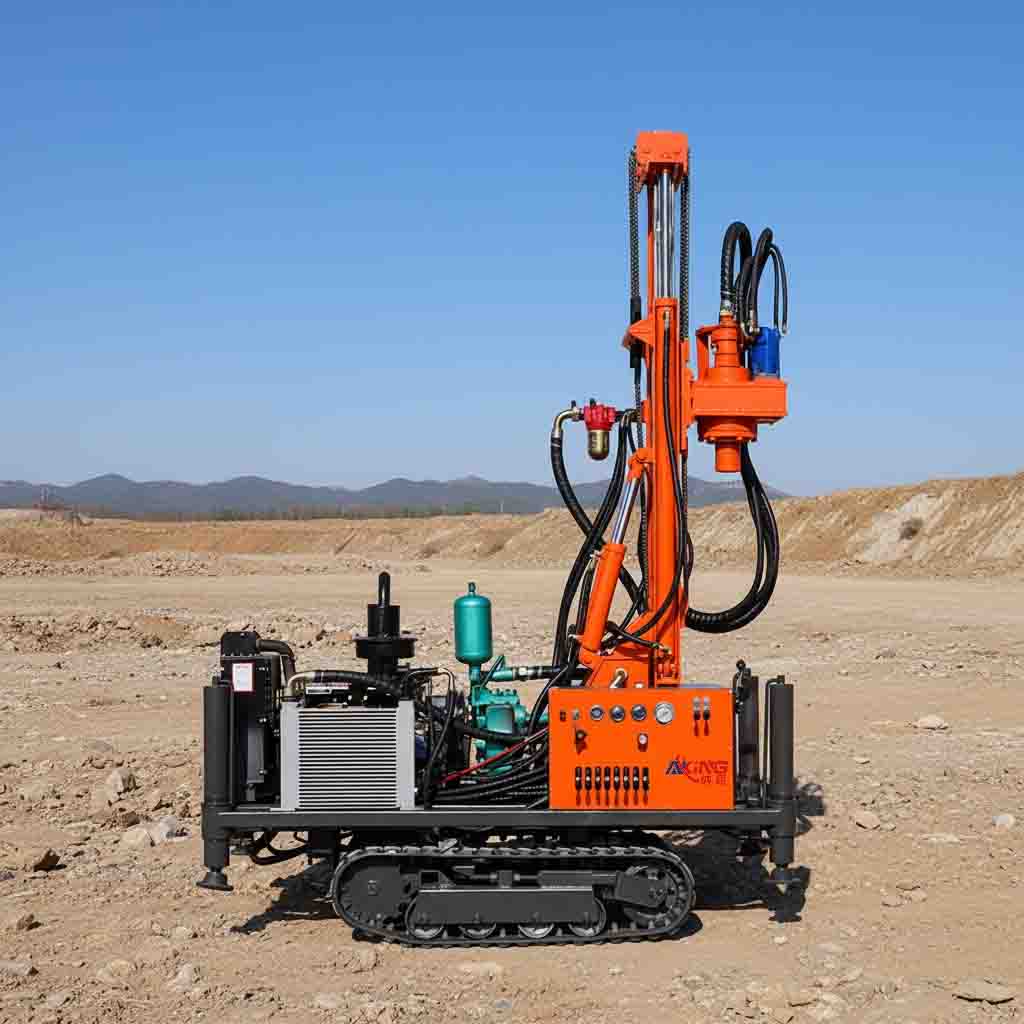
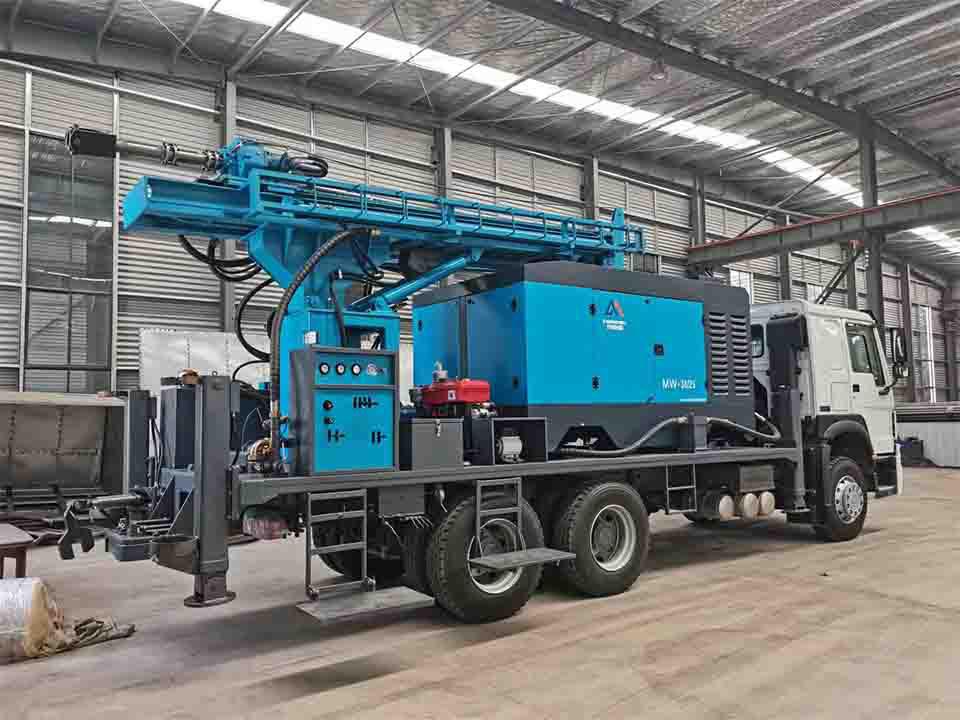
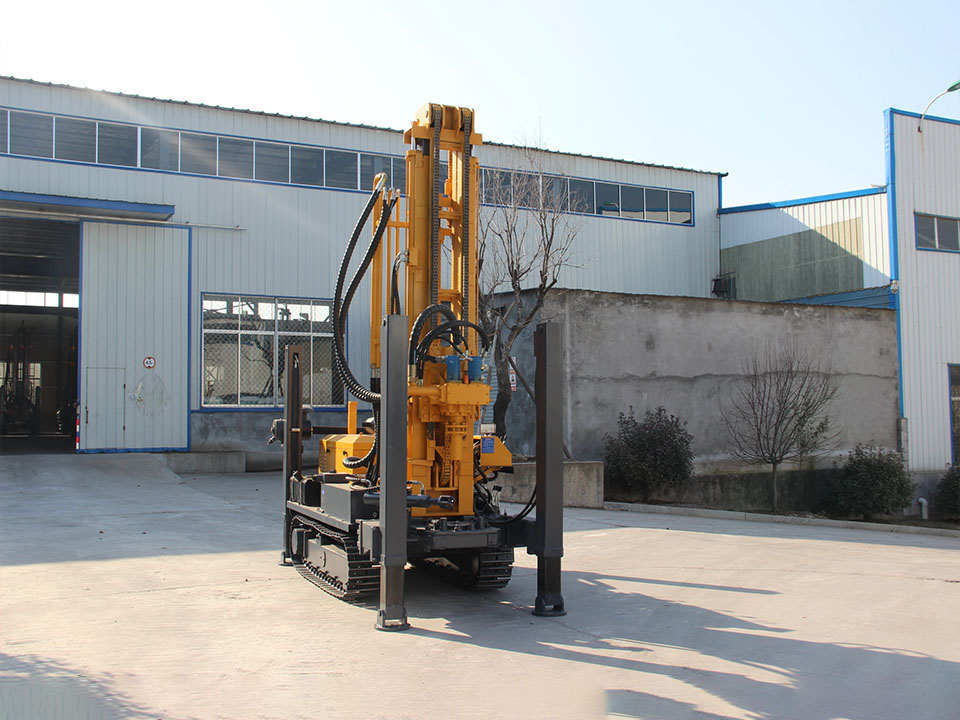
“The Drilling Rig gave us a true one-stop solution. Their team matched the right rig, compressor, and drilling tools for our project, and the engineering support stayed fast and professional from quote to delivery.”
How to Size CFM and PSI for Water Well Drilling Programs
Stop shopping by horsepower sticker
Most buyers don’t.
I keep seeing the same bad pattern in water well drilling compressor sizing: teams compare engine HP, trailer paint, or FOB price, then act surprised when the rig stalls in hard rock, the cuttings stop clearing, fuel burn climbs, and the supplier starts blaming the formation instead of the spec sheet.
Table of Contents
Why are we still pretending horsepower alone sizes a borehole drilling air compressor?
The hard truth is simple. CFM clears the hole. PSI drives the hammer and protects penetration when depth, water, friction loss, and stubborn rock start stacking against you. According to EPA’s monitoring-well drilling guidance, air rotary drilling uses air to entrain cuttings and carry them to the surface, and that method requires high air velocities, large air volumes, and real compressor horsepower; EPA also notes that DTH percussion hammers can rapidly penetrate bedrock. (epa.gov)
So when I size a water well drilling air compressor, I do not start with the compressor. I start with four things: bore diameter, target depth, formation, and site conditions. Everything else is noise.
CFM clears the hole, PSI keeps the hammer honest
That split matters.
If you are figuring out how to size CFM and PSI for water well drilling, the cleanest way to think about it is this: pressure is what gives the hammer impact authority, while flow is what keeps the annulus moving enough to lift cuttings out instead of letting them recirculate, regrind, and slow your rate of penetration.
DTH drilling compressor CFM PSI: one real benchmark
Here is a benchmark I actually trust because it comes from an OEM hammer chart, not from sales copy. In Epiroc’s COP M6 technical data, a 6.5–7 inch hammer is shown with a working pressure range of 87–435 psi. At 150 psi it consumes about 275 cfm; at 218 psi, 392 cfm; at 290 psi, 570 cfm; at 360 psi, 801 cfm; and at 435 psi, about 995 cfm. That one chart tells you more than a hundred vague quotations.
And that is where a lot of import mistakes begin. A buyer sees “7-inch class hole” and thinks a 300–400 cfm package sounds respectable. Fine—until the hole gets deeper, the water table appears, the formation hardens, or the drill string friction starts eating margin.
Bore diameter punishes weak flow faster than buyers expect
This is not subtle.
When bore diameter increases, annular area rises fast, and the compressor flow and pressure for bore diameter stop being “nice to have” numbers and become the deciding constraint. Even if everything else stays constant, a modest diameter jump can more than double the air-cleaning burden in the annulus. That is why a portable drilling compressor for hard rock formations that feels adequate on paper can look anemic on site.
I’ll put it bluntly: if your air package only works in the lab version of the hole, it is undersized.
The number buyers skip: delivered air at altitude
Air gets thinner.
And the compressor does not care that your sales sheet was written at friendlier conditions. In Epiroc’s COP M-series hammer selection guide, the example is brutally useful: a rig rated at 1,070 cfm at 350 psi drops to about 870 cfm delivered at 1,800 meters altitude and 10–20°C. That is roughly a 19% haircut before the rock even gets a vote.
So, no, I do not accept nominal compressor ratings at face value. I want delivered air at site altitude, at site temperature, at working pressure. Anything less is brochure theater.
For context, Atlas Copco’s DrillAir drilling compressors span roughly 116–508 psi and 760–1,460 cfm, which tells you how wide the real operating window is once drilling applications get serious. That range exists because drilling programs are not uniform, and the “one compressor fits all” pitch is usually nonsense. (Atlas Copco)
A practical sizing matrix for buyers and distributors
The table below is a buying screen, not a universal formula. It is built from EPA air-rotary guidance, Epiroc COP M6 hammer data, and Epiroc’s altitude correction example. Treat it as a fast way to reject bad quotations early. (epa.gov)
Program profile
PSI target
Delivered CFM target
What I’d watch
6.5–7 in. hard-rock hole, modest depth, sea-level conditions
150–290 psi
275–570 cfm
Entry DTH range; still easy to underspec once water or extra depth shows up
6.5–7 in. hard-rock hole, aggressive penetration target
360–435 psi
800–995 cfm
Fast drilling costs air; cheap packages fall apart here
8 in. class hole at ~1,800 m altitude
~350 psi class
Around 870 cfm delivered from a 1,070 cfm nominal package
Altitude derating can kill a “good” quote
180–200 m program in mixed-to-hard formation
300–435 psi
700–1,000+ cfm
Depth plus hole cleaning margin decide uptime
Mud-pump or mixed circulation program
Case-specific
Case-specific
Do not copy DTH air numbers into a mud system and call it engineering
A weak air package does not merely drill slower. It can also chew up economics in ways that are harder to see on day one: longer engine hours, more recutting, more bit stress, more non-productive time, and more operator temptation to push the machine outside sane limits.
The fuel side alone is enough reason to stop lowballing specs. Using EIA’s U.S. diesel series, the 2024 monthly national on-highway diesel prices average out to about $3.76 per gallon. That means every extra hour you create with a bad compressor choice compounds into real money, not spreadsheet fiction. Atlas Copco also says its high-pressure DrillAir testing found that drilling at 35 bar finished the job faster with lower total fuel consumption than gradually building pressure. I would not use that as the only basis for a purchase, but it supports the point: getting the air package right can reduce total fuel burned, even if the machine itself looks bigger on paper. (U.S. Energy Information Administration)
The safety side is even less negotiable. In its 2024 final rule, MSHA lowered miners’ respirable crystalline silica exposure limit to 50 µg/m³ and set an action level of 25 µg/m³, while also stating that silica exposure can cause silicosis, COPD, lung cancer, and renal disease. If your air rotary program is blowing cuttings badly, or your dust control is an afterthought, you are not just inefficient—you are flirting with a regulation and health problem. ([Federal Register][4])
And yes, there is performance upside when the tool and air package are matched properly. A 2023 peer-reviewed field study on a large-diameter pneumatic DTH hammer reported that a designed hammer with reduced air consumption delivered a penetration rate 1.7 times faster than conventional mud drilling in the test case. Different method, different geology, different hole, yes. But the message is still sharp: air-system design changes drilling economics in the real world, not just in catalog language. (ScienceDirect)
When a mud system changes the answer
This matters too.
Not every drilling program should be forced into an air-only logic tree. If the actual job is closer to a 200m impact mud pump type mining shaft drilling rig, then copying a DTH drilling compressor CFM PSI chart into the buying spec is lazy work. Mud rotary, impact-plus-mud, and mixed circulation programs have different fluid transport behavior, different contamination control issues, and different cost structures. EPA’s guidance makes that distinction pretty clear. (epa.gov)
So my opinion is not polite here: buyers who refuse to separate air rotary from mud-supported drilling are not simplifying procurement. They are dodging it.
FAQs
What is the difference between CFM and PSI in water well drilling?
CFM in water well drilling is the delivered air volume available at the hammer and in the annulus to carry cuttings out of the hole, while PSI is the air pressure that powers the hammer, overcomes system losses, and sustains penetration as depth, water, and formation resistance increase. In practice, low PSI weakens impact energy and low CFM chokes hole cleaning, so a workable spec needs both numbers sized together, not traded against each other casually. (epa.gov)
How much CFM do I need for a 6.5- to 7-inch DTH well drilling setup?
For a 6.5- to 7-inch DTH setup, a real OEM reference point shows roughly 275 cfm at 150 psi, 392 cfm at 218 psi, 570 cfm at 290 psi, 801 cfm at 360 psi, and about 995 cfm at 435 psi, depending on the hammer’s working point and drilling objective. That does not mean every 7-inch hole needs 1,000 cfm. It means buyers should stop assuming that “7-inch” automatically means a small air package is safe.
Does altitude change air compressor sizing for water well drilling?
Yes—altitude changes compressor sizing because the same nominal package delivers less useful air mass as elevation and temperature rise, which means a compressor that looks adequate on the sales sheet can become underpowered at the actual site before geology, hole cleaning losses, or water entry are even considered. Epiroc’s example of a 1,070 cfm package falling to about 870 cfm at 1,800 meters is the sort of derating buyers need to price into the job from day one.
Is higher PSI always better for deep water well drilling?
No—higher PSI is not always better because pressure without enough delivered flow can leave the hammer supplied but the hole dirty, while extra pressure can also raise cost, heat, and stress if the hammer, bit, and formation do not actually benefit from that operating point. The better question is whether the pressure-flow pair matches the hammer chart, hole diameter, and program depth. Deep programs often need higher pressure classes, but they still fail if CFM is weak or altitude derating is ignored.
What is the best compressor for deep water well drilling?
The best compressor for deep water well drilling is the unit that can deliver the required CFM at the required PSI after site altitude, temperature, bore diameter, hammer class, and depth losses are accounted for, not the cheapest unit with the biggest engine decal or the loudest promise from a trader. That answer frustrates people because it kills the fantasy of a universal “best” model. But it is the only answer that survives real drilling. OEM drilling compressor ranges and hammer charts show just how wide the operating band can be. (Atlas Copco)
My advice is blunt: ask every supplier for delivered CFM at working PSI, corrected for your altitude and temperature, tied to your exact hammer and bore diameter. If they cannot answer that cleanly, they are not selling you a drilling solution. They are selling hope.