“The Drilling Rig gave us a true one-stop solution. Their team matched the right rig, compressor, and drilling tools for our project, and the engineering support stayed fast and professional from quote to delivery.”
Compressor Sizing Table for 5-Inch to 10-Inch Bore Wells
Most tables lie. I say that because buyers keep getting sold bar numbers that look impressive on paper while the airflow is nowhere near enough to keep a real bore clean, especially once the hole gets wet, the cuttings get heavy, and the RFQ conveniently forgets to mention rod diameter or target depth. Why does that still happen?
Table of Contents
I’ve reviewed enough drilling quotes to know the hard truth: bore diameter is not the whole job, but it is the fastest honest filter in a borewell compressor size chart. Sullair states plainly that compressor choice depends on tools, borehole diameter, and hole depth; USGS and USACE manuals put minimum air-cleaning velocity near 3,000 feet per minute; and Numa’s 2024 technical manual pushes the healthier operating window up to 4,000-7,000 feet per minute for better hole cleaning and tool life. That combination is the difference between a usable RFQ and brochure theater.
The rule I trust when spec sheets start lying
The airflow baseline that actually matters
Here is the rule. For air rotary and DTH work, USACE gives a practical relation of CFM = 16.5 × (D² – d²), where D is hole diameter in inches and d is drill pipe diameter in inches, built around a 3,000 FPM uphole velocity baseline; USGS publishes the same 3,000 FPM minimum logic, while Numa warns that dropping below 4,000 FPM starts hurting bit life, drilling speed, and tool recovery. That is why a water well compressor sizing exercise starts with annular velocity, not motor horsepower.
And this is where buyers get burned. A salesman can hand you a 16 bar machine and call it a “best compressor for borewell diameter” option, but if the free-air delivery is light, the hole will not clean properly and the pressure number becomes a distraction rather than a selection metric. Isn’t that the oldest trick in the compressed-air playbook?
Why I round the numbers up
Real holes are messy. I do not size from the bare minimum because the minimum assumes a cleaner annulus, fewer losses, and nicer geology than most contractors ever get in the field, so the table below rounds upward from the formula and builds in margin for water inflow, leakage, depth, and the fact that no serious driller wants to run a compressor flat-out all day just to prove a spreadsheet right.
The borewell compressor size chart buyers can actually use
This borewell compressor recommendation table is my procurement-grade synthesis for 5-inch to 10-inch bore wells in hard-rock air rotary or DTH service. The airflow bands are rounded from the USACE/USGS annular-velocity baseline and then pushed upward toward a safer real-world operating range in line with Numa’s 2024 hole
Bore well diameter
Minimum airflow baseline
Practical RFQ range
Typical pressure class
My read
5 inch
~210 CFM
250-300 CFM (7-8.5 m³/min)
10-14 bar
Smallest serious drilling class; still not a shop compressor job
6 inch
~260-390 CFM
350-450 CFM (10-12.7 m³/min)
12-17 bar
Common mid-light borewell class; easy place to undersize
7 inch
~475 CFM
500-650 CFM (14-18.4 m³/min)
14-17 bar
This is where real drilling air starts looking expensive
8 inch
~557-722 CFM
650-850 CFM (18.4-24.1 m³/min)
14-20 bar
Strong airflow matters more than brochure polish
9 inch
~837 CFM
850-1050 CFM (24.1-29.7 m³/min)
17-24 bar
Serious production territory; verify test data before PO
10 inch
~1151 CFM
1100-1300 CFM (31.1-36.8 m³/min)
17-24+ bar
Large-hole class; many “water well” compressors are too small
But notice the pattern: pressure rises, yes, yet airflow rises faster as bore diameter expands. That is why a 10 inch borewell compressor selection fails when someone shops by bar alone, and it is why a 5 inch borewell compressor can look deceptively similar until the airflow ma
Where your current compressor pages fit — and where they do not
The units that look respectable but are too small for primary drilling
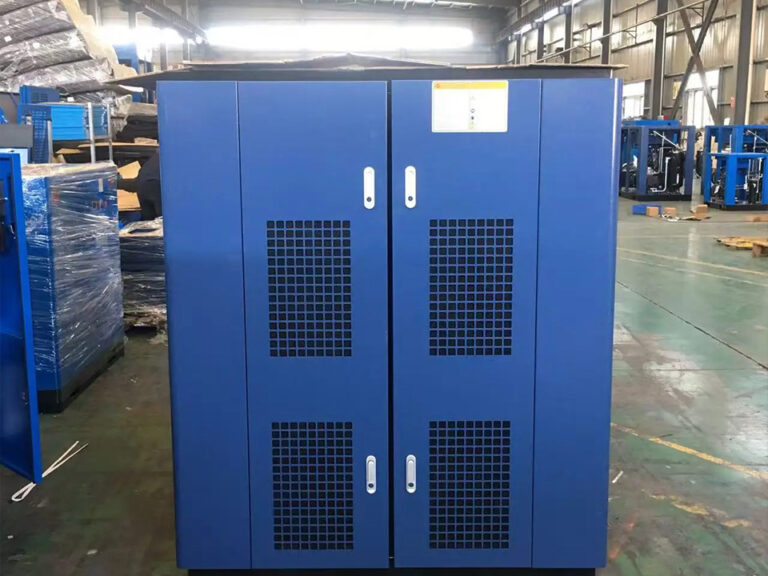
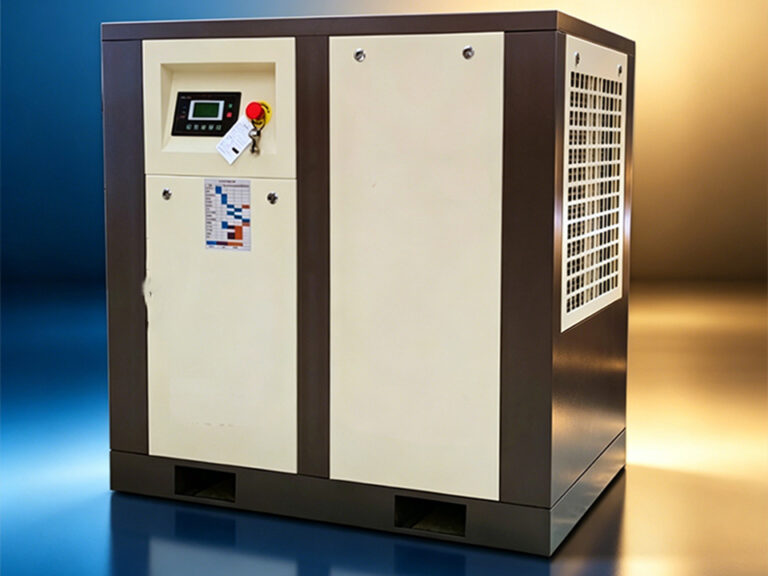
This part is blunt. Your 11kW direct-drive electric screw compressor is listed at 1.5 m³/min, and your 15kW silent 16 bar screw compressor is listed at 1.28 m³/min with 16 bar pressure; those are auxiliary-air or plant-air numbers, not primary drilling-air numbers for a 5-inch to 10-inch borewell compressor size chart. They miss the airflow class by a wide margin, even before you add depth, water, or f
I would use those pages carefully. They can still support content around service air, pneumatic tools, pilot work, or non-drilling compressed-air duty, but if you position them as mainline air compressor for borewell solutions for 6-inch, 8-inch, or 10-inch drilling jobs, a technical buyer will spot the mismatch fast. And once that buyer stops trusting one spec table, they start doubting all of them.
The pages that can actually carry a borewell RFQ
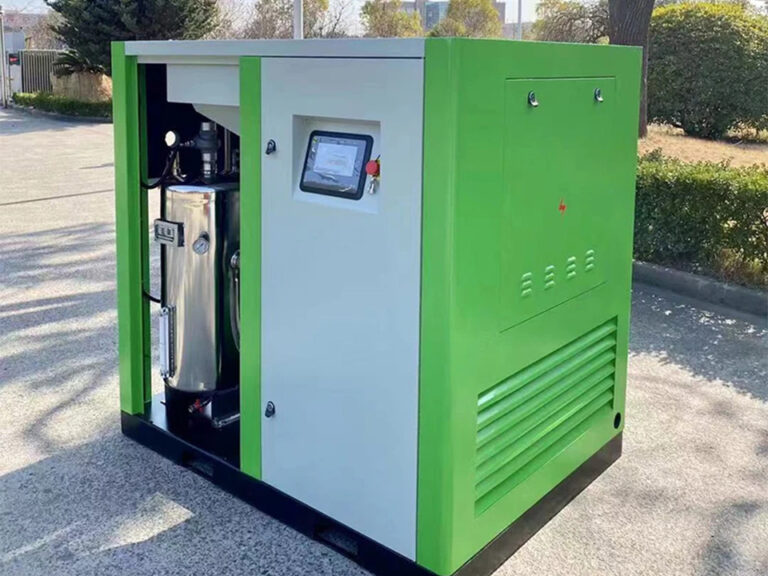
Your 17 bar 580 CFM diesel screw air compressor is the first product in the set that lands in believable drilling territory. It is listed at 1.7 MPa and 580 CFM/17 m³/min, which places it roughly in the 7-inch class and on the light edge of some 8-inch jobs, although the page’s “580 CFM” and “17 m³/min” are close but not identical values, so I would ask for rated free-air-delivery conditions before treating it as proc
Your 23 m³/min stationary water well diesel screw compressor is the stronger borewell fit. At 23 m³/min, it works out to roughly 812 CFM, which makes it a far better match for 8-inch work and some 9-inch jobs, but I would still hesitate to market it as a default 10-inch solution unless the geology is friendly and the depth modest. For many true 10-inch drilling RFQs, I would
That is the insider split. The electric pages help with peripheral intent and broader compressed-air authority; the diesel drilling pages do the commercial heavy lifting when the user query is actually how to choose compressor for borewell size.
The water market is getting harsher, not easier
This is not abstract. According to CGWB’s 2024 groundwater assessment release, India’s annual groundwater extraction stood at 245.64 BCM, the national extraction stage was 60.47%, and 751 assessment units were classified as over-exploited. That means borewell procurement is happening in a market where more buyers are not just drilling; they are drilling under pressure, drilling deeper, and drilling with less toleance for downtime.
And the pressure is visible in the headlines. Reuters’ March 2024 report on reservoir storage said India’s 150 main reservoirs were at 40% of capacity, the lowest March level in five years. Reuters’ May 2024 reporting from Bengaluru’s tanker economy described borehole-fed tanker points that had dropped from around 40 tankers a day to 15-20. That is exactly why distributors want a faster borewell compressor pump performance chart and fewer v
The bigger trend is uglier still. A Nature study published in 2024 found accelerated groundwater decline in 30% of the world’s regional aquifers, based on data from 170,000 wells and 1,693 aquifer systems. My opinion is simple: when groundwater gets harder to access, the market punishes sloppy compressor sizing
FAQs
What size compressor is needed for a 6-inch borewell?
A 6-inch borewell compressor is usually a mid-volume, mid-pressure drilling package delivering roughly 350 to 450 CFM at about 12 to 17 bar for hard-rock DTH work, because that hole size sits beyond light utility compressors but below the large 8-inch-and-up production class. I would treat anything much smaller as a risk unless foam, shallow depth, and easy ground are
Is 16 bar enough for an 8-inch bore well?
An 8-inch borewell compressor is a high-volume drilling package, not merely a high-pressure machine, and in practice it usually means about 650 to 850 CFM with a real 14 to 20 bar class when you want stable hole cleaning instead of spec-sheet fantasy. So yes, 16 bar can be enough in some jobs, but only if the airflow is there; pressure without volume is
Can an electric stationary compressor drill a borewell?
An electric stationary compressor can support borewell-related work such as tools, controls, cleaning, or light site air, but for primary 5-inch to 10-inch borewell drilling it is usually underpowered unless it delivers drilling-class airflow rather than factory-air airflow. That is why I would not position the 11kW direct-drive electric screw compressor or the 15kW silent 16 bar screw compressor as mainline drilling units
What is the best compressor for borewell diameter from 8 inches to 10 inches?
The best compressor for 8-inch to 10-inch borewell diameter is a verified high-flow drilling unit sized by annular-velocity math, rod diameter, depth, and formation, which usually means moving into the 650 to 1300 CFM bracket rather than shopping by motor kW or bar alone. In your current set, the 17 bar 580 CFM diesel screw air compressor is an entry point for 7-inch to light 8-inch work, while the 23 m³/min stationary water well diesel screw compressor is the more serious 8-inch to 9-inch candidate. For many true 10-inch RFQs, I would
Your Next RFQ Move
Stop asking for “a 17 bar machine” as if that settles anything.
Ask for five numbers every time: rated free-air delivery, rated pressure, assumed hole diameter, assumed rod diameter, and target depth. Then make the supplier state whether the recommendation is for drilling, well development, or general compressed-air support. That single move filters out weak quotes faster than any glossy brochure.
If this page is meant to rank and convert, I would center the commercial intent around the real drilling pages, keep the electric units in supporting roles, and make the table above the heart of the page. That is how this H1 stops being generic SEO filler and starts acting like a serious