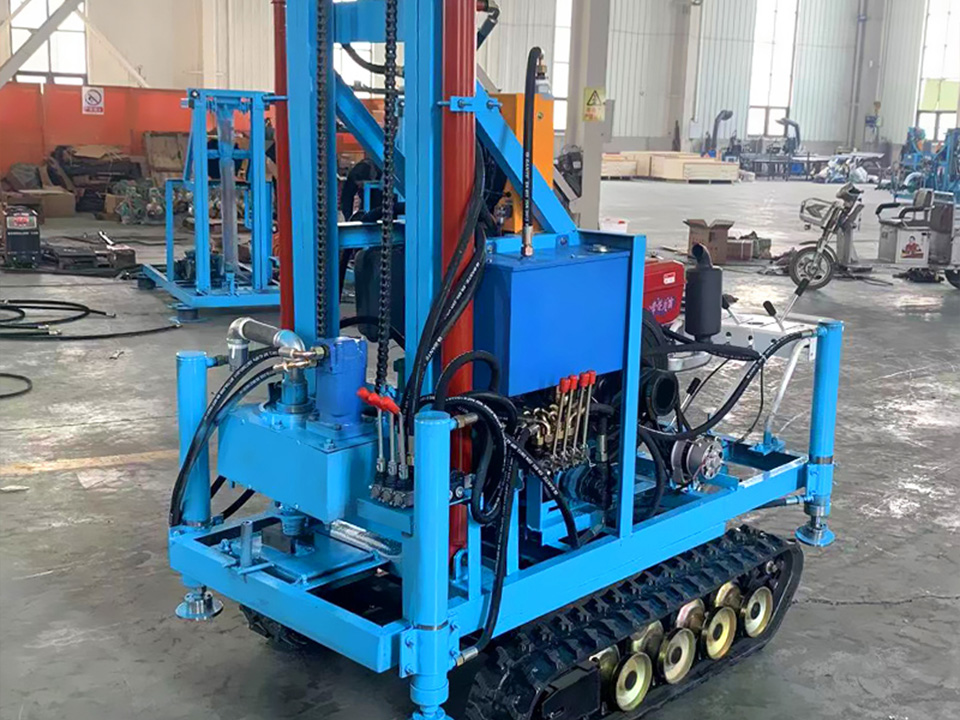
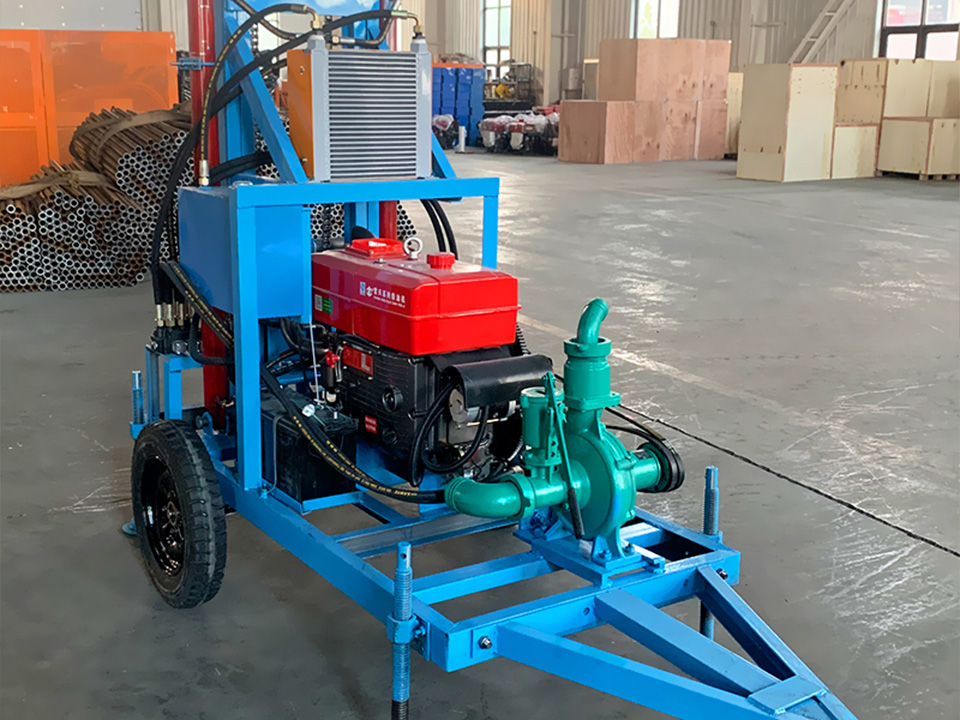
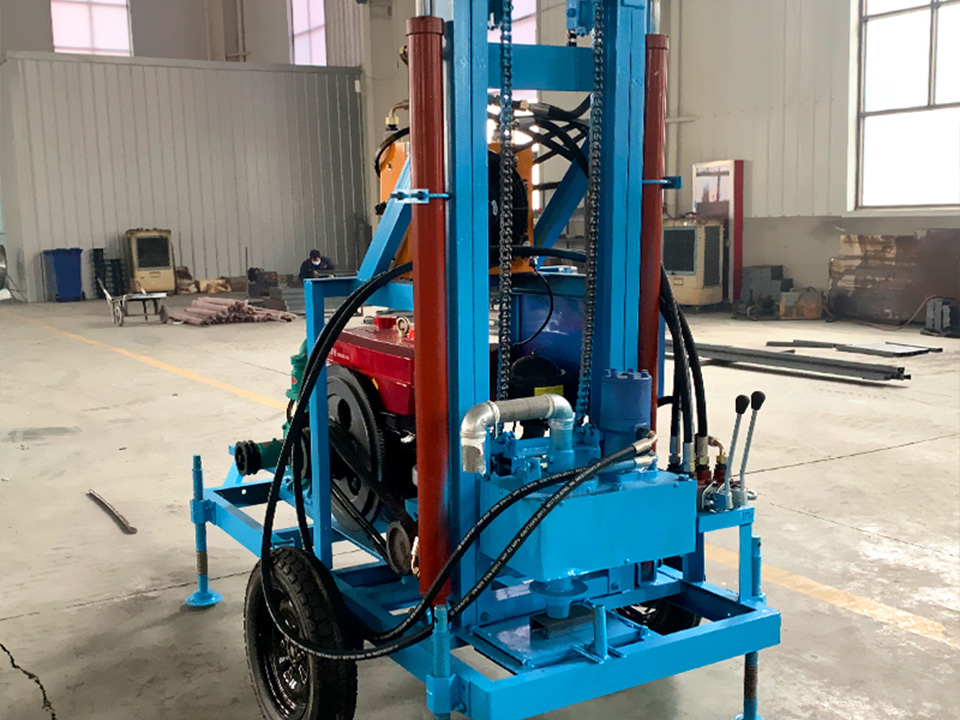
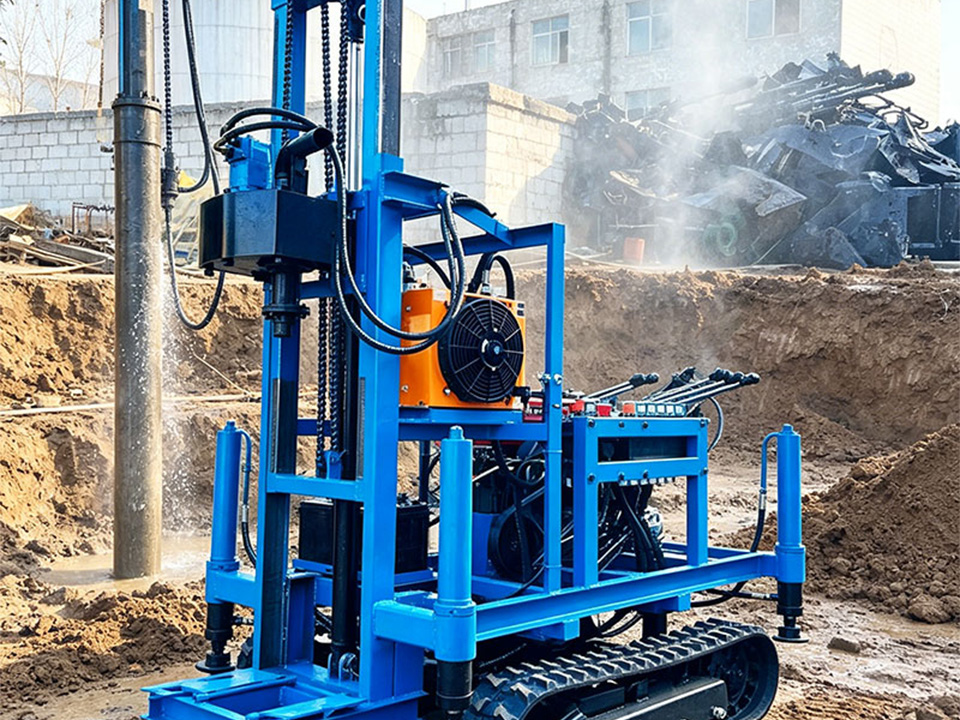
“The Drilling Rig gave us a true one-stop solution. Their team matched the right rig, compressor, and drilling tools for our project, and the engineering support stayed fast and professional from quote to delivery.”
Truck-Mounted Rig and Compressor Integration: Key Load Checks
The Bad Truck Looks Fine Until It Turns, Brakes, or Sinks
Most truck-mounted rig failures don’t begin at the borehole.
They begin on paper.
A buyer sees “300 m,” “600 m,” “high torque,” “matched air compressor,” and a shiny truck chassis. Fine. But nobody weighs the rear axle after the compressor, mast, hydraulic tank, drill pipes, fuel, spare hammer, casing tools, welding plates, toolbox, and crew gear are added. Nobody asks where the combined center of gravity lands when the mast is folded. Nobody checks whether the compressor service door can actually open when the rig frame is mounted too close to the side rail.
That’s the trap.
Table of Contents
I’ve seen it happen. A truck mounted drilling rig gets sold as an “integrated solution,” but in reality it is a drilling rig, an air compressor, and a truck chassis forced into marriage by welding and optimism. Then the fleet buyer discovers the ugly part: road inspections, tire heat, brake fade, frame twist, weak climbing, fuel waste, and worse—an unstable machine on a sloped jobsite.
Looks strong. Isn’t.
And when the U.S. National Highway Traffic Safety Administration reported 5,472 people killed in crashes involving large trucks in 2023, with 70% of fatalities being occupants of other vehicles, it should remind every equipment buyer of one uncomfortable truth: a heavy truck is not judged only by engine horsepower. It is judged by stability, braking, roadworthiness, and load discipline.
So the real question is not, “Can this rig drill?”
The real question is: Can this truck mounted water well drilling rig carry, move, brake, service, and operate the whole drilling package without turning into a liability?
Payload Is Not a Guess: Start With the Chassis, Not the Drill Depth
A drilling truck is not a magic platform. It has a gross vehicle weight rating, axle limits, frame capacity, suspension limits, tire ratings, and braking capacity. Ignore those, and the rig becomes a legal and mechanical problem before it becomes a drilling machine.
In the U.S., the Federal Highway Administration explains the Federal Bridge Formula with an example where an 80,000 lb total load can still fail a specific axle-group check; one axle group in its example reaches 68,000 lb actual weight while the allowed value is only 65,500 lb, meaning the truck is illegal even though the broader vehicle concept may look acceptable.
That detail matters for export buyers too, even outside the U.S., because the engineering principle is universal: total weight is not enough. Axle distribution decides tire stress, brake load, suspension life, and police-road compliance.
For a practical buyer, I’d treat these as non-negotiable load numbers:
Load Check
What to Verify
Why It Matters
Red Flag
Empty chassis curb weight
Actual weighed value, not brochure estimate
Gives true remaining payload
“Approximate” weight only
Rig body weight
Mast, rotary head, feed system, frame, hydraulic system
Determines rear axle load
No separate rig-body weight
Compressor weight
Dry weight plus fuel, oil, receiver, hoses
Usually shifts mass rearward or sideways
Compressor added after chassis selection
Drill pipe load
Full rack, not sample pipe count
Pipe weight grows fast in fleet work
Pipe rack ignored in payload math
Front/rear axle load
Weighbridge calculation before shipment
Prevents illegal or unstable configuration
Rear axle near limit before tools
Side-to-side balance
Left/right wheel load where possible
Detects compressor-side lean
Compressor mounted high on one side
Service load
Water, fuel, spare hammer, casing tools
Real field load, not showroom load
Buyer told “don’t carry too much”
Here’s my strong opinion: a supplier who refuses to give a load layout drawing is not selling an integrated truck. They’re selling a risk bundle.
If the buyer wants a compact production unit, a smaller 200m truck mounted hydraulic water well drilling rig may be easier to keep legal and serviceable than a heavier “big-depth” package forced onto the wrong chassis. Bigger depth sells well in ads. Balanced payload keeps fleets alive.
Center of Gravity: The Number Buyers Rarely Ask For, Until the Rig Leans
Center of gravity is where the lie becomes visible.
A truck mounted drilling rig has several moving mass problems at once: mast height, rotary head position, drill pipe rack, hydraulic tank, compressor block, diesel tank, outriggers, and sometimes a water pump or foam system. When the mast is down, road stability matters. When the mast is up, jobsite stability matters. When the mast is halfway moving, dynamic load matters.
That middle stage gets ignored.
The U.S. CDC/NIOSH warned in 2023 that drill rigs and other heavy specialty equipment used in foundation work can overturn, causing injuries, fatalities, and site damage; the agency also noted that data on these overturn events remains incomplete, which is exactly why buyers should not rely on “we have sold many units” as a safety argument.
I’ll be blunt: many overturn risks are not mysterious. They are layout problems wearing a safety helmet.
The Real Center-of-Gravity Questions
Ask these before placing the order:
Where is the center of gravity with the mast folded for transport?
Where does it move when the mast is raised?
What is the outrigger footprint at full working position?
What slope angle is acceptable during drilling?
What is the side load when the compressor is mounted left or right?
How does the truck behave with full pipe rack and low fuel?
Is the rear overhang increasing frame stress during bad-road travel?
Do not accept a vague answer like “stable enough.”
Stable enough for what—flat concrete, wet clay, mining access roads, mountain tracks, or rural water projects in Africa after rain?
For deeper borehole jobs, a 600m truck mounted deep borehole water well drilling rig should be checked with even more suspicion because deeper capacity usually means heavier mast structure, stronger feed system, more pipe load, higher compressor demand, and larger service mass. One weak chassis choice can poison the whole package.
Compressor Matching: Air Demand Is Not Just CFM and PSI
Buyers love simple numbers: 18 bar, 25 bar, 35 m³/min, 600 psi, 300 m, 600 m.
But compressor matching is not a sticker exercise. A drilling rig with air compressor integration must match hole diameter, hammer size, formation, bore depth, flushing velocity, fuel system, engine reserve, cooling, and service access. Put the wrong compressor on the truck and the damage shows up in two ways: slow penetration and expensive heat.
Here’s the hard truth: an undersized compressor makes the drilling crew hate the machine; an oversized compressor makes the truck hate the buyer.
If you’re drilling 115–165 mm boreholes with a 4-inch or 5-inch DTH hammer, the compressor selection has to be built around working pressure and air volume under real site altitude and temperature. A supplier may quote theoretical output, but the buyer should ask for rated output at actual working pressure. Not “maximum pressure.” Not “peak airflow.” Actual usable air.
A good diesel engine 300m water well drilling rig package should be evaluated as a drilling system: engine power, compressor class, rotary torque, feed force, pipe handling, and chassis load must agree with each other. Otherwise the rig becomes a strange animal—strong in one organ, weak in circulation.
Compressor-to-Truck Integration Checks
Integration Point
Good Practice
Bad Practice
Compressor airflow
Matched to hammer and hole diameter
Sold by largest m³/min number only
Working pressure
Sized for depth and formation
Quoted as peak pressure without duty detail
Cooling airflow
Clear radiator intake and exhaust path
Compressor boxed into the rig frame
Fuel tank layout
Accessible, protected, balanced
High tank mounted far behind rear axle
Service doors
Open fully with safe mechanic access
Blocked by mast frame or pipe rack
Noise and heat
Directed away from operator zone
Exhaust blows toward controls
Weight position
Low and close to chassis centerline
High, rear-heavy, one-side-heavy
Vibration isolation
Mounted with suitable pads/frame support
Hard welded into weak subframe
The FMCSA cargo-securement rule says cargo must be immobilized or secured so shifting does not harm vehicle stability or maneuverability. That rule is written for road transport, but the logic fits rig integration perfectly: anything heavy that can shift, flex, vibrate loose, or overload one side is not “installed.” It is waiting to create a failure.
Brake, Tire, and Frame Checks: The Unsexy Parts That Save Money
Nobody brags about tire load rating in a sales video.
They should.
The Insurance Institute for Highway Safety reports that brake defects were found in 42% of crash-involved trucks in one investigated large-truck study, and defects serious enough to place the truck out of service tripled crash risk. That is not a drilling-specific statistic, but it is painfully relevant. A truck carrying a rig, compressor, drill pipes, fuel, and tools has no business being designed to “just about” meet braking and axle capacity.
The brake system is where cheap integration gets exposed.
The tire is next.
Then the frame.
A truck-mounted rig frame should not be treated like a flat table. Drilling loads move through the mast base, subframe, chassis rails, outriggers, and ground contact points. If the compressor is mounted without thinking about frame twist, the truck can develop fatigue cracks, loose bolts, bad alignment, and uneven tire wear.
I don’t trust any truck mounted rig compressor layout until I see:
Chassis model and rated GVW
Front axle and rear axle rating
Tire size and load index
Brake type and service capacity
Subframe design
Outrigger location relative to mast load
Compressor mounting point
Full loaded weight estimate
Road transport height and width
Service clearance drawing
For fleet buyers comparing models, a higher-spec truck mounted water well drilling rig for deeper jobs may be the correct choice only when the chassis and compressor package are designed as one unit. If not, the buyer is just paying for heavier problems.
Roadworthiness Is a Sales Issue, Not Just a Legal Issue
Let’s talk about something many equipment sellers avoid: roadworthiness.
In some markets, a drilling truck is treated casually because it spends time on rural roads, jobsite paths, and private access tracks. That thinking is dangerous. A fleet buyer still has to move the truck between villages, mines, farms, and municipal projects. Police checks, insurance claims, tire failures, and accident investigations do not care that the machine was “for drilling.”
The National Safety Council reported that 5,340 people died in large-truck crashes in 2024, down 2.5% from 2023 but still up 30% over the last 10 years. That broader trend should push drilling fleet owners to ask harder questions before buying any road-mobile rig.
And yes, I know some buyers will say, “Our country does not inspect like the U.S.”
Maybe not.
But physics does.
If the truck is rear-heavy, brake-stressed, hot-running, badly balanced, or overloaded, the failure does not ask which country issued the license plate.
The Buyer’s Pre-Shipment Load Audit
Before shipment, I would demand a basic load-audit file from the supplier. Not a brochure. A file.
Minimum Documents to Request
Document
What It Should Show
Why It Protects the Buyer
General arrangement drawing
Rig, compressor, pipe rack, tanks, outriggers
Confirms layout before production
Chassis specification
GVW, axle ratings, engine, wheelbase
Shows whether chassis is properly selected
Estimated weight sheet
Dry weight and working weight
Prevents “surprise” overload
Axle load estimate
Front/rear axle distribution
Finds rear-heavy designs early
Compressor data sheet
Airflow, pressure, engine, dry weight
Confirms compressor matching
Service access layout
Doors, filters, oil drain, radiator access
Prevents maintenance nightmares
Transport dimension sheet
Length, width, height
Helps shipping and road planning
Stability notes
Outrigger footprint and mast position
Reduces overturn risk
This is where serious suppliers separate themselves from brochure sellers.
A real manufacturer can explain the trade-off: deeper drilling capacity means higher mass; higher compressor output means more heat and fuel; more pipe storage means more rear load; larger chassis means higher cost but better road margin. No magic. Just engineering.
How to Integrate Air Compressor With Truck Mounted Drilling Rig Without Creating a Bad Machine
The best truck mounted rig setup for fleet buyers is not always the biggest rig with the biggest compressor. It is the setup where the drilling target, compressor output, chassis payload, center of gravity, service access, and road regulations fit together with margin.
That last word matters: margin.
I prefer a rig that runs at 80–85% of its practical transport and service envelope over one that looks impressive but lives at 98% of its axle, brake, and cooling limits. The second machine may sell faster. The first one usually earns longer.
Practical Matching Logic
For a 200 m class truck mounted drilling rig, you usually want a lighter, simpler integration with enough compressor capacity for common water-well diameters, but not so much compressor mass that the rear axle becomes the sacrificial part.
For a 300 m class package, compressor matching becomes more sensitive because buyers often expect mixed geology work: sandstone, limestone, fractured rock, clay overburden, and harder zones. Here, engine reserve and cooling are not optional.
For a 600 m class truck mounted deep borehole rig, the buyer should think like a fleet engineer, not a trader. Pipe load, mast load, chassis frame, compressor heat rejection, fuel burn, and transport legality must be reviewed as one model.
A truck mounted drilling rig is a drilling system installed on a road-mobile truck chassis, combining the mast, rotary head, hydraulic system, controls, and often an air compressor or mud pump into one transportable platform for water wells, boreholes, geotechnical drilling, or shallow mining support work.
The advantage is mobility. The risk is integration. If the chassis payload, axle distribution, compressor weight, and center of gravity are not calculated together, the machine may drill acceptably but travel poorly, overload tires, stress brakes, or become unstable during mast raising and field operation.