“The Drilling Rig gave us a true one-stop solution. Their team matched the right rig, compressor, and drilling tools for our project, and the engineering support stayed fast and professional from quote to delivery.”
How Air Systems Change Bit Life, Cleaning, and Development Time
The costly lie behind most air drilling bids
Pressure lies.
I have watched too many buyers compare compressors as if the job ends at the catalog line for bar, CFM, or kW, when the field reality is uglier: the wrong air system changes cuttings transport, accelerates bit abuse, stretches round-trip frequency, complicates discharge, and quietly adds rework after total depth, which is where budgets usually start bleeding in ways the purchase order never showed. So what are you really buying?
Table of Contents
The DOE’s 2024 Subsurface Accessibility program is blunt about the economics: geothermal wells still average roughly 125–150 feet per day, doubling daily drilling rate can cut total well cost by 10–15%, and casing and cement can reach about 50% of well-construction cost. That is why I treat the air package as a performance system, not an accessory.
And here is the hard truth I think the industry understates: in air rotary drilling and down-the-hole work, the compressor is not merely “support equipment.” It is one of the variables deciding whether the bit cuts fresh rock, whether the hole stays clean, and whether the development crew inherits a manageable well or a stubborn one.
Bit life starts with airflow discipline, not bit marketing
Most teams blame the bit.
I usually blame the system first, because a premium bit running in an abrasive, poorly cleaned, air-drilled interval is just an expensive way to manufacture scrap metal, and the 2024 Stanford paper on The Geysers says exactly why that matters: the wells were mud-drilled to the reservoir and then air-drilled through fractured zones at temperatures of at least 450°F, where air drilling proved highly abrasive, bits were often dulled in less than 24 hours, round trips averaged about 20 hours, and average footage in the 8.5-inch section was only 201 feet for PDC versus 299 feet for roller cone, with prior wells averaging 372 feet for roller cones. Does anyone still think the compressor decision is separate from bit economics?
The same Stanford paper also points to the upside when the system is managed intelligently: at Utah FORGE, within four wells, instantaneous drilling rates improved by nearly 500% and bit life improved by nearly 200% under a physics-based drilling workflow. I read that as a warning and an opportunity. The warning is that bad operating discipline destroys tools faster than brochures admit. The opportunity is that better airflow, better dysfunction detection, and better cuttings management can move the bit-life curve far more than buyers expect.
My opinion is not polite. Buyers obsess over bit brand because it feels concrete; they underweight air delivery stability because it feels operational. That is backwards. In compressed air drilling, unstable cleaning and recirculated fines punish the cutting structure long before the sales rep admits the package was undersized or mismatched.
Hole cleaning is where air drilling either prints money or burns it
Cuttings decide everything.
The Geysers team did not treat cuttings removal as a side issue; their daily drilling discussions explicitly addressed cuttings removal rates as a performance limiter, which tells you something important about hole cleaning in air drilling: once the annulus stops clearing properly, the bit stops cutting efficiently, torque becomes noisy, rate of penetration loses credibility, and the “air drilling advantage” starts collapsing into regrind, heat, and trips.
And there is a second bill coming. The U.S. Department of Labor’s April 2024 silica rule lowered the permissible exposure limit for respirable crystalline silica to 50 micrograms per cubic meter over an 8-hour time-weighted average, and it requires immediate corrective action when exposure exceeds that line. In dry, hard, quartz-rich intervals, weak hole cleaning is not just a drilling inefficiency; it is also a dust-control and compliance problem tied directly to SiO2 exposure.
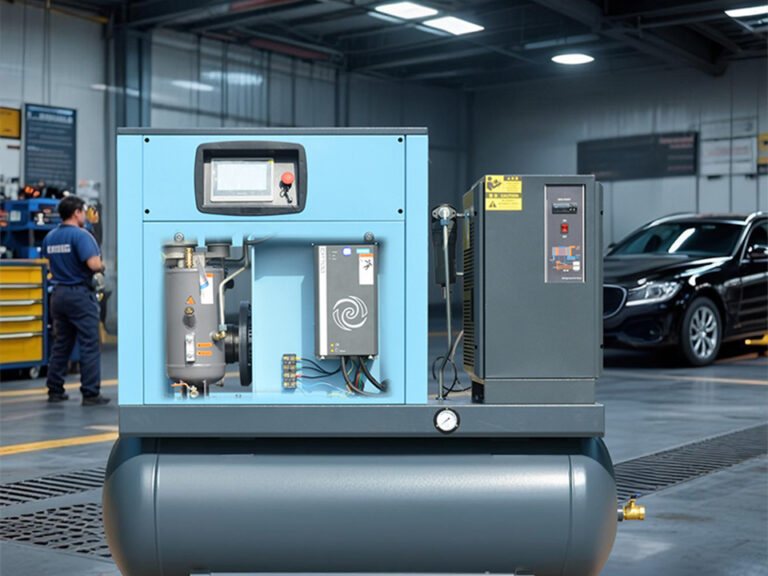
For lower-pressure ancillary duty, a direct-drive 8 bar screw air compressor can make sense around workshops, redevelopment yards, or tool support. But using that operating class as a substitute for a true water well drilling air compressor in hard-rock DTH work is where procurement turns into fiction.
Development time is won after TD, not at the sales demo
This part matters.
The Stanford Mak-Ban 2024 case study is one of the better reminders I have seen that the compressor decision survives long after drilling stops: nine new production wells were drilled in the 2021–2022 campaign, and the authors state that an air compressor is the preferred stimulation method for newly drilled wells in remote locations because it has a proven success rate, while also warning that sudden thermal shock during discharge can damage casing. That is not a minor footnote; that is the whole argument against treating development air as an afterthought.
The Stanford Dieng 2024 paper gets even more operational. Across five air-compression campaigns over the prior five years, four reached discharge and one did not; the median target compression pressure was around 70 barg, the unsuccessful case failed to reach its pressure target, and the program later shifted toward slower, more controlled discharge because rapid release had posed casing-integrity risk and was linked to a later geometry change seen in caliper data. Their pros-and-cons matrix also prices air compression at roughly $70,000–$150,000 per well. I do not think enough buyers price that phase honestly.
So yes, development time is a compressor story too. A well that reaches TD quickly but unloads badly, flashes violently, or needs integrity checks because the discharge was handled like an on/off event is not a fast project. It is a project that moved the delay downstream.
What a sane buyer actually compares
I would split the buying brief like this.
Field objective
What to optimize first
Bad buying logic
Likely field outcome
Hard-rock DTH or high-pressure air drilling
Stable pressure, enough delivered volume, mobility, discharge control
Buying by headline bar alone
Faster bit wear, more trips, erratic cleaning
Hole cleaning in air rotary drilling
Annular velocity, fines evacuation, dust control, operator discipline
Treating cuttings removal as secondary
Regrinding, noisy torque, silica trouble
Well development using compressed air
Controlled pressure build, holding time, valve/throttle strategy, casing integrity
Treating the compressor like a simple blowdown tool
Thermal shock risk, delayed commissioning, extra surveys
Fixed-site support air
Noise, duty cycle, maintenance access, pressure class
Using a field mining package for shop duty
Poor efficiency and wasted capex
That matrix is my reading of the DOE and Stanford field evidence, not a generic catalog template, and it matches the published operating classes of the linked equipment far better than the lazy “bigger compressor equals safer buy” logic I still see in tenders.
Air drilling is a well-construction method that uses compressed air or gas, instead of liquid mud, to lift cuttings from the borehole, keep hard formations cleaner, and often raise penetration in dry rock when the compressor, hammer, bit, and hole geometry are matched. In practice, the gain is real only when cuttings removal, bit loading, and discharge behavior stay under control, which is why DOE and Stanford field work tie drilling speed so closely to system design and operating discipline.
How does compressed air affect bit life?
Compressed air affects bit life by controlling how effectively cuttings leave the hole, how much heat and fines stay around the cutting structure, and whether the bit sees stable loading instead of abrasive recirculation, chatter, and off-design drilling that turns a consumable into a delay event. Stanford’s 2024 Geysers work shows how punishing air-drilled sections can be: bits were often dulled in under 24 hours, trips averaged about 20 hours, and footage in the 8.5-inch interval varied sharply by bit type and formation.
What is hole cleaning in air drilling?
Hole cleaning in air drilling is the process of moving rock fragments, fines, and dust out of the annulus fast enough to stop recutting, torque spikes, and buried bottoms, while also limiting worker exposure to respirable crystalline silica when dry drilling hard, quartz-rich intervals. That is why I treat cleaning as both a drilling variable and a health-control variable; MSHA’s 2024 silica rule makes weak dust and fines management much harder to excuse.
What is the best air compressor for water well drilling?
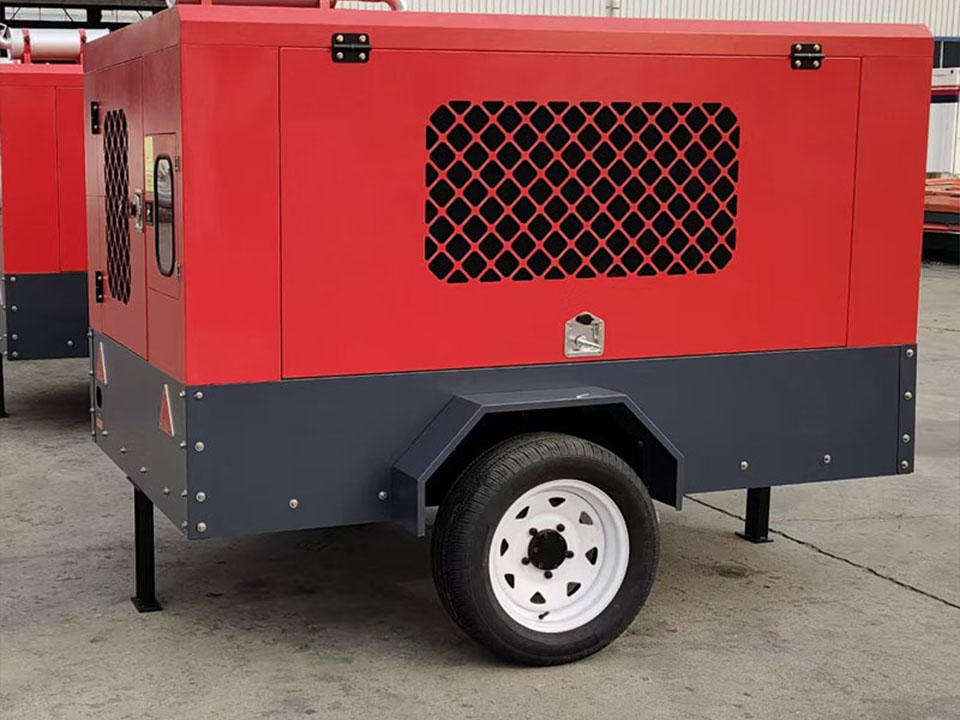
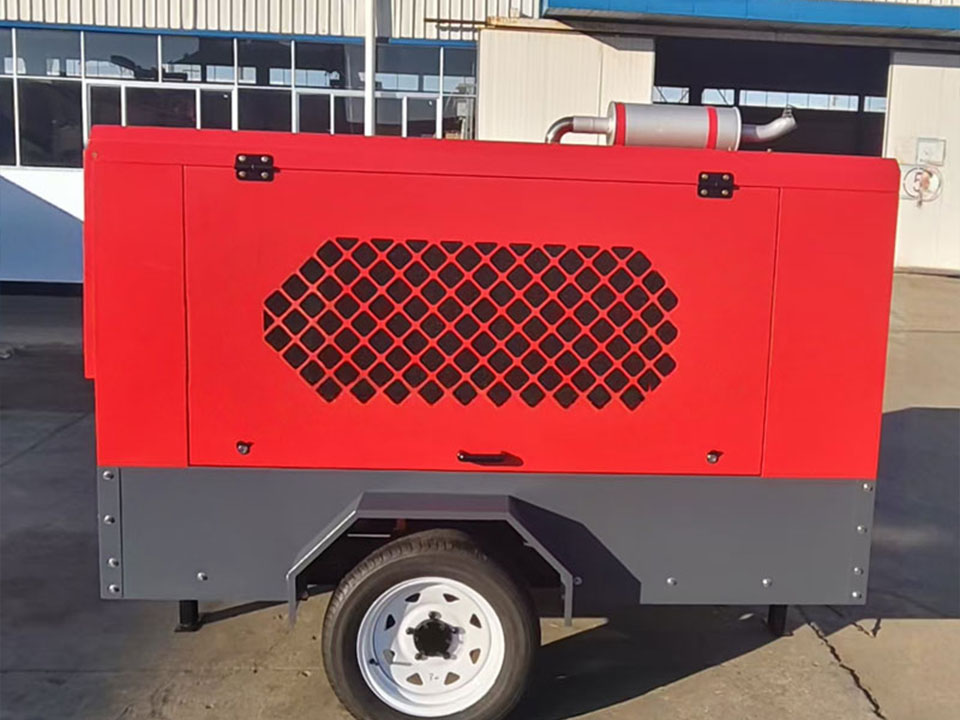
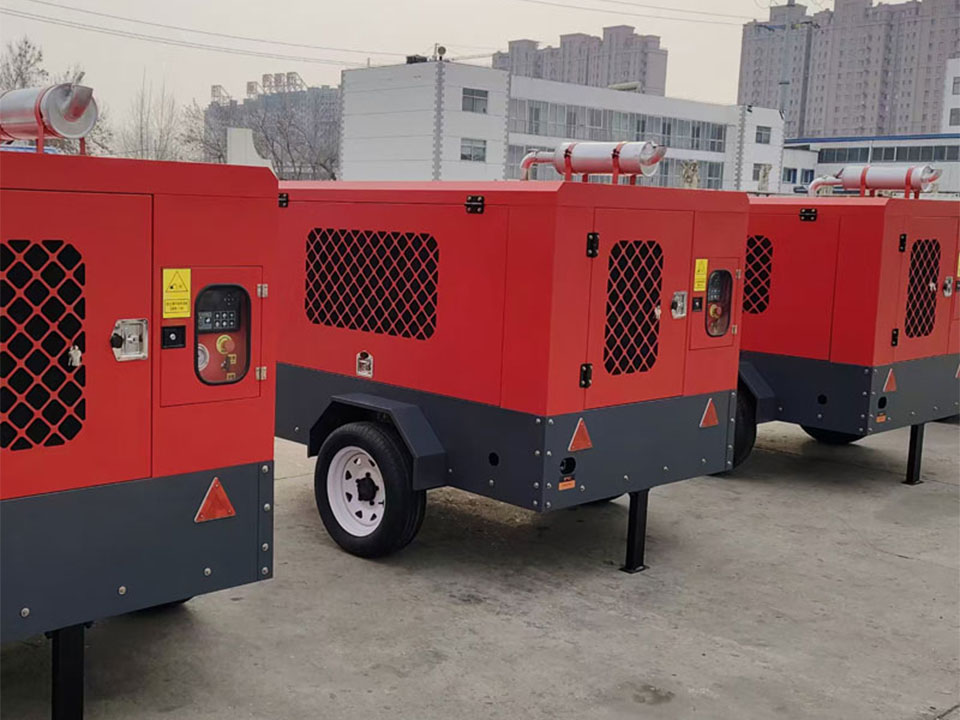
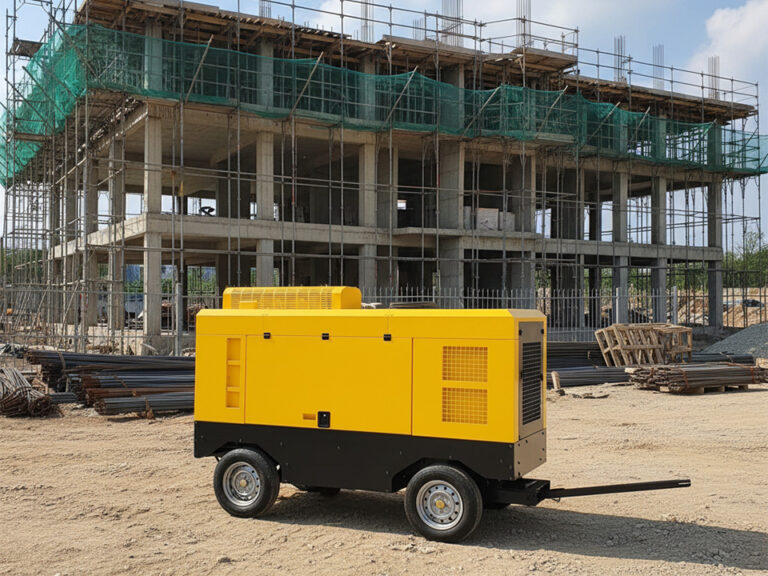
The best air compressor for water well drilling is the one whose pressure, delivered volume, mobility, and control logic match the hole size, depth, hammer type, and post-drill development plan, because a unit that looks adequate on a brochure can still fail at startup, cleaning, or controlled unloading. For example, the published class of the KSCY-580/17 portable diesel unit is fundamentally different from the BK22-8 or BK37 stationary systems, so the right answer depends on whether you are drilling, supporting, or developing the well.
Your next step
Stop buying by bar alone.
Build the compressor brief backward from field outcomes: formation, hole diameter, target depth, hammer type, expected cuttings load, dust-control constraints, discharge method, and whether the package is for drilling or for post-drill development. Then compare the equipment honestly across operating class, starting with a true field unit like the 17 bar diesel screw air compressor for air drilling against stationary options such as the BK22-8 industrial screw air compressor or the 37kW 8–13 bar industrial screw air compressor. That is how you avoid paying for speed up front and delays later.
Send the hole size, target depth, and hammer spec, and I’ll turn this into a buyer-side air package matrix.