“The Drilling Rig gave us a true one-stop solution. Their team matched the right rig, compressor, and drilling tools for our project, and the engineering support stayed fast and professional from quote to delivery.”
Dual-Compressor Workflows That Cut Time per Water Well
Most buyers guess. And that is why so many water well drilling compressor decisions still look rational on a quote sheet but turn ugly on site, where one oversized unit loafs through easy intervals, then still gets strained during peak air demand, while fuel, transport weight, idle time, and maintenance stack up in the background like a tax nobody priced properly. Why keep pretending one compressor profile fits an entire well?
Table of Contents
I have a hard view on this. If your pressure peak, CFM peak, and utilization peak do not happen at the same time, a single-box strategy is usually lazy buying, not disciplined buying. The right dual-compressor setup for water well drilling is not “more equipment.” It is staged capacity. One machine carries the base load. The second machine only shows up when the hole, the formation, or the development phase actually earns it.
The buying mistake nobody wants to admit
Crews love headline numbers. A 23 bar sticker, a 3.5 MPa title, a big CFM claim. Feels safe. Looks serious. But safety margins become waste margins fast when the compressor spends most of the job making pressure the hole does not need.
That matters more now because groundwater conditions are getting less forgiving, not more predictable. A January 2024 Reuters report on global groundwater decline summarized research across 1,693 aquifer systems and found that more than a third were falling by at least 0.1 meters per year, while around 30% had accelerated depletion since 2000. A July 2024 Reuters examination of India’s water stress put the operational consequence in plain language: when the water table keeps falling, borewells fail.
So, yes, the compressor decision is now a time-per-well decision. And a rework decision. And, increasingly, a margin decision.
Where dual-compressor workflows actually beat one big machine
Here is the blunt version: dual works when the job has separated demand peaks. It fails when crews cannot define those peaks.
Surface interval and support tasks are not hard-rock production
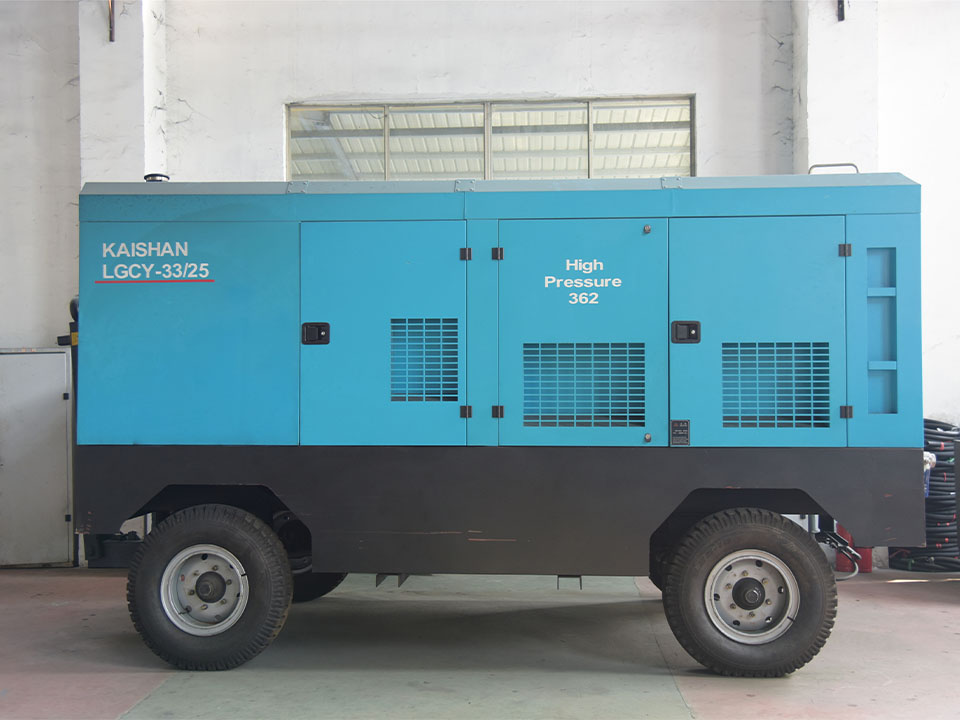
A lighter machine should handle light work. For ancillary air, early-stage prep, service tools, and lower-pressure utility work, something in the class of the 330 CFM portable diesel screw air compressor is the logical base-load candidate; the listing puts it at 330 CFM / 9.5 m³/min and 8 bar in a portable direct-driven layout. That is not a deep, high-pressure hammer solution, and it should not be sold as one.
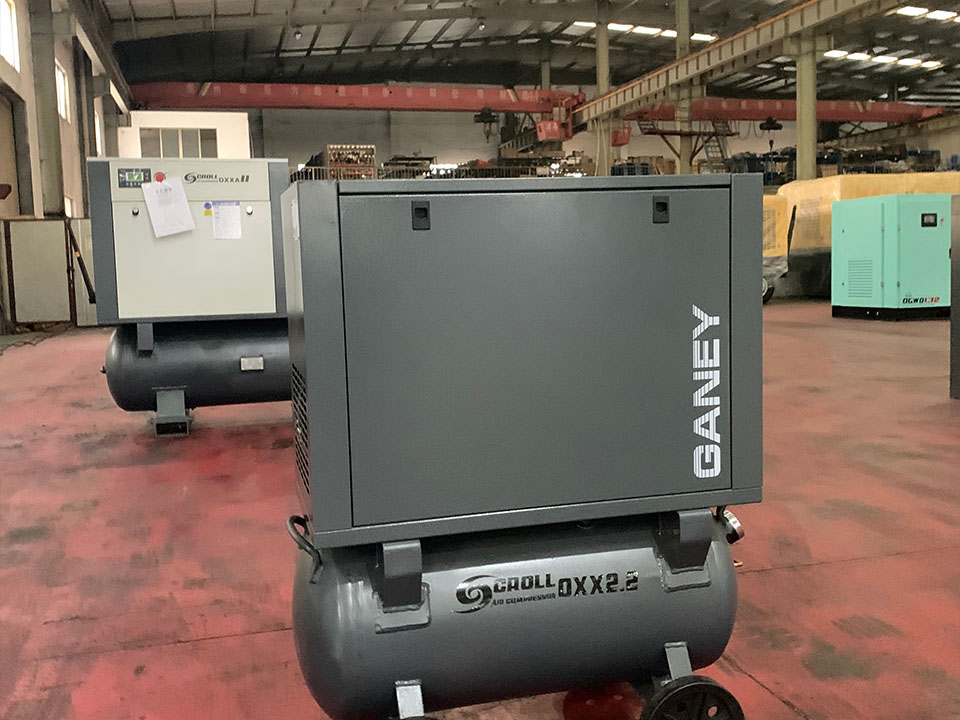
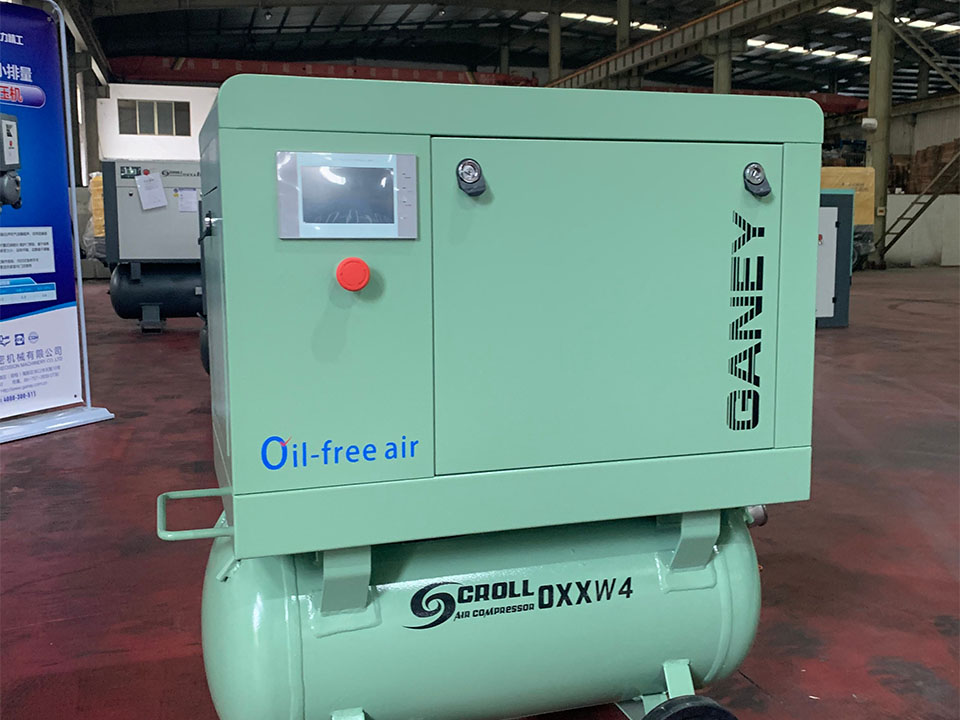
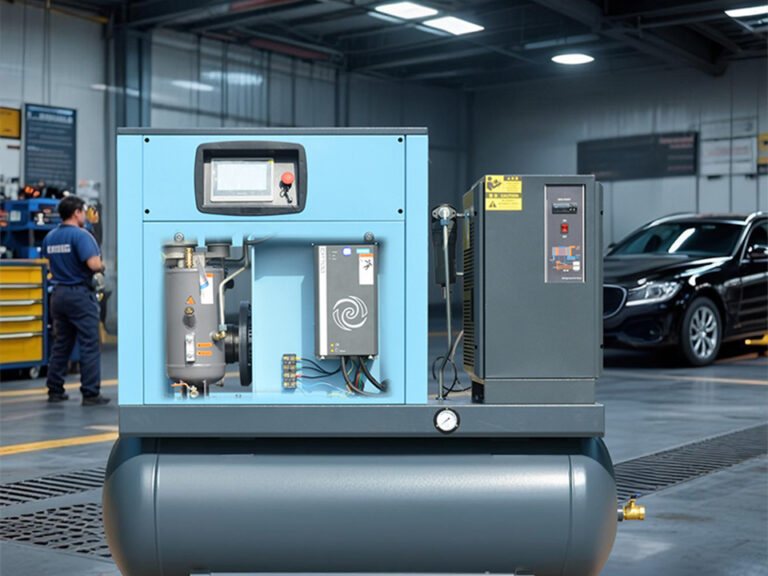
I would say the same about a yard or workshop support machine. The 37kW silent stationary screw air compressor is listed at 8 bar and 5.9–7.58 m³/min in a stationary format, which makes it far more believable for off-rig utility air, prep, testing, or shop support than for primary downhole drilling duty. Buyers blur those categories all the time, then wonder why “the compressor underperformed.” It did not. They misassigned it.
High-pressure drilling intervals are where the second compressor earns its keep
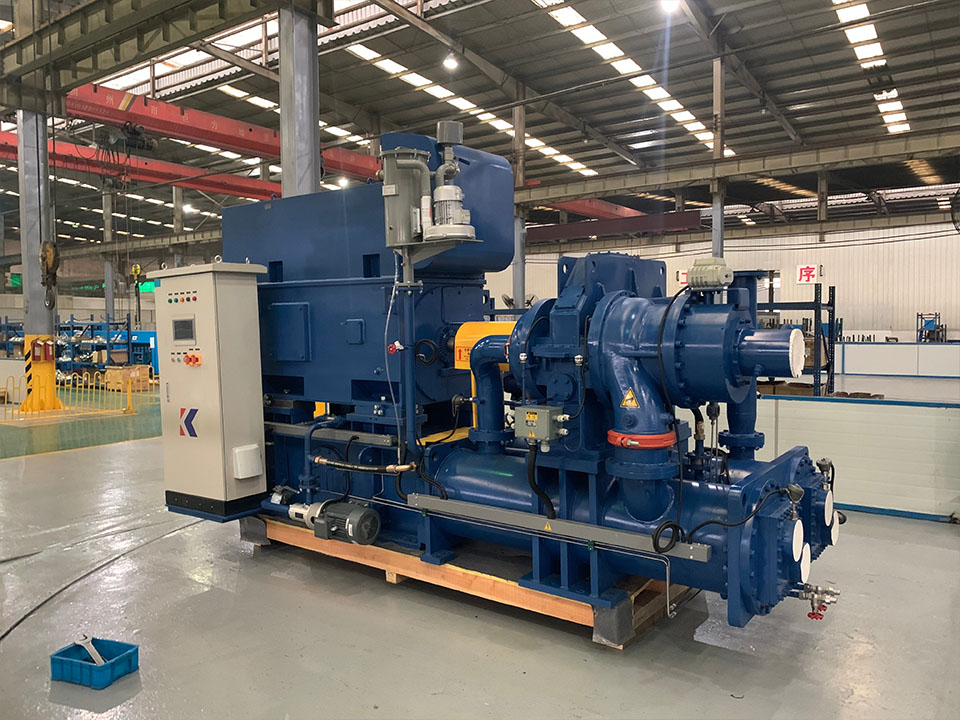
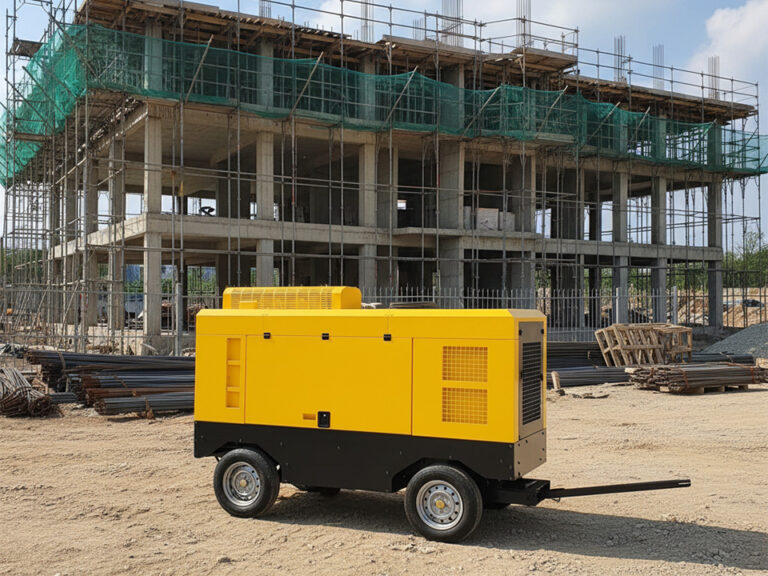
Peak duty needs peak hardware. A machine like the 295KW 23 bar portable diesel screw air compressor is listed at 295 kW, 23 bar, and 29 cbm displacement, and the page explicitly describes it as a direct-driven water drill compressor. That is the kind of unit that belongs in the high-pressure window, not idling through everything before and after it.
And when the real bottleneck is both pressure and volume, the more aggressive option is a unit like the 33 m³/min 3.5 MPa portable diesel engine air compressor. The listing title itself frames it around 33 m³/min and 3.5 MPa, while the page describes it as a portable screw compressor with mute function and ISO9001 certification. That is not a “nice to have” second box. That is a peak-phase tool.
Well development and cleanout often expose the single-compressor myth
This is the phase buyers underrate. Development, air-lift, cleanout, and post-drill correction work do not always want the same compressor behavior as aggressive penetration drilling. I have seen crews run a premium high-pressure box through development simply because it was already on site, even when the work really needed controlled staging and better utilization, not maximum bragging rights.
The hard truth is simple: if Compressor A can keep the rig fed during ordinary intervals and Compressor B only jumps in during development surges, blowdown, or stubborn formations, your total cycle time can fall even if your equipment count rises. That sounds counterintuitive only if you still think “capacity” and “productivity” mean the same thing. They do not.
What the numbers say when you stop reading brochures
The best recent public evidence does not come from water well marketing copy. It comes from energy and industrial operations data, which is exactly why I trust it more.
A May 2024 DOE industrial decarbonization pathways summary states that upgrading controls on air compressors and sequencing multiple compressors can save energy while keeping equipment at the actual required pressure. The same DOE summary estimates air-compressor applications have energy-reduction potential of about 36% from those kinds of measures. That is not a drilling-only figure, but the operating logic carries over cleanly: stop making pressure nobody is using.
Then there is the April 2024 DOE Better Plants case study on Detroit Diesel. One of the cited compressed-air measures was sequencing air compressors, alongside leak-repair work. I like this example for one reason: sophisticated operators do not treat compressor sequencing as theory. They treat it as plant discipline. Drilling contractors should do the same.
And the fuel side is not getting friendlier. A February 2024 Reuters analysis of diesel prices warned that global diesel and middle-distillate stocks were below normal and prices could rise sharply if industrial demand recovered. That means every unnecessary hour of oversized compressor runtime now hits the job twice: once in fuel burn, and again in lost pricing flexibility.
The comparison buyers should run before they sign anything
When dual-compressor sizing makes operational sense
This is the rule set I would use.
Use dual compressors when pressure and volume peak in different windows
If one interval wants 23 bar but moderate volume, and another wants heavy flow for development or cleanout, two staged machines will usually beat one constantly oversized unit. You buy a base-load engine and rent or deploy the peak-load engine only when the bore demands it.
Use dual compressors when downtime costs more than transport complexity
Redundancy is not romantic. It is arithmetic. On high-value jobs, the second machine is partly a productivity tool and partly insurance. One box down does not mean one crew down.
Do not use dual compressors when the crew cannot stage them cleanly
I am not sentimental about this. If the site has weak manifolding, sloppy hose routing, no isolation logic, and no clear rule for when the second machine comes on line, dual-compressor workflows become an expensive theatre production. More hoses. More confusion. Same hole.
Do not use dual compressors just to mask bad compressor sizing
This is the industry’s favorite bad habit. One wrong machine gets bought first. A second wrong machine gets added later. Then the seller calls it a “flexible fleet.” No. That is a papered-over mistake.
The part vendors underplay: utilization beats nameplate vanity
Three words matter. Run-time matching matters.
A water well air compressor should be sized against the job’s phase profile, not the buyer’s anxiety. When I look at field inefficiency, it almost always comes from one of four failures: buying for the worst five percent of the cycle, dragging peak-pressure equipment through low-demand work, using development air requirements to size drilling air, or treating workshop air as if it belongs on the rig.
The stronger buyers do the opposite. They map the well into phases, assign pressure and CFM bands to each phase, estimate duration, then decide where a second compressor reduces total hours instead of just increasing total iron. That is how utilization improves. That is how cost per completed well drops. And that is how “apparently more complex” setups start looking simpler once the invoices land.
FAQs
What is a dual compressor setup for water well drilling?
A dual compressor setup for water well drilling is a staged air system in which one compressor carries the normal base load and a second compressor is added only when the job enters a higher-pressure, higher-volume, or higher-risk phase that would otherwise slow penetration or create idle time.
In practice, that means you stop forcing one machine to do every job badly. One unit handles routine flow. The second handles peaks, redundancy, or a separate support task. That is the real answer-engine version, and it is the only one worth using.
How do dual-compressor workflows cut time per water well?
Dual-compressor workflows cut time per water well by matching compressor output to the specific drilling, development, and support phases of the job, so high-pressure equipment is used only when the bore actually needs it and lower-demand intervals are not burdened by oversized, fuel-hungry runtime.
The gain does not come from magic. It comes from reduced waiting, fewer pressure bottlenecks, better equipment utilization, and less downtime when one compressor can keep work moving while the other is staged, serviced, or held in reserve.
What is the best water well air compressor for deep drilling?
The best water well air compressor for deep drilling is the one whose working pressure, CFM, duty cycle, and transport footprint match the hardest interval of the hole without forcing you to overpay for that same peak capability during the easier 70% to 90% of the project.
That usually points buyers toward a staged decision, not a single champion machine. For deeper, harder, peak-pressure intervals, higher-pressure portable units make sense; for lighter duty, a smaller base-load compressor is often the smarter economic choice.
How should buyers approach water well drilling compressor sizing?
Water well drilling compressor sizing should start with a phase-by-phase load map that assigns expected pressure, required airflow, duration, and failure cost to each interval of the well, rather than using one inflated maximum-demand assumption to size the entire compressor purchase.
That is the clean method. Size for base load first. Then identify whether a second portable air compressor for well drilling or a booster-style unit is cheaper than oversizing the whole fleet for a short-lived peak.