“The Drilling Rig gave us a true one-stop solution. Their team matched the right rig, compressor, and drilling tools for our project, and the engineering support stayed fast and professional from quote to delivery.”
Case Study: When a 185-CFM Compressor Became the Bottleneck
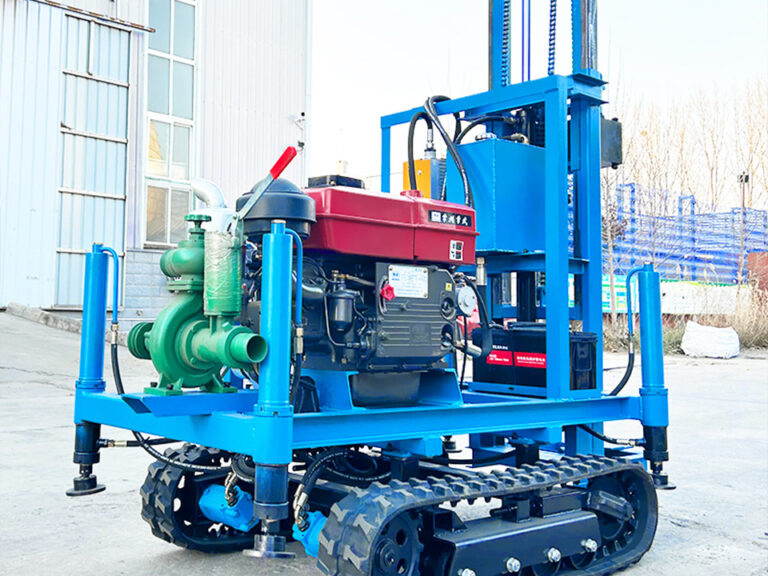
The Job Did Not Fail Because of the Rig
I saw it.
And what bothered me was not that the crew made a mistake; it was that the mistake looked completely reasonable to a buyer sitting in an office, reading a supplier quote, comparing diesel engines, and trying to squeeze one more season out of an existing 185 CFM air compressor.
That is how bad equipment decisions usually happen. Not with stupidity. With half-truths.
A small compressor had been paired with a bigger drilling plan. The buyer wanted to drill deeper boreholes, run a larger DTH setup, reduce subcontractor dependence, and keep the old 185 CFM compressor in service because, frankly, it was already paid for. Why buy more air when you already own air?
Table of Contents
Because drilling is not a brochure.
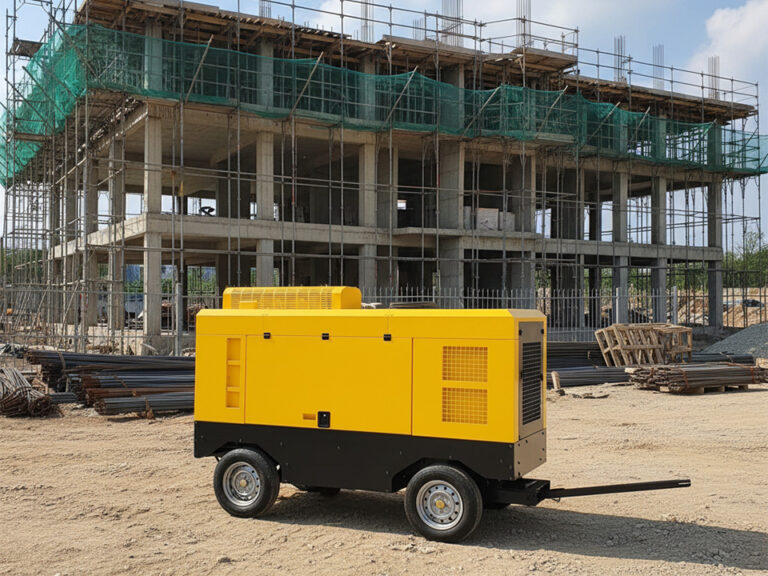
The exact field problem was simple: the rig had enough pullback, enough rotation, and enough feed force, but the compressor could not maintain the air volume and working pressure needed for steady DTH performance. The 185 CFM compressor for drilling became the bottleneck. Not the operator. Not the hammer. Not the ground alone. The air system.
Here is the ugly truth: many import buyers overspend on the rig frame and underspend on compressed air. They ask about drilling depth first. They should ask about air demand first.
Why 185 CFM Looks Bigger Than It Feels
A 185 CFM compressor sounds useful because the number is familiar. Rental yards stock them. Small contractors know them. In light construction, 185 CFM is a normal class. But water well drilling is not jackhammer rental.
DTH drilling is brutally air-hungry. The hammer needs pressure to strike. The hole needs airflow to lift cuttings. The borehole does not care what the catalog says at sea level under clean test conditions.
According to Atlas Copco’s compressor sizing guidance, compressor selection should start with airflow and pressure requirements rather than horsepower alone. That sounds obvious until you watch buyers compare engine kilowatts while ignoring pressure loss, hose length, altitude, hammer size, and annular velocity.
Bad math wins.
In water well work, Chicago Pneumatic describes drilling efficiency as a function of ideal airflow and pressure range for different drilling depths, with its water well compressor range covering 500 to 1250 CFM and 175 to 425 PSI for higher-performance drilling applications. See their note on selecting the right compressor for water well drilling. That range tells us something uncomfortable: 185 CFM sits far below the compressor class usually discussed for serious DTH water well production.
Does that mean a 185 CFM air compressor is useless?
No. But it means the application envelope is narrow. Small diameter. Shallow depth. Light hammer. Favorable formation. Short air lines. No heroic expectations.
The Field Case: One Compressor, Too Much Program
The drilling program started modestly. Shallow wells. Softer formations. A small rig. Then the buyer expanded the work: larger boreholes, harder rock intervals, deeper targets, longer daily production goals, and more pressure from local customers.
The compressor stayed the same.
That is where the trap closed. The crew could technically start the hole. They could rotate. They could blow some cuttings out. They could make noise, dust, and progress. But the penetration rate dropped, cleaning became unstable, and the operator started compensating with slower feed, repeated flushing, and more time spent waiting for the hole to behave.
This is where a drilling compressor bottleneck hides: the machine does not always stop. It just makes every meter expensive.
A buyer sees “still drilling.” I see fuel converted into waiting.
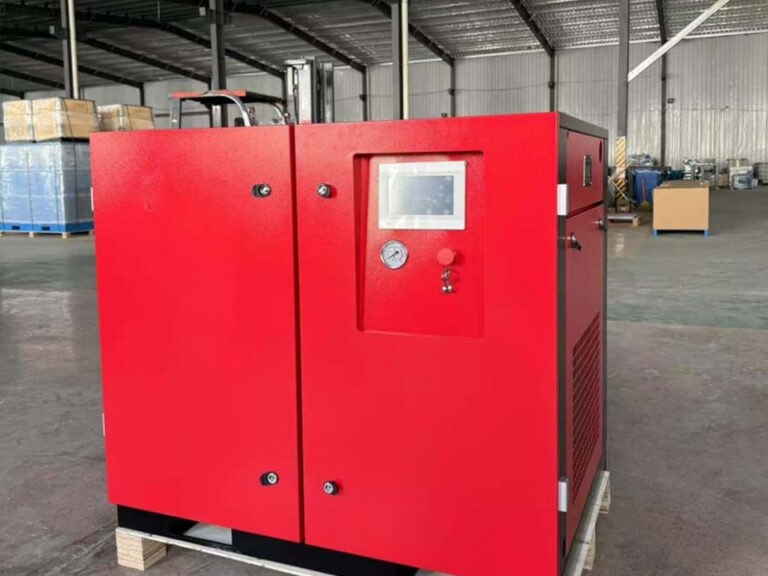
For reference, a small stationary diesel screw option such as a 12V stationary water well diesel screw air compressor may fit low-demand site support or smaller drilling work, but when the program shifts toward deeper DTH water well production, the buyer has to move the conversation toward pressure, flow, and reserve capacity — not just whether the engine starts.
What Actually Happened Underground
The symptoms came in layers:
Field Symptom
What the Buyer Saw
What Was Really Happening
Commercial Damage
Slow penetration
“Hard rock today”
Hammer energy and cuttings evacuation were both underfed
More diesel per meter
Re-drilling and flushing
“Operator is being careful”
Cuttings were not clearing fast enough
Lost daily output
Hammer inconsistency
“Maybe bad hammer quality”
Pressure/volume mismatch reduced stable impact
Tool wear and blame games
Hot working cycle
“Compressor is working hard”
Small compressor was being stretched near its limit
Higher failure risk
Missed schedule
“Weather and geology problem”
Air package was undersized from the beginning
Delayed cash collection
That table is not academic. It is how arguments start between buyers, suppliers, operators, and end customers.
The 185 CFM vs 380 CFM Question Buyers Keep Getting Wrong
Let me be direct: 185 CFM vs 380 CFM compressor comparisons are often framed incorrectly.
Buyers ask, “Can a 185 CFM compressor run a DTH hammer?”
The better question is: “Can a 185 CFM compressor run this hammer, at this borehole diameter, at this depth, in this formation, with acceptable penetration rate and hole cleaning?”
A 185 CFM compressor may cycle a small hammer under controlled or shallow conditions. But “cycle” is not the same as “produce.” That distinction costs money.
For import buyers who are moving into harder formations or larger borehole programs, stepping into stronger air packages such as a 17 bar screw air compressor with diesel engine can make more commercial sense than forcing a small compressor to behave like a larger unit. And once depth, rock hardness, and hole diameter increase again, high-pressure units such as a 295 kW 23 bar portable diesel screw air compressor become part of the real discussion.
The real enemy is not buying too much compressor. The real enemy is buying almost enough compressor.
Almost enough air gives you the most expensive type of failure: a machine that keeps running badly.
The Hidden Cost Is Not the Compressor Price
I frankly believe many small drilling contractors miscalculate compressor economics by looking only at purchase price. They see a bigger compressor as a cost. I see an undersized compressor as a tax.
A bigger compressor burns fuel. Yes.
But a small compressor that doubles the drilling time also burns fuel, wears tools, wastes labor, delays invoicing, and makes the contractor look unreliable. Which one is really expensive?
The U.S. Department of Labor’s OSHA 2024 guidance on respirable crystalline silica reminds contractors that drilling and construction activities can create health exposure risks when dust is not controlled properly; their Small Entity Compliance Guide for the Respirable Crystalline Silica Standard for Construction discusses dust controls and compliance responsibilities. Why mention silica in a compressor article? Because bad hole cleaning, poor air control, and uncontrolled dust are not just productivity problems. They become site management problems.
NIOSH also notes that respirable crystalline silica particles can be generated from materials such as soil, sand, concrete, mortar, granite, and other minerals, and particles small enough to enter deep lung tissue are the concern. Their page on silica and worker health is worth reading if your drilling work involves dry dust exposure.
No, a bigger compressor alone does not solve silica compliance. But unstable drilling air makes the whole job messier.
And messy jobs produce complaints.
Where a 185 CFM Compressor Still Makes Sense
I do not hate 185 CFM compressors. I hate false expectations.
A 185 CFM compressor for drilling can still make sense when the work profile is controlled:
Application Condition
185 CFM Fit?
My Comment
Shallow small-diameter boreholes
Possible
Only if hammer and hole size match
Light-duty support air
Good
Cleaning, tools, site support
Soft formation drilling
Possible
Production expectations must stay realistic
Larger DTH water well drilling
Weak
Bottleneck risk rises fast
Deep hard-rock boreholes
Poor
Pressure and airflow reserve become too small
Contractor growth program
Risky
It limits the jobs you can accept
This is why compressor selection should be tied to the business plan, not only the current well.
If a contractor wants to drill shallow agricultural wells, maybe 185 CFM is fine. If he wants to move into bigger boreholes, harder rock, and paid production schedules, he needs a different air strategy.
For heavy-duty demand, a machine class like a 33 m³/min 3.5 MPa portable diesel engine air compressor belongs in the conversation because 33 m³/min is roughly 1,165 CFM, and 3.5 MPa is about 35 bar. That is not the same universe as 185 CFM.
The Bottleneck Formula Buyers Should Use Before Paying a Deposit
Here is the practical buying logic I use.
First, define the hole diameter. Then define the hammer size. Then define the target depth. Then define the formation. Then select compressor pressure and airflow with reserve.
Not the other way around.
If a supplier starts with “this rig can drill 200 meters” but cannot explain DTH drilling compressor size, air compressor CFM requirements, working pressure, and realistic formation limits, I would slow the purchase down immediately.
A rig without enough air is a truck without enough fuel delivery. It may look complete. It is not complete.
My Field Checklist Before Choosing a Water Well Drilling Compressor
Ask these questions before buying:
Question
Why It Matters
What borehole diameter will you drill most often?
Larger holes need more air to clean cuttings
What DTH hammer size will you run?
Hammer air consumption must match compressor output
What is the target drilling depth?
Deeper holes increase pressure and evacuation demands
What formation is expected?
Hard rock punishes weak air systems
What is the altitude and climate?
Hot, high-altitude sites reduce real compressor performance
What is the acceptable meters per day?
Production goals change compressor sizing
Is future expansion planned?
Buying only for today can block tomorrow’s jobs
This is not fancy engineering. It is survival math.
The Supplier Conversation I Would Trust
I trust suppliers who say “no” sometimes.
If a buyer asks whether a 185 CFM air compressor can run a larger DTH hammer, a responsible answer should include conditions, not slogans. Something like: “It may run only a small hammer in shallow work, but for larger boreholes and harder formations, expect slow penetration and poor hole cleaning.”
That answer might lose a cheap order. It can also save a customer.
The worst answer is: “Yes, no problem.”
No problem?
There is always a problem when airflow is undersized. The only question is who pays for it: the buyer, the operator, the customer waiting for water, or the supplier dealing with complaints after delivery.
FAQs
Can a 185 CFM compressor run a DTH hammer?
A 185 CFM compressor can run some small DTH hammers only under limited conditions, usually shallow depth, smaller borehole diameter, favorable geology, and modest production expectations. It should not be treated as a universal DTH drilling compressor for deeper water wells, larger holes, or hard-rock programs.
The real issue is not whether the hammer moves. The issue is whether the compressor provides enough air volume and pressure to maintain impact energy and clean the hole. If cuttings stay in the borehole, the hammer works in a dirty environment and drilling speed drops.
What is the main sign of a drilling compressor bottleneck?
A drilling compressor bottleneck is a condition where the rig and hammer can operate, but the compressor cannot supply enough airflow or pressure to sustain efficient penetration, cuttings removal, and stable DTH hammer performance. The job continues, but every meter becomes slower and more expensive.
In the field, this often looks like “bad ground.” Operators flush repeatedly, penetration becomes uneven, and fuel use rises. Many buyers blame the rig or hammer first, but the compressor is often the quiet limiting factor.
Is 185 CFM enough for water well drilling?
A 185 CFM compressor is enough for some light water well drilling tasks, especially shallow, small-diameter, low-demand work where the hammer and borehole size are carefully matched. It is usually not enough for larger DTH water well drilling programs that require stronger cuttings evacuation and higher working pressure.
For buyers planning commercial drilling, the better approach is to size the compressor around the actual borehole, hammer, depth, and geology. If the project may expand, choosing only 185 CFM can restrict future jobs.
Why does CFM matter in DTH drilling?
CFM matters in DTH drilling because airflow removes cuttings from the borehole while also supporting hammer operation with enough compressed air volume. Without enough CFM, cuttings accumulate, penetration slows, hammer behavior becomes unstable, and the operator spends more time flushing than drilling.
Pressure gives the hammer energy, but airflow keeps the hole clean. You need both. A compressor with attractive pressure but weak volume can still fail in real drilling conditions.
Should I choose 185 CFM or 380 CFM for drilling?
A 380 CFM compressor is usually the safer choice than 185 CFM for larger or more serious DTH drilling because it provides more airflow reserve for hole cleaning, hammer stability, and production speed. A 185 CFM unit may work only in smaller, shallower, and less demanding applications.
The decision should not be based on compressor price alone. Compare cost per finished meter, daily production, tool wear, fuel burn, and the risk of refusing larger jobs. Cheap air can become expensive air.
Your Next Step: Size the Air Before You Buy the Rig
If you are buying a water well drilling rig, do not start by asking only for drilling depth and machine price.
Send the supplier your target depth, borehole diameter, formation type, hammer size, expected meters per day, and local working conditions. Then ask for a matched air package. If the answer is vague, keep asking.
And if you are still trying to stretch a 185 CFM compressor into a larger DTH drilling program, be honest with yourself: you may not be saving money. You may simply be moving the cost from the purchase invoice into every slow, dusty, fuel-heavy meter you drill.