“The Drilling Rig gave us a true one-stop solution. Their team matched the right rig, compressor, and drilling tools for our project, and the engineering support stayed fast and professional from quote to delivery.”
How to Size Rotary Head Torque and Speed for Formations
Short answer? Most people get it wrong.
And I’m not talking about beginners—I’m talking about contractors who’ve drilled 200+ wells, bought a “200m rig,” and still stall out at 80m because the torque curve collapses under real rock load, not brochure conditions, which quietly assume ideal formations, zero vibration, and perfectly matched bit geometry.
So what actually matters?
Table of Contents
The Real Equation Nobody Writes Down
Here’s the ugly truth: torque and RPM are not independent—they’re a trade-off system governed by rock strength, bit diameter, and energy transfer efficiency.
And yes, there’s data to back this.
According to a U.S. government drilling simulation study published by the Centers for Disease Control and Prevention, required torque increases with rock shear strength and drilling depth due to higher resistance and chip hold-down forces.
Translation? Harder rock = more torque, less RPM.
But here’s where it gets interesting—
A 2025 geothermal drilling study from Stanford University showed that improper RPM/torque balance causes torsional vibration (stick-slip), which reduces penetration rate and destroys bits faster than most operators realize.
So no—this isn’t theoretical. It’s expensive.
Formation Dictates Everything (Not Your Rig Spec Sheet)
Let me put it bluntly.
You don’t “choose” torque. The formation forces it on you.
Formation vs Rotary Behavior
Formation Type
Typical UCS (MPa)
Torque Demand
RPM Strategy
Real Field Behavior
Clay / Overburden
<20
Low
High RPM
Fast penetration, low wear
Sandstone
20–80
Medium
Moderate RPM
Stable but sensitive to bit choice
Limestone
80–150
High
Lower RPM
Torque spikes, slower drilling
Granite / Basalt
150+
Very High
Low RPM
Bit wear, vibration, stall risk
Now here’s the part most people ignore—
Torque doesn’t just increase linearly.
Lab data shows torque rises sharply with rock compressive strength and bit diameter, while RPM must be reduced beyond certain thresholds to maintain cutting efficiency.
Meaning? If you keep RPM high in hard rock—you’re not drilling, you’re polishing.
RPM vs Torque: The Trade-Off That Kills Rigs
Three words: You can’t cheat physics.
A lot of buyers think: “Higher RPM = faster drilling.”
Wrong.
Field guidance from drilling manufacturers shows that when RPM drops, you must increase torque to maintain penetration—and vice versa.
But here’s where rigs fail:
They advertise:
120 RPM
3500 Nm torque
But not at the same time.
That’s the trap.
Real-World Example
I’ve seen operators running a 200m class rig like this:
Soft soil → 90–120 RPM → low torque → fast
Hit granite at 110m → torque demand spikes → RPM collapses to 30–40
Result → penetration drops 60%, fuel cost doubles
And suddenly that “cheap rig” isn’t cheap anymore.
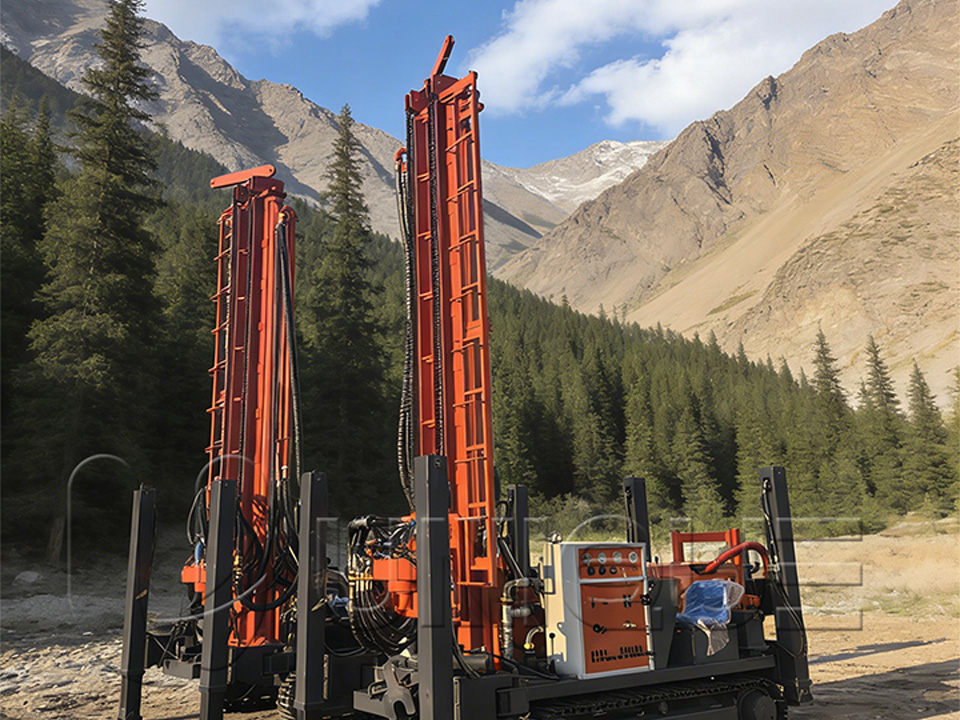
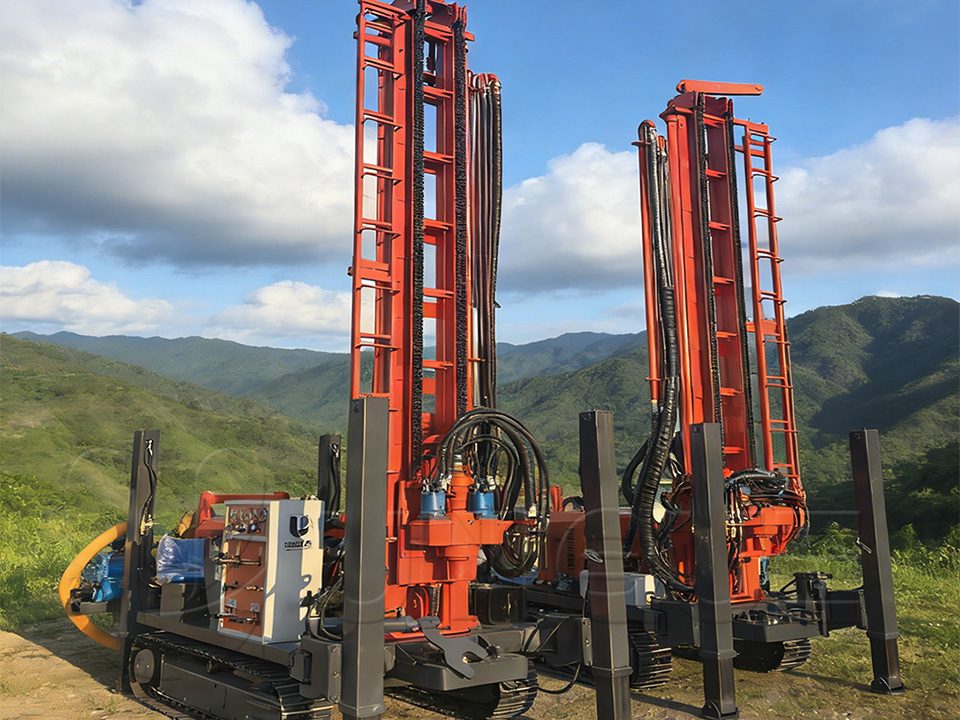
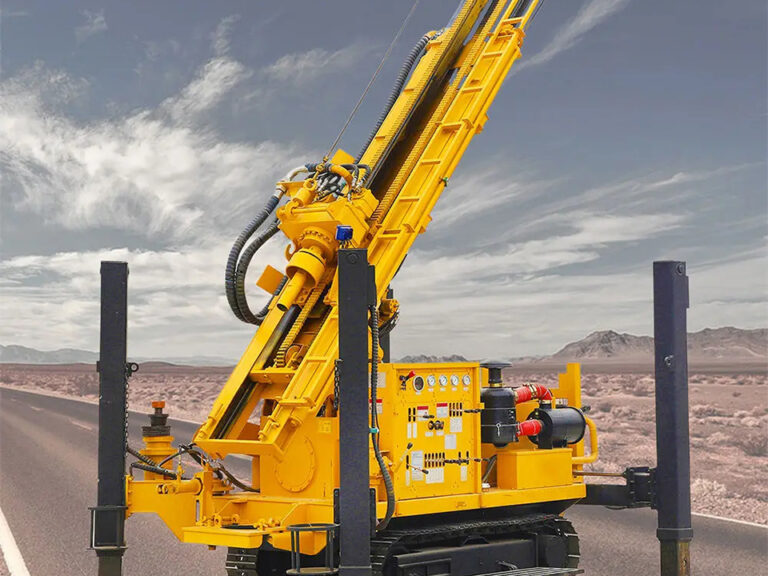
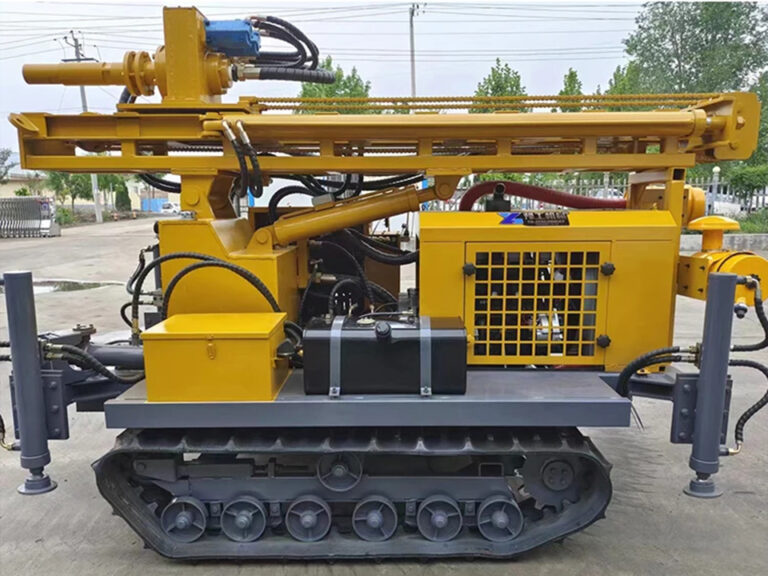
Matching Rotary Head to Real Machines (Not Brochures)
And honestly? Most buyers don’t even ask for that data.
What You Should Actually Ask
Max torque at low RPM (30–60 rpm)
Torque drop-off curve
Hydraulic motor displacement
Gear ratio (real, not marketing)
Because here’s the hard truth—
A rig that claims 200m depth but loses torque at 80m is not a 200m rig.
It’s a liability.
Why Bit Selection Changes Everything
Let me push this further.
Torque sizing without bit context is useless.
Different bits change everything:
Drag bits → higher RPM, lower torque
Tricone → balanced
DTH hammer → low RPM, high torque + air
And here’s something most people don’t realize—
The same formation can require completely different torque depending on bit type and diameter.
That’s why two rigs on the same site perform differently.
Not luck. Physics.
FAQs
What is rotary drilling torque and speed?
Rotary drilling torque and speed refer to the rotational force (torque) and rotational rate (RPM) applied to the drill bit, which together determine how efficiently the bit cuts through formations based on rock strength, bit type, and drilling conditions.
How does formation affect drilling torque and speed?
Formation affects torque and speed by increasing resistance as rock strength rises, requiring higher torque and lower RPM in hard formations, while softer formations allow higher RPM and lower torque for efficient drilling.
What is the best RPM for hard rock drilling?
The best RPM for hard rock drilling is typically low (20–60 RPM range) because higher speeds reduce cutting efficiency and increase bit wear, while higher torque ensures effective rock breaking and penetration.
How do you calculate rotary head torque requirements?
Rotary head torque requirements are calculated based on rock strength (UCS), bit diameter, and drilling depth, with higher strength and larger bits requiring exponentially higher torque to maintain penetration.
Why does incorrect torque sizing reduce drilling performance?
Incorrect torque sizing reduces performance because insufficient torque causes stalling and low penetration, while excessive RPM without torque leads to bit polishing, vibration, and premature equipment failure.
Final Thoughts: Stop Buying Depth—Start Buying Torque
Here’s my take.
Depth ratings sell rigs. Torque runs jobs.
If you remember one thing, make it this:
A drilling rig is not defined by how deep it can go— but by how much torque it can hold when everything goes wrong.
And it will.
Your Next Steps
If you’re serious about avoiding expensive mistakes:
Audit your target formations (not just depth)
Match torque curves—not max specs
Choose rigs based on low-RPM torque stability
Or—
Just keep buying based on “200m capacity” and learn the hard way.