“The Drilling Rig gave us a true one-stop solution. Their team matched the right rig, compressor, and drilling tools for our project, and the engineering support stayed fast and professional from quote to delivery.”
Continuous-Duty vs Nameplate Ratings in Drill Compressor
Three words matter: sustained air delivery.
I’ve watched too many buyers compare compressors by the prettiest quote sheet, then act surprised when the machine that “won” on paper starts losing flow after the first hour, the separator runs hotter, the inlet filter loads up, the operator pushes pressure to protect penetration rate, and the unit that looked cheaper begins eating diesel, margin, and credibility at exactly the same time. Why does this keep happening?
Because the drill-compressor market still has a dirty habit. We sell headline numbers. The site needs continuous behavior.
Table of Contents
The number on the plate is not the number in the hole
Let me be blunt. A nameplate rating is not a fraud by itself. It’s just incomplete. And in drilling, incomplete data is expensive data.
The Compressed Air & Gas Institute says performance comparisons are supposed to be grounded in standardized tests and data sheets, not marketing fog; its verification program is built around ISO 1217 testing and independently checked published performance claims. That matters because buyers are often comparing units that look similar in horsepower and discharge pressure but are not equally honest about delivered flow and efficiency.
And then there’s the part salespeople love to skate past: ambient conditions. CAGI’s handbook notes that capacities are based on prevailing ambient conditions, and the same handbook shows performance shifting materially as capacity changes and inlet conditions move away from the nice, clean assumptions used in the test sheet.
That is the whole trap.
A drill compressor does not live in a brochure. It lives beside dust, heat, pressure drop, intermittent abuse, restricted service intervals, and operators who will absolutely keep drilling once the unit is already telling you it wants a break.
Continuous duty is where reputations get made or destroyed
Here’s my hard truth: if you’re selling compressors for drilling and you don’t lead with continuous-duty behavior, you are not really selling equipment. You are selling future arguments.
The U.S. Department of Energy warns that hot or contaminated intake air impairs compressor performance, reduces capacity, and pushes energy and maintenance costs higher; it also notes that when intake temperature rises, air density falls, which means reduced mass flow and pressure capability, often forcing operators to run additional compressors.
Read that again. Reduced mass flow. Not just a tiny efficiency quirk. The air actually available to do work drops.
CAGI goes even further in the technical language most quote sheets politely avoid: at a standard inlet temperature of 68°F, moving to 86°F implies a measurable weight-flow reduction, and the handbook states that proper system performance requires compressor rating to be guaranteed for summertime inlet conditions or as a weight-flow rating under those same conditions.
So, no, I don’t get excited when someone says, “But the nameplate says 22 kW” or “the brochure shows 8 bar.” That tells me almost nothing about whether the machine can hold its air end together and maintain usable delivery over a long drilling cycle.
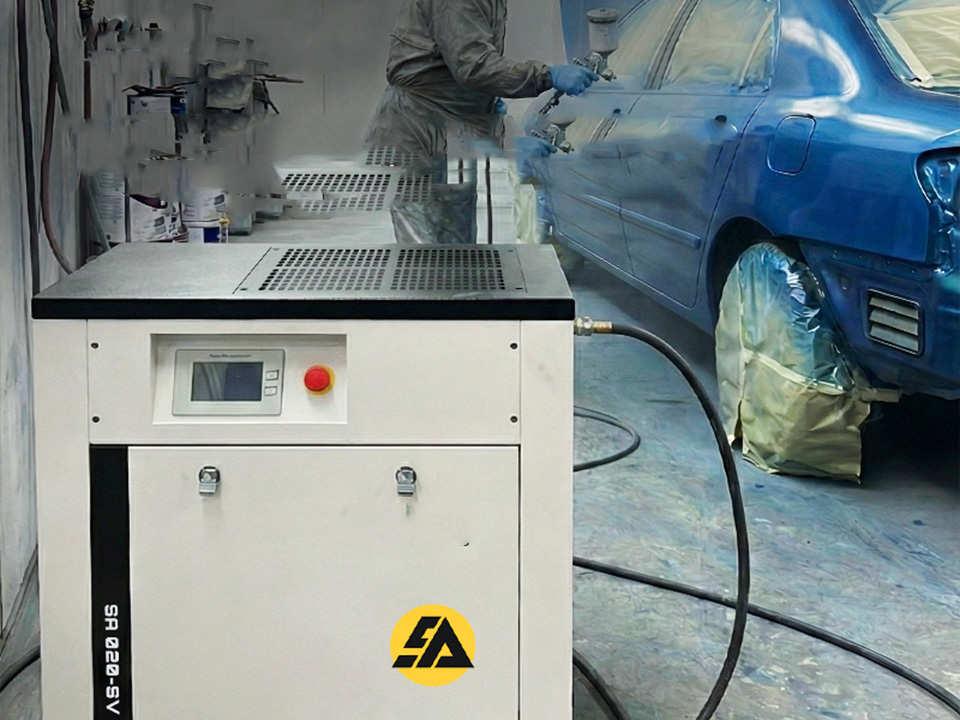
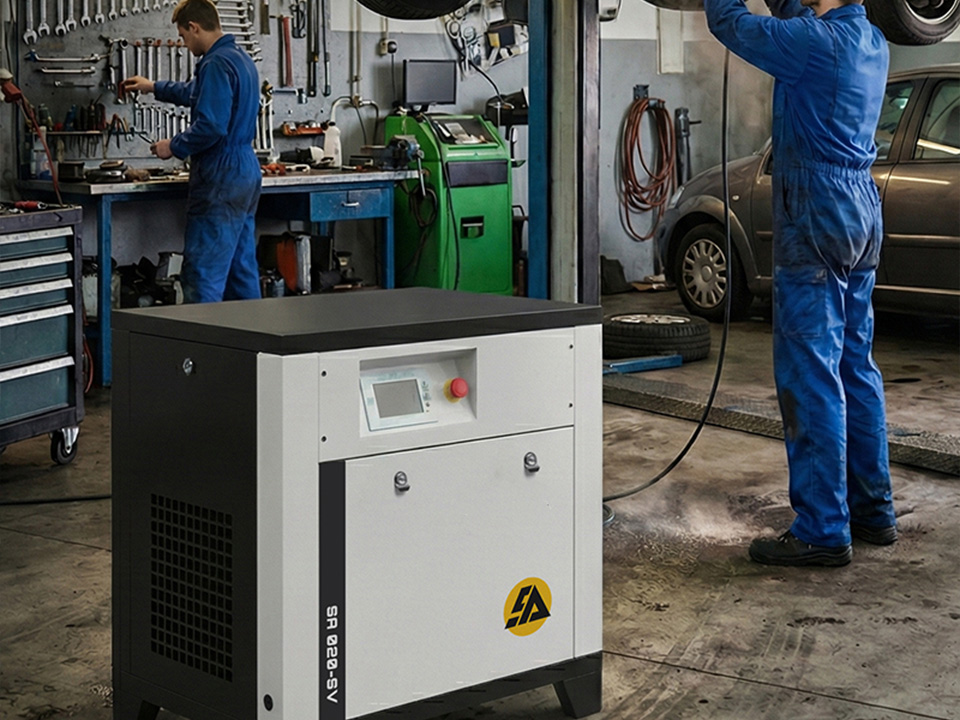
If you’re discussing smaller stationary or shop-linked support air packages, that is exactly why I’d rather review the published operating envelope behind a unit like this 11kW direct drive AC power electric screw air compressor than stare at a bare motor number. The same goes for this 15kW silent screw air compressor 220V AC gas power model, where the useful question is not “what’s the nameplate?” but “what does it hold after heat, load, and cycle length stop being polite?”
What buyers miss when they compare “same pressure, same power”
This is where bad procurement starts.
Two compressors can both say 8 bar. Two can both say 30 kW. Two can both look “competitive.” But the buyer still needs answers to the questions below:
Checkpoint
Why it matters in continuous drilling
What weak sellers usually hide
Tested standard
Tells you whether flow and power were measured under a recognized method
No mention of ISO 1217 or independent verification
Full-load flow vs part-load behavior
Drilling demand shifts, and unstable part-load behavior burns fuel and uptime
Only one headline CFM number
Summer inlet condition
Heat reduces density and delivered mass flow
Ratings shown only at benign conditions
Filter restriction tolerance
Dirty air and clogged inlet filters cut capacity fast
No data on intake pressure drop or maintenance effect
Duty cycle expectation
Long drilling cycles expose thermal weakness and control instability
Language like “max output” without sustained duration
Specific power / kW per delivered flow
Separates honest compressors from loud compressors
Motor power emphasized, delivered air obscured
This is not theory. The DOE states that a dirty intake filter on a 200 hp compressor can reduce efficiency by 1% to 3%, translating into higher annual energy costs, and its leak guidance says leaks often waste 20% to 30% of compressor output while also increasing run time, cycling, and maintenance stress.
That second number matters more than many dealers admit. Because once 20% to 30% of output disappears into leaks, restrictions, or bad control logic, the “cheaper” compressor suddenly needs to work harder and longer to fake the same field result. And fake results never stay fake for free.
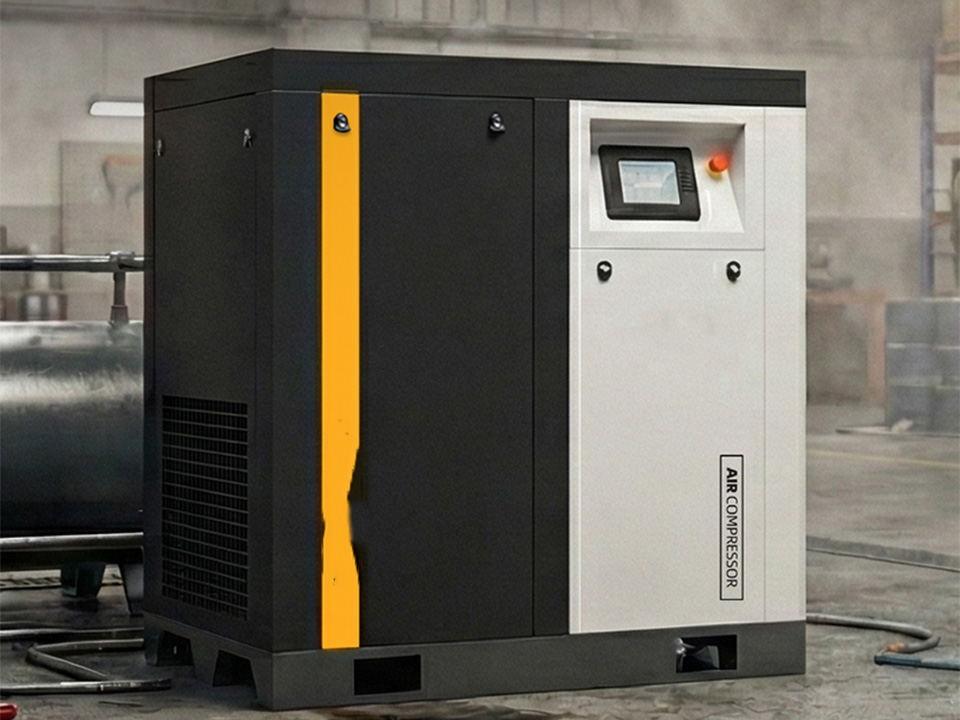
For buyers comparing mid-size electric packages, I’d want the same discipline applied to a 22kW 8bar direct drive screw air compressor or a 30kW electric screw air compressor 380V AC: show me the verified delivered flow, the test condition, the part-load behavior, and what happens after the machine is fully heat-soaked. Otherwise, you’re just asking me to trust typography.
The case studies say the quiet part out loud
The most useful evidence does not come from glossy catalogs. It comes from situations where bad operating logic got exposed by data.
A 2023 peer-reviewed case study in Cleaner and Responsible Consumption audited a rotary screw compressor at a marine equipment plant in Türkiye and found the machine was short cycling because the system was oversized for real demand and paired with inadequate tank volume. Reconfiguring the system to a fixed-speed baseload compressor plus a variable-speed trim compressor cut compressed-air energy use by 73%, saving 74,160 kWh annually, about €9,373.8 per year, with an estimated payback of 2.2 years. That’s not a rounding error. That’s an indictment of lazy compressor sizing.
A 2024 compressed-air case study from Consumers Energy on Auto-Cast in Grandville, Michigan showed that reducing unnecessary CFM demand with efficient nozzles and hoses delivered 1,465,879 kWh in annual electric savings and an estimated $117,270 per year in cost savings, while also reducing compressor maintenance and noise. Again, the headline lesson isn’t “buy shiny hardware.” It’s that real system demand, not brochure theater, determines value.
And the legal lesson? Don’t dismiss it. In January 2024, Reuters reported that Kubota North America agreed to pay a $2 million civil penalty after the FTC said it falsely labeled some replacement parts as “Made in USA,” with the FTC calling it the largest civil penalty under that labeling rule. Different claim, same business lesson: in equipment markets, regulators are paying attention to representation quality, and buyers are getting less tolerant of claims that sound strong but don’t survive scrutiny.
I’m not saying a shaky compressor nameplate claim is the same legal issue. I am saying the tolerance for fuzzy equipment claims is getting thinner, not thicker.
What continuous-duty compressor rating should actually mean
Let’s define it the way the field defines it, not the way brochures do.
A continuous-duty compressor rating is the sustained air-delivery and pressure performance a compressor can maintain during long operating cycles, after thermal stabilization, under stated ambient and inlet conditions, without relying on short-duration peak output or idealized assumptions. That’s the number a drilling contractor lives with. Everything else is flirting.
And the buyer needs five more pieces beside it:
1. Tested flow at stated pressure
Not “up to.” Not “theoretical displacement.” Tested delivered air at the working pressure that drilling will actually use. CAGI’s standardized data sheets exist precisely because the market needed a consistent language for this.
2. Test condition disclosure
Temperature, altitude, humidity, inlet condition. No disclosure, no trust.
3. Full-load and part-load power draw
A compressor that looks decent only at one perfect point can still be a bad buy if it hunts, unloads inefficiently, or cooks itself at partial demand. CAGI’s handbook explicitly shows performance data across full, 75%, and 50% capacity examples.
4. Real duty cycle tolerance
Tell me whether the unit can run through long drilling windows without pressure fade, nuisance trips, or maintenance intervals collapsing.
5. Serviceability under dirt and heat
Because the DOE is very clear: intake contamination, dirty filters, and heat hit both capacity and cost.
The dealer’s filter: how I would vet a quote in ten minutes
If I’m looking at two drill-compressor offers, I ask these in order:
Ask for the test basis first
If the seller cannot say ISO 1217, CAGI data sheet, or equivalent recognized method, I stop trusting the performance section immediately. Not later. Immediately.
Ask whether the quoted flow is continuous or peak
Peak numbers are great for marketing. Rocks do not care.
Ask for flow retention at higher inlet temperature
Because summer doesn’t negotiate.
Ask how much output disappears with dirty filtration or normal restriction
The DOE notes dirty intake filters can create measurable efficiency loss and cost increase even before the machine becomes obviously “bad.”
Ask for power-per-flow, not just motor size
The motor nameplate is part of the story. It is not the story.
Ask what happens after 90 minutes, not after 90 seconds
This one separates adults from quote artists.
The most common lie is not a fake number. It is an incomplete number.
That’s the ugly truth.
Most underperforming compressor deals I’ve seen were not built on an entirely invented spec. They were built on a technically defensible but commercially misleading slice of the truth: one pressure point, one temperature assumption, one clean-filter condition, one brief operating state. Then the machine goes into a drilling cycle, the weather changes, the filter loads, the demand swings, the separator runs hotter, and suddenly the delivered air is nowhere near the tidy certainty the quote implied.
You don’t fix that with better copywriting. You fix it with better buying discipline.
FAQs
What is the difference between continuous-duty rating and nameplate rating in a drill compressor?
A continuous-duty rating is the sustained airflow-and-pressure performance a compressor can hold over long operating periods under stated real-world conditions, while a nameplate rating is the labeled motor or package specification that may not reflect heat soak, inlet restrictions, or true field delivery. After that simple split, the rest gets uncomfortable. Nameplate data can still be useful, but only as a starting point. For drilling, what matters is delivered air after temperature rise, duty cycle, and pressure stability begin to affect the machine. That is why recognized test methods and disclosed operating conditions matter far more than a pretty sticker.
How do I compare compressor nameplate and field output before I buy?
The correct comparison method is to match quoted airflow, pressure, power draw, and test conditions against the actual drilling duty cycle, ambient temperature, altitude, and likely inlet restriction the machine will face on site. Then get more specific. Ask for ISO 1217-based data or a standardized performance sheet, confirm whether the quoted flow is continuous or peak, and require disclosure of inlet temperature and pressure assumptions. If the seller cannot tell you how the unit behaves after extended loaded running, you are not comparing compressors; you are comparing confidence tricks.
Why does compressor output fall during long drilling cycles?
Compressor output falls during long drilling cycles because rising inlet temperature, contamination, pressure drop, leaks, control inefficiency, and thermal loading reduce mass flow, pressure capability, or both, even when the machine’s nameplate numbers have not changed. That’s why field complaints usually start after the first steady run, not at startup. DOE guidance says hotter intake air lowers density and cuts mass flow and pressure capability, while CAGI’s handbook shows that ratings must be understood against ambient condition and weight-flow realities. Add leaks or dirty filters, and the usable air available to the hammer can drop fast enough to hurt drilling performance and service life.
What documents should a dealer or importer ask for before quoting a drill compressor?
A dealer or importer should ask for standardized performance data, the test basis used for airflow and power claims, ambient-condition disclosure, part-load behavior, maintenance assumptions, and any third-party verification tied to the published rating. In practice, I would demand the performance sheet first. CAGI’s verification framework exists because published claims need comparable formatting and independent checking, not just manufacturer optimism. If a seller can only provide headline CFM, rated pressure, and motor size, that is not a technical package. It is a risk transfer package.
Your Next Step
Here’s what I’d do tomorrow morning if I were you.
Take every compressor quote on your desk and mark four items in red: test standard, stated ambient condition, delivered flow at working pressure, and continuous-duty expectation. If any of those are missing, the offer is incomplete. Not competitive. Incomplete.
And if you are building a product page, quote package, or dealer conversation around electric screw units, stop leading with motor size alone. Lead with sustained air delivery, stated conditions, and honest operating context. That approach will sell fewer fantasies and more repeat orders.
Because in this business, the machine does not get judged in the catalog.