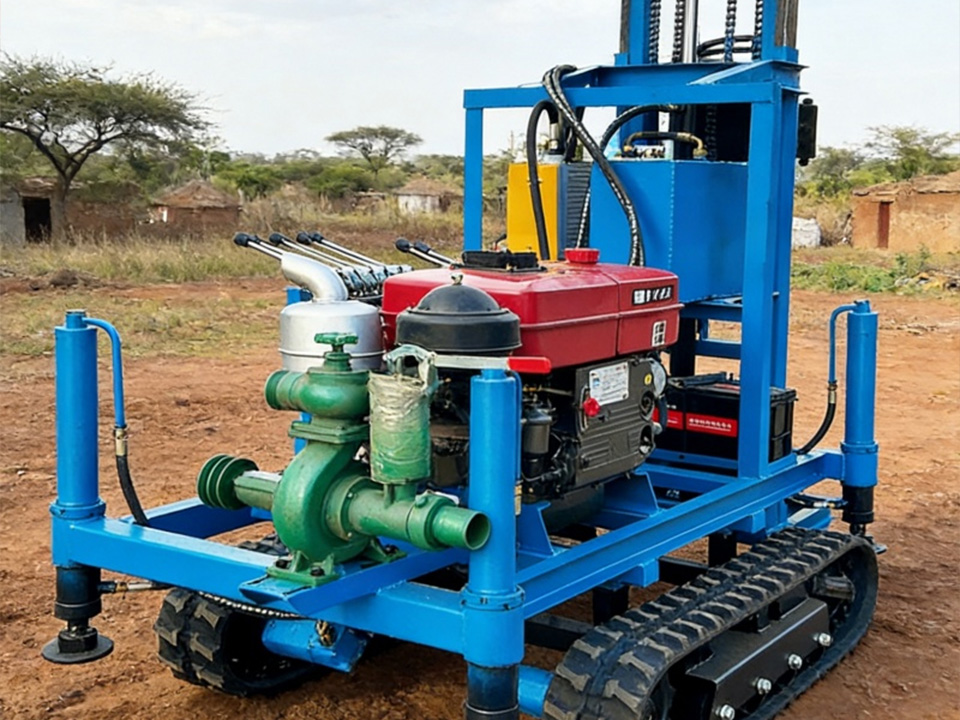
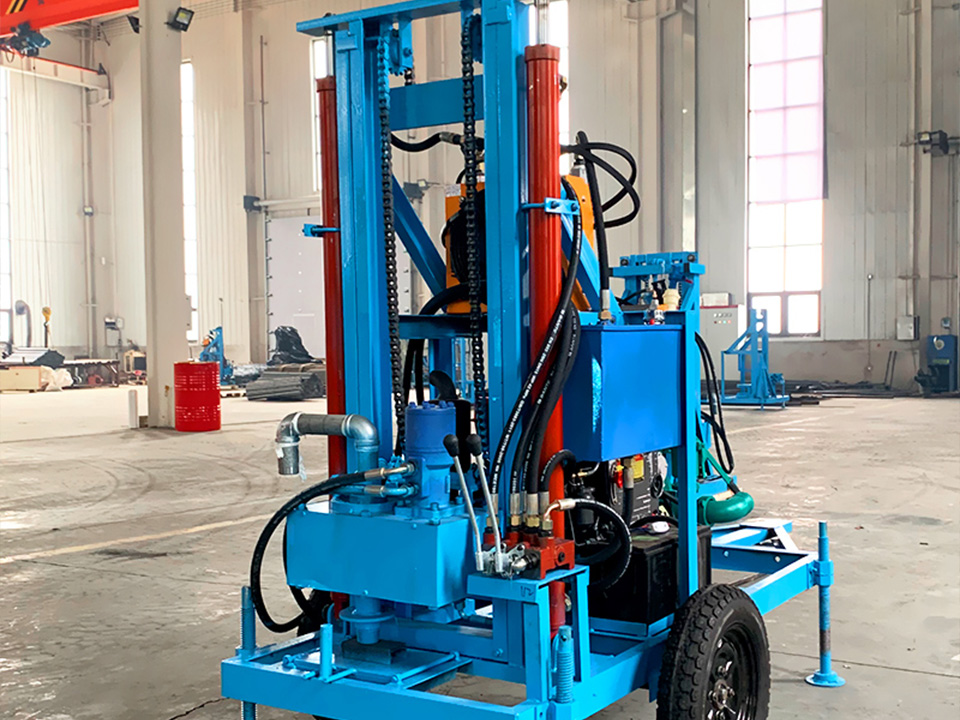
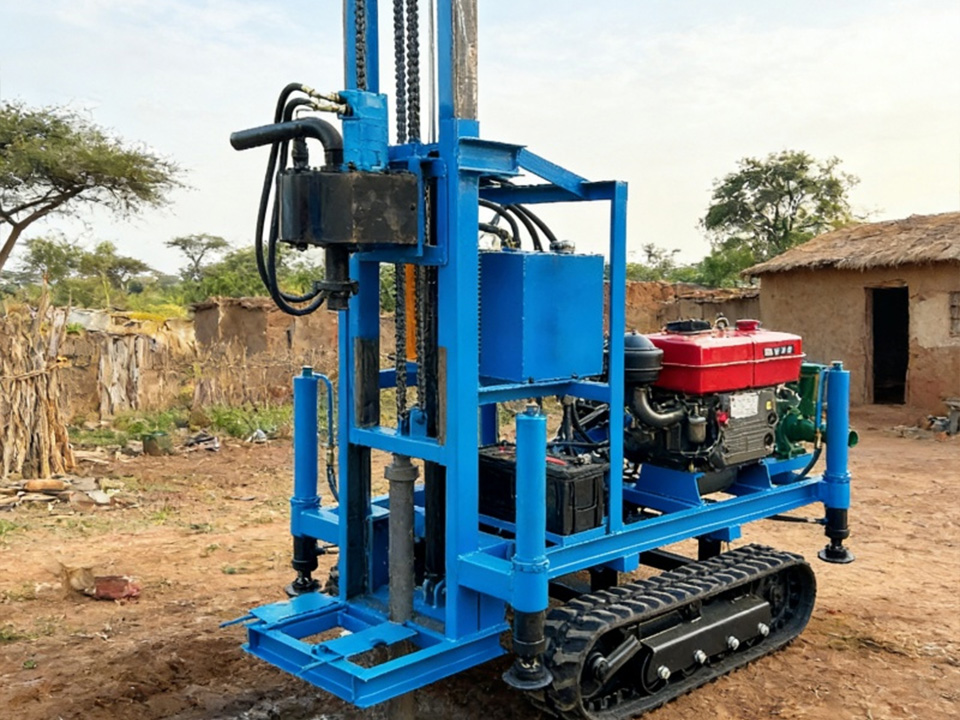
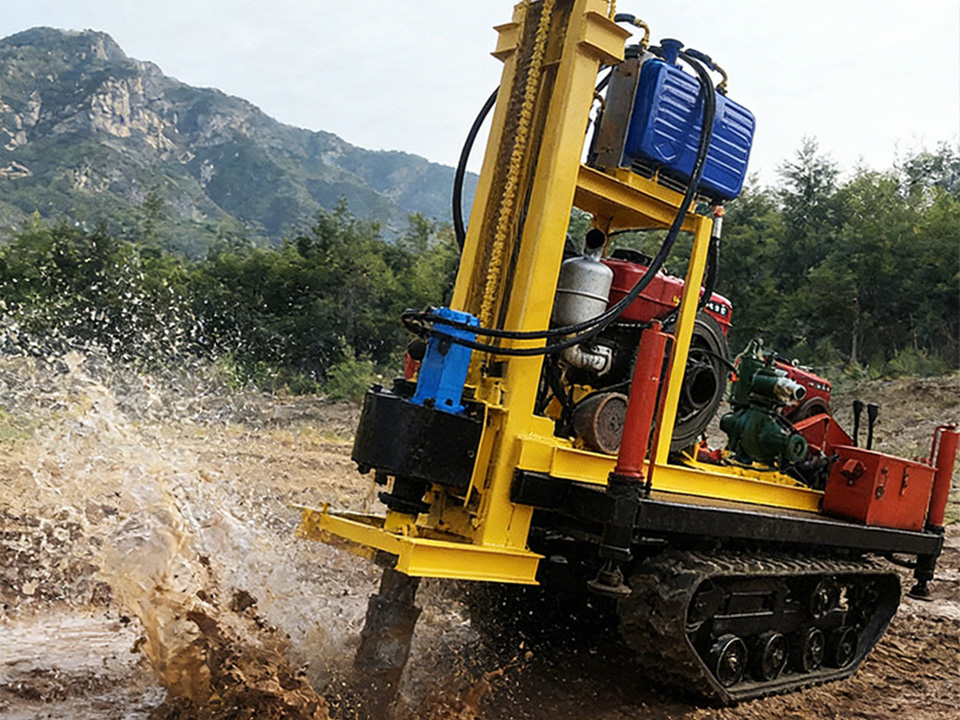
“The Drilling Rig gave us a true one-stop solution. Their team matched the right rig, compressor, and drilling tools for our project, and the engineering support stayed fast and professional from quote to delivery.”
Mast Height, Rod Handling, and Pipe Capacity: What Matters
The Spec Sheet Usually Lies by Omission
Steel tells stories.
I have seen too many buyers stare at engine power, compressor matching, hole diameter, and “maximum drilling depth” while skipping the boring-looking mast and pipe-handling lines that actually decide how fast a crew works after lunch, how often they stop to wrestle rods by hand, and how likely the operator is to make one rushed movement when the ground, wind, or slope is already working against him.
So what matters more: a bigger engine number, or a mast and rod system that removes ten small delays from every single hole?
Table of Contents
Here is my blunt view: drilling rig mast height is not just a dimensional spec. It is a productivity spec, a fatigue spec, a transport spec, a safety spec, and sometimes a hidden cost spec. A short mast can look smart on a quote sheet because the machine is easier to ship and cheaper to build. But if that short mast forces more rod changes, more manual handling, more awkward lifting, and more stop-start drilling, the “saving” can disappear in one ugly week on site.
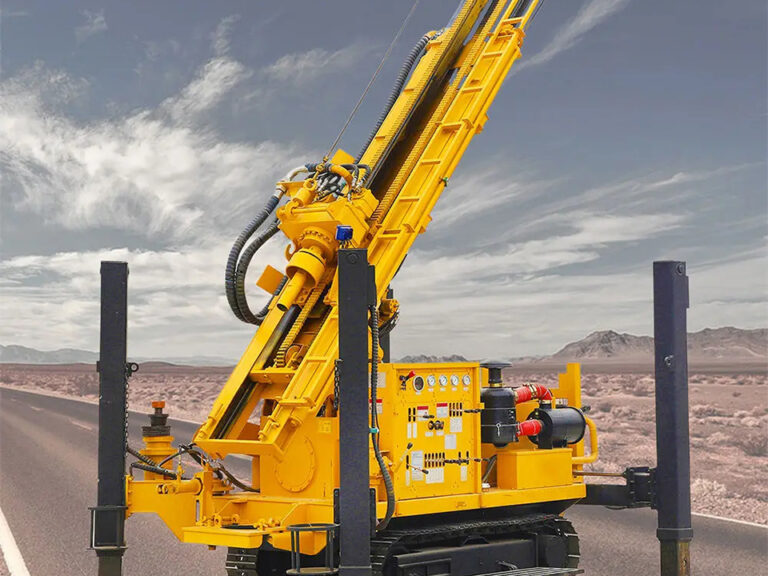
Drilling rig mast height affects how long a drill rod the rig can handle vertically, how stable the feed stroke feels under load, how many connections are needed to reach target depth, and how much dead time is created by repetitive rod changes. In plain words: mast height controls rhythm.
A taller mast usually allows longer rod length capacity. Longer rods mean fewer joints. Fewer joints mean fewer stops. Fewer stops mean less handling. Less handling means fewer chances for dropped pipe, crushed fingers, bad alignment, thread damage, and crew fatigue.
But taller is not automatically better.
A mast that is too tall for the chassis, crawler base, ground condition, or jobsite slope can create its own problems. NIOSH warned in 2023 that drill rigs and other heavy specialty equipment can overturn, and it pointed to working platforms, slope, bearing pressure, and improper equipment use as real contributors to those incidents in foundation drilling work. The same logic travels well into mining and borehole drilling: a mast is not floating in the air; it is sitting on steel tracks, soil, rock, mud, and sometimes a contractor’s optimism. Read the NIOSH drill rig overturn safety bulletin and you will notice the quiet theme: stability is designed before drilling starts.
The hard truth? Some buyers love tall masts because they look powerful in photos. Fine. Photos sell. But field output comes from the match between mast height, rod length, feed force, rotary head travel, machine weight, track width, leveling system, and ground preparation.
If one of those is wrong, the mast becomes a lever.
Rod Handling Is Where Cheap Rigs Show Their Teeth
Manual rod handling looks harmless in a factory video. A worker lifts, aligns, threads, steps back. Repeat. Smooth music. Clean yard. No rain.
Real sites are uglier.
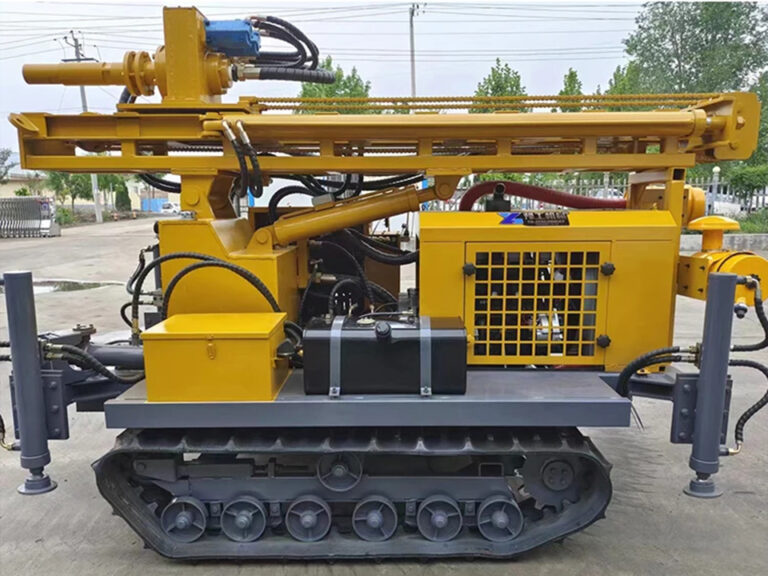
There is mud around the track frame, loose cuttings near the hole, a tired helper, a deadline, poor radio communication, and sometimes an operator trying to keep production moving while the buyer’s boss keeps asking why the rig is not hitting promised meters per shift. That is when a weak drilling rig rod handling system turns into a tax.
A proper pipe handling system for drilling rig productivity should reduce three things:
Human lifting
Body-in-the-line exposure
Connection time
If the design keeps workers close to rotating parts, suspended rods, unstable pipe stacks, or the mast swing area, I do not care how good the brochure looks. The machine is shifting cost from steel to people.
OSHA’s public 2024 accident data includes a fatal case where a drill rig mast contacted an overhead power line while being raised, energizing the rig and killing a worker by electric shock. That was not a “rod handling” accident in the narrow sense, but it proves the larger point: mast movement, site clearance, and operator procedure are not paperwork issues; they are life-or-death engineering issues. See the OSHA accident report on the November 11, 2024 drill rig mast electrocution.
And OSHA’s 2024 release of 2023 injury and illness records covered data submitted by more than 375,000 establishments, plus partial data from over 850,000 OSHA Form 300 and 301 records. That matters because safety patterns are becoming easier to inspect, compare, and expose. Buyers who still treat handling design as a “nice extra” are behind the data curve. See OSHA’s 2023 injury and illness data release.
Pipe Capacity Is Not Just Storage — It Is Shift Economics
Drill pipe capacity sounds simple: how many rods can the rig carry?
Not simple.
Pipe capacity affects mobilization, support truck dependence, crew movement, idle time, and the number of times pipe must be manually loaded, unloaded, dragged, stacked, counted, cleaned, and inspected. In mid-range rigs, especially mining and blasting machines working repetitive hole patterns, the difference between “enough onboard pipe” and “almost enough” can decide whether the rig keeps drilling or waits for support.
A buyer should calculate pipe capacity from the job backward.
Buyer Question
Why It Matters
Bad Buying Habit
Better Buying Standard
What is the target hole depth?
Defines required rod count per hole
Only asking max drilling depth
Match rod count to working depth, not brochure depth
What rod length can the mast handle?
Determines number of connections
Ignoring mast height
Compare mast height with real rod length capacity
How many rods are carried onboard?
Controls support dependence
Assuming pipe rack is enough
Check onboard drill pipe capacity for one full work cycle
Is rod handling manual, semi-automatic, or assisted?
Changes labor intensity and safety exposure
Buying only on engine power
Evaluate pipe handling system design
How fast can the crew add/remove rods?
Affects meters per shift
Believing “max depth” equals output
Time the rod cycle during demo
Is the rig stable with mast raised and rack loaded?
Links productivity to safety
Looking only at photos
Check chassis, leveling, working slope, ground pressure
Here is a rough field-style example. If a rig uses 3-meter rods and drills 30-meter blast holes, the crew deals with about 10 rods per hole. If another setup supports 4.5-meter rods, that falls to about 7 rods. Three fewer connections per hole may sound minor until you multiply it by 40 holes, dust, heat, dull threads, and a helper who has already done this for nine hours.
That is where money leaks.
Engine Power Is Loud; Handling Design Is Profitable
I am not saying engine power does not matter. It does. But it is often the loudest number in the room, and loud numbers attract lazy buying.
A smaller rig can outperform a larger one on the right site if the drilling pattern is shallow, access is tight, transport is difficult, and the pipe handling routine is simple. But a larger rig can crush the small one in daily output if longer rods, better mast geometry, and more efficient rod handling reduce cycle loss. This is why “best drilling rig mast and rod handling design” is not a universal answer. It depends on hole depth, hole angle, crew skill, terrain, compressor pairing, and how many times per shift the crew must break and make connections.
I distrust any supplier who answers this topic in one sentence.
What I Check Before Trusting Rig Mast Specifications
A serious buyer should ask for more than a clean PDF. Ask for video. Ask for operating dimensions. Ask for transport dimensions. Ask for rod length. Ask for feed stroke. Ask for pipe rack capacity. Ask for mast raising method. Ask for the allowed working slope. Ask for ground clearance, crawler width, machine weight, and the stabilizing method if used.
And ask for the ugly details.
1. Mast Height vs. Working Rod Length
The mast height should support the rod length the contractor actually wants to use, not just the rod length the factory happens to show in a yard video. If the buyer plans deeper repetitive holes, longer rods can reduce connection count. If access is restricted, shorter rods may be more practical.
2. Feed Stroke vs. Rod Change Frequency
A long feed stroke can reduce repositioning and improve drilling rhythm. But feed stroke must work with rotary head travel, mast stiffness, and rod length. A long-looking mast with poor usable travel is just decoration.
3. Rod Handling Position
Where does the helper stand? Where does the rod move? Where are hands exposed? Where is the pinch point? If the answer is vague, the design is not buyer-friendly.
4. Pipe Rack Capacity
Drill pipe capacity should match the job cycle. If the rig cannot carry enough rods for the planned depth or drilling pattern, support logistics become part of the machine’s real cost.
5. Stability with Mast Raised
The mast should be judged with the machine in working condition: rods, tools, slope, platform, and actual site ground. NIOSH’s 2023 warning about drill rig overturns should be required reading for buyers who think stability is just a wide-track photo.
A Better Buying Framework for Mid-Range Rigs
When comparing mid-range rigs, I use a simple rule: do not compare machines by maximum depth first. Compare them by working cycle.
What rod length can it handle safely and efficiently?
Rod length capacity
What rod is included?
What rod length reduces connections for my target depth?
Drill pipe capacity
How many pipes can it carry?
Can it carry enough rods for one productive cycle without support delays?
Rod handling system
Is it easy to use?
How many workers touch the pipe during add/remove operations?
Rig mast specifications
What is the max depth?
What are feed stroke, usable travel, mast stiffness, and working slope limits?
Safety design
Does it meet normal standards?
Where are the pinch, struck-by, overhead, and overturn risks during mast and pipe operations?
The Bureau of Labor Statistics recorded 5,283 fatal occupational injuries in the United States in 2023, including 561 in natural resources and mining, with contact incidents accounting for 185 deaths in that category. See the BLS 2023 fatal occupational injury table. Those numbers are not about your exact rig model, of course. But they do remind us that heavy equipment work punishes vague thinking.
The Uncomfortable Truth About “Maximum Depth”
Maximum depth is a marketing number until the supplier explains the configuration behind it.
What rod diameter? What compressor? What formation? What DTH hammer? What rotation torque? What flushing method? What mast and pipe setup? What operator skill? What site altitude? What maintenance condition?
Buyers love one-line answers because they make procurement easier. Sellers love one-line answers because they make quoting faster. Both sides then act surprised when the rig reaches the site and daily output does not match the conversation.
A better question is: “At my target hole depth, how many rod changes per hole, how many minutes per change, and how many rods onboard before support is needed?”
That question makes weak suppliers uncomfortable. Good.
FAQs
What is drilling rig mast height?
Drilling rig mast height is the vertical structural height that determines usable feed travel, supported rod length, rod-change space, and working clearance during drilling operations. It affects productivity because taller or better-designed masts can reduce connection frequency, but it also affects safety because mast movement changes stability, overhead clearance, and site risk.
Mast height should never be judged alone. Buyers should compare it with rod length capacity, feed stroke, rotary head travel, machine weight, crawler width, transport size, and actual jobsite ground conditions.
How does mast height affect drilling rig performance?
Mast height affects drilling rig performance by controlling how long each drill rod can be, how many rod connections are needed, and how smoothly the rig can maintain drilling rhythm. A better mast setup can reduce non-drilling time, but a poorly matched tall mast may increase transport, stability, and clearance problems.
For mid-range rigs, the best mast is not always the tallest mast. The best mast is the one that fits the hole depth, drilling angle, rod plan, ground condition, and crew workflow.
What is a drilling rig rod handling system?
A drilling rig rod handling system is the mechanical, hydraulic, or assisted arrangement used to lift, align, add, remove, and store drill rods during operation. Its main purpose is to reduce manual handling, shorten rod-change time, protect threads, and keep workers farther away from pinch points, suspended pipe, and rotating components.
In buyer terms, rod handling is where production and safety overlap. A weak design costs money every time the crew adds pipe. A strong design removes repeated human effort from the drilling cycle.
Why is drill pipe capacity important?
Drill pipe capacity is important because it determines how many rods the rig can carry, how long it can work before support is needed, and how much time the crew spends moving pipe instead of drilling. Enough onboard pipe capacity can improve shift output, reduce logistics interruptions, and lower manual handling exposure.
For repetitive hole patterns, pipe capacity should be calculated from target hole depth and rod length. Do not accept “pipe rack included” as a complete answer.
What rig mast specifications should B2B buyers compare?
B2B buyers should compare mast height, usable feed stroke, rod length capacity, rotary head travel, mast raising method, working slope limits, transport dimensions, pipe rack capacity, and stability with rods loaded. These specifications reveal whether the rig can perform efficiently in real site conditions instead of merely looking strong in a brochure.
A serious supplier should explain these details clearly. If they only repeat horsepower and max depth, they are avoiding the real performance discussion.
Is the best drilling rig mast and rod handling design always automatic?
The best drilling rig mast and rod handling design is not always fully automatic; it is the design that reduces handling risk and cycle loss for the buyer’s actual drilling depth, crew skill, budget, and site conditions. Semi-assisted systems can be enough for some jobs, while high-volume drilling may justify more advanced handling.
Automation is useful only when it fits the work. A fragile automatic system on a remote site with poor service access can become worse than a simple, durable assisted design.
Your Next Steps
Before you choose a rig, send your supplier five numbers: target hole depth, hole diameter, expected formation, preferred rod length, and daily hole quantity. Then ask for mast height, rod length capacity, feed stroke, drill pipe capacity, and a rod-change video.
If you are comparing mining or blasting rigs, start with the models most relevant to your hole plan: KG310 for compact crawler drilling needs, KG410H for portable 80–105 mm blasting applications, KG510 for deeper rotary drilling requirements, and KG610/KG610H for higher-output mining blasting work.
Do not buy the tallest mast. Buy the cleanest work cycle.