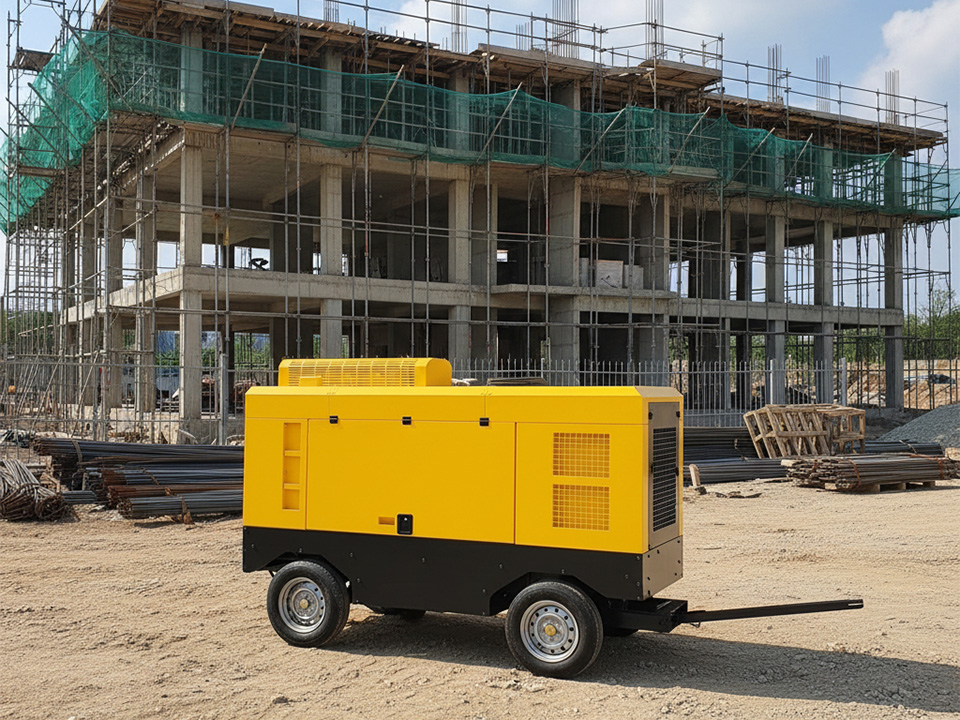
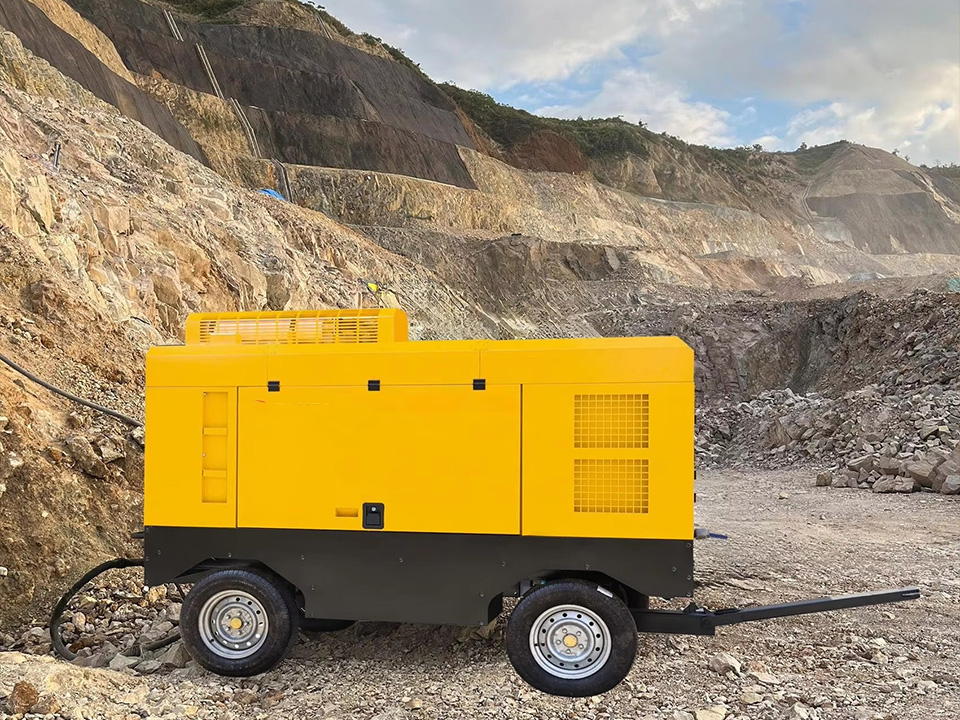
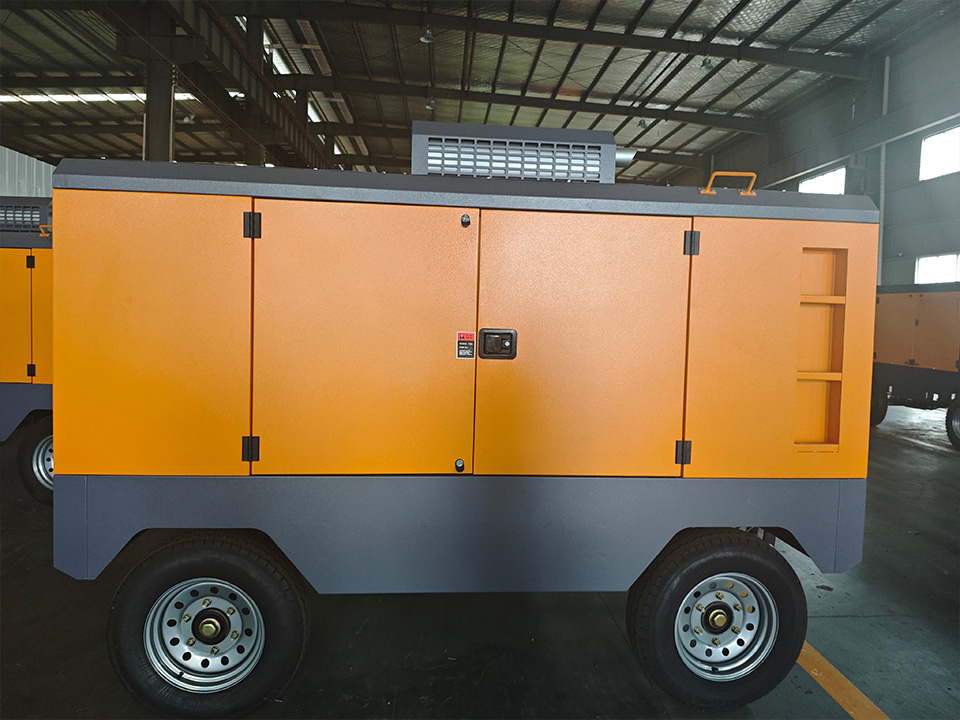
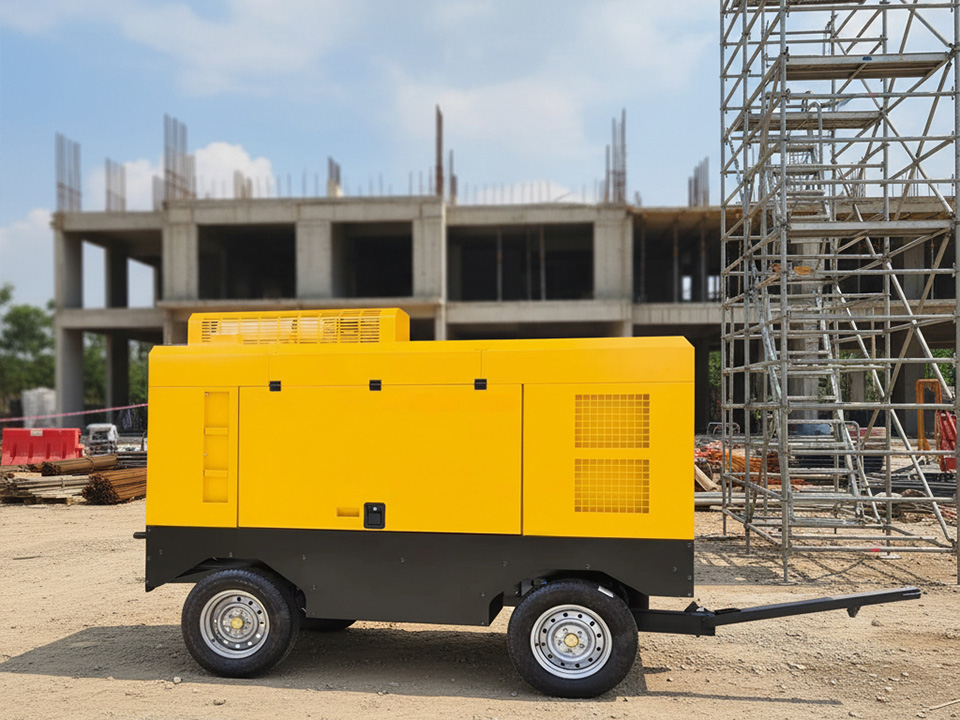
“The Drilling Rig gave us a true one-stop solution. Their team matched the right rig, compressor, and drilling tools for our project, and the engineering support stayed fast and professional from quote to delivery.”
Case Study: Upgrading to 380 CFM and the Output Improvement
The Dirty Little Secret Behind “Slow Drilling”
Air tells the truth.
I have seen too many drilling crews blame the formation, the hammer brand, the operator, the bit face, even “bad luck,” while the compressor is sitting there quietly starving the entire drilling system like a weak heart trying to feed a marathon runner. The rig still rotates. The hammer still hits. Dust still comes out. So everyone assumes the system is working.
But is it working, or only pretending?
In DTH water well drilling, a 380 CFM compressor for drilling is not just a bigger number on a sales sheet. It is airflow, cuttings velocity, hammer consistency, borehole cleaning, and job-cycle discipline packed into one machine decision. When the compressor is undersized, the hammer does not fail dramatically on day one. It becomes lazy. Then the bit starts regrinding cuttings. Then the hole gets dirty. Then the crew pulls rods more often. Then the project manager asks why a 3-day job has become 5 days.
Table of Contents
Here is my hard opinion: many buyers do not have a drilling rig problem. They have an air problem.
That is why this case study matters. The move from a smaller air package, often around the 185 CFM class, into a 380 CFM air compressor setup changes the economics of drilling in a way buyers can feel on site — not in brochures, not in showroom talk, but in meters drilled per shift, diesel burned per meter, and fewer “why is the hole not cleaning?” arguments.
The Baseline: When 185 CFM Looked Cheap but Worked Expensive
The original setup in this field-style comparison used a smaller compressor class for shallow-to-medium boreholes. On paper, it looked acceptable. The buyer wanted water wells, not mining blast holes. The target depth was modest. The rig was not huge. The sales quote was lower.
Bad logic. Common logic.
A 185 CFM compressor can work in certain small-diameter, shallow, forgiving drilling conditions. I will not pretend otherwise. Soft formations, low pressure demand, smaller hammer, short depth, clean return path — yes, it can make sense. But once the site moved into harder rock bands and deeper borehole sections, the weak point became obvious: air volume was not enough to evacuate cuttings fast enough.
The crew saw four symptoms:
Slower penetration after the first productive section
More re-drilling of cuttings at the bottom
Higher bit wear because the face was not staying clean
More non-drilling time from flushing, checking, and waiting
This is where buyers get fooled. They ask, “Can a 185 CFM compressor run a DTH hammer?” Sometimes, yes. The sharper question is: can it run that hammer at useful output, in that borehole diameter, at that depth, in that formation, for commercial drilling?
Different question. Different answer.
The U.S. Department of Energy’s compressed air guidance is written mostly for industrial systems, not borehole drilling, but the principle carries over cleanly: compressed air performance depends on system management, not just compressor purchase price. Their Compressed Air Systems resources focus on performance, energy use, and system-level assessment. In drilling, the same thinking applies. A compressor is not an accessory. It is the engine of cuttings removal.
And if cuttings do not leave, progress becomes fake.
What Changed After Upgrading to a 380 CFM Air Compressor
The upgrade target was simple: more usable air volume, better hole cleaning, and fewer pauses during DTH drilling. A 380 CFM compressor for drilling does not automatically double output compared with 185 CFM. That is sales fantasy. But in the right mismatch scenario, it can remove the bottleneck that was suppressing the whole drilling package.
The first improvement showed up in the return flow.
Instead of weak, uneven discharge from the borehole, the upgraded compressor delivered stronger and more stable cuttings evacuation. The hammer stayed cleaner. The bit face worked against fresh rock more often, not recycled chips. That sounds small until you calculate how much time a crew loses when the bottom of the hole turns into a grinding chamber.
The second improvement was rhythm.
With the smaller compressor, drilling progress came in waves: drill, slow down, flush, listen, adjust, continue. After the DTH drilling compressor upgrade, the cycle became more continuous. More minutes of the shift were spent actually drilling. Fewer minutes disappeared into “small checks” that nobody writes honestly in the daily log.
The third improvement was project confidence.
When a contractor can tell the village committee, farm owner, or local project buyer, “We can finish this hole today,” that has commercial value. Not emotional value. Real value. Labor cost, food cost, diesel logistics, accommodation, transport, and machine opportunity cost all shrink when the well closes faster.
The Numbers Buyers Should Watch, Not the Numbers Sellers Like to Shout
I do not trust compressor talk when it only mentions CFM. Pressure matters. Altitude matters. Hose size matters. Hammer size matters. Borehole diameter matters. Formation matters. Even moisture and leakage matter.
A 380 CFM air compressor sounds powerful, but if the working pressure is wrong, the hammer still underperforms. If the hose line is too restrictive, the compressor rating becomes a laboratory number. If the bit is oversized for the air supply, the annular velocity falls and hole cleaning suffers. That is the unglamorous truth.
The U.S. ENERGY STAR compressed-air leak guidance says leaks can waste 20–30% of compressor output and cause fluctuating pressure, inefficient tool operation, excess compressor capacity, and shorter equipment life in industrial air systems. Their Minimize Compressed Air Leaks sheet was not written for water well contractors, but I would still put it in front of every drilling fleet owner. Why? Because losing air in hoses, fittings, traps, couplings, or bad maintenance habits hurts a drilling site the same basic way: pressure and volume stop arriving where the hammer needs them.
Here is a simple comparison from the field logic:
Operating Factor
Smaller Compressor Class Around 185 CFM
Upgraded 380 CFM Compressor Class
Why It Matters
Cuttings removal
Often weak in deeper or harder sections
Stronger borehole cleaning
Less regrinding, better bit contact
Drilling rhythm
Frequent slowdowns and flushing
More continuous drilling cycle
More productive minutes per shift
Hammer behavior
May hit unevenly under load
More stable impact performance
Better penetration consistency
Fuel per meter
Can rise when drilling slows
Often improves if output rises faster than fuel burn
Economics improve by meter, not by hour
Bit wear
Higher risk from dirty bottom hole
Lower risk when cuttings clear faster
Fewer hidden consumable losses
Completion confidence
Harder to predict
Easier to schedule
Better customer trust and crew planning
Now, a warning: do not oversell the 380 CFM class. If the borehole is too large, depth is too great, or the hammer requires higher pressure, 380 CFM may still be the middle step, not the final answer.
That is where larger compressor classes enter the conversation. For example, the KSCY550-13 132kW portable screw air compressor is listed with 15 m³/min capacity and 13 bar pressure, which converts to roughly 529 CFM — already above the 380 CFM discussion range. For buyers dealing with harder formations or more demanding airflow needs, that extra margin can matter.
But bigger is not always smarter.
Why 380 CFM Can Improve Drilling Speed Without “Making the Rig Stronger”
A drilling rig does not become stronger just because the compressor gets larger. The mast does not gain steel. The rotary head does not gain torque. The feed system does not suddenly become more disciplined.
So how does 380 CFM improve drilling speed?
It reduces the hidden work the bit and hammer were wasting on poor hole conditions. In DTH drilling, the hammer needs compressed air to power impact and clear the hole. If the air system cannot carry cuttings out fast enough, the bit starts striking broken chips instead of clean rock. That is not drilling. That is punishment.
In the upgraded setup, the operator did not need to force the rig as much. Feed pressure became easier to control. The sound of the hammer became more consistent. The borehole returned cleaner material. And when the crew added rods, the performance drop was less aggressive than before.
I have watched operators misread this. They say, “The new compressor gives the rig more power.”
No. It gives the drilling process less resistance.
That distinction matters because it keeps buyers from buying nonsense. If the problem is low rotary torque, poor mast stability, weak feed, bad drill rods, or wrong bit design, a bigger compressor will not save the project. But if the bottleneck is air volume and hole cleaning, the compressor upgrade may be the cleanest money you spend.
The 2024 South African Journal of Industrial Engineering paper Future Mines’ Compressed Air Planning Using Digital Twin Simulations made a mining-side point that applies here: compressed air planning is often overlooked even though it directly affects production, and one case-study solution increased pressure at the problem level by 32%. Different industry. Same disease. People under-plan air, then act shocked when production suffers.
Compressor Selection: 380 CFM Is a Class, Not a Magic Prescription
A buyer who only says “I need 380 CFM” is not ready to buy yet. I know that sounds blunt. Good. It should.
The correct compressor conversation should include:
Borehole diameter
Target depth
Hammer size
Working pressure requirement
Formation hardness
Altitude and temperature
Hose diameter and length
Diesel availability and site logistics
Expected meters per day
Whether the buyer values lowest purchase cost or lowest cost per finished well
For example, a contractor drilling 100–150 m farm wells in mixed ground may have a very different air demand from a contractor drilling deeper hard-rock wells with larger-diameter DTH tools. If the buyer is already near the limit of a 380 CFM compressor, then a model such as the KSZJ-18/17 diesel screw air compressor may enter the discussion because its listed configuration includes 18 m³ air capacity and high working pressure. That is not the same as casually “upgrading.” That is matching the air package to a harder job.
The KSCY750-20 20 bar high pressure diesel screw air compressor also belongs in upgrade conversations where pressure becomes the bigger issue, not just airflow. I would not push it for every water well buyer. That would be lazy selling. But for harder drilling, deeper work, or pressure-hungry DTH tools, 20 bar capability deserves attention.
And then there are stationary or heavy-duty site setups. The KSZJ-29/23G diesel engine stationary screw air compressor lists 23 m³/min air capacity, air cooling, and diesel power, which places it far above the typical 380 CFM conversation. That kind of machine makes more sense when the buyer is not merely fixing a small bottleneck but building a stronger drilling or mining air system.
The Safety Angle Nobody Wants in a Sales Case Study
More air also means more stored energy, more pressure risk, and less tolerance for sloppy maintenance.
I do not like compressor articles that only talk about speed. Speed sells. Safety keeps the company alive. OSHA’s air receiver rule, 29 CFR 1910.169, requires air receivers to have a visible pressure gauge and one or more spring-loaded safety valves with enough relieving capacity to keep pressure from exceeding maximum allowable working pressure by more than 10%. It also says no valve may be placed between the receiver and the safety valve.
That is not paperwork trivia.
When you upgrade compressor capacity, you should also audit hoses, fittings, gauges, valves, drain habits, receiver condition, and relief devices. A contractor moving from a small compressor to a 380 CFM air compressor may suddenly expose weak parts of the system. Cheap hoses. Wrong couplings. Dirty filters. Poor condensate draining. Bad operator habits. They were already there. The larger compressor just reveals them faster.
The Bureau of Labor Statistics reported 92 fatal occupational injuries in U.S. private-sector mining, quarrying, and oil and gas extraction in 2024, including 65 in oil and gas extraction industries. The BLS table includes drilling oil and gas wells and support activities in that oil and gas extraction category. See the BLS fatal occupational injuries chart. No, water well drilling is not identical to oil and gas work. But the lesson is uncomfortable and useful: mobile equipment, pressure systems, field crews, and remote work do not forgive casual safety culture.
The Economics: Output Improvement Is Measured Per Finished Well
The best way to justify a DTH drilling compressor upgrade is not by saying “380 CFM is bigger.” Everyone knows that. The better argument is cost per finished well.
Let us use a simple commercial frame.
If a crew charges by project, not by hour, then every extra day on site reduces margin. If the old compressor forces slow penetration, poor flushing, more bit wear, and more troubleshooting, the cheap compressor becomes expensive. The invoice may not show it. The profit does.
A 380 CFM compressor for drilling can improve project economics when it does three things at once:
Raises actual drilling meters per shift
Reduces wasted flushing and rework time
Protects consumables by keeping the bottom hole cleaner
But there is a line. Past that line, oversizing becomes waste. A compressor that burns more diesel without improving actual drilling output is just an expensive noise machine. I have no patience for “bigger is always better” sales talk. Bigger is better only when the current air system is the binding constraint.
That is why the comparison between 185 CFM vs 380 CFM compressor should not be framed as small versus large. It should be framed as under-supplied air versus matched air.
When matched correctly, the output improvement shows up in fewer interruptions, better hammer rhythm, cleaner returns, and more predictable completion. When matched poorly, the buyer just owns a larger fuel bill.
What This Case Study Really Proves
This case study does not prove that every buyer needs 380 CFM.
It proves something more useful: if your drilling speed collapses in harder or deeper sections, and your rig mechanically has enough capacity, airflow may be the bottleneck. The upgrade to a 380 CFM compressor class can shift the entire job from unstable, stop-start drilling into a cleaner, more continuous production cycle.
That is operational proof.
Not showroom proof. Not catalog proof. Not “our machine is very powerful” proof.
The buyer should ask for a compressor recommendation based on hole diameter, depth, hammer size, pressure, geology, and expected output. The supplier should be willing to say when 380 CFM is enough — and when it is not. If nobody asks about formation and borehole size, the quotation is probably just guessing with a price tag attached.
FAQs
What is a 380 CFM compressor for drilling?
A 380 CFM compressor for drilling is an air compressor class that delivers about 380 cubic feet of air per minute to support DTH hammer operation, borehole cleaning, and cuttings removal in water well, borehole, and light mining drilling applications. Its value depends on matching airflow with pressure, hammer size, hole diameter, and formation conditions.
In practical terms, 380 CFM is often considered when smaller compressor classes cannot maintain clean returns or stable hammer action. It is not automatically correct for every job, but it can be a strong upgrade when the previous setup is choking drilling output.
How does 380 CFM improve drilling speed?
A 380 CFM compressor improves drilling speed by increasing usable airflow for DTH hammer operation and cuttings evacuation, which helps keep the borehole cleaner and reduces regrinding at the bottom of the hole. Better cleaning allows the bit to strike fresh formation more consistently instead of wasting energy on broken chips.
The speed gain usually comes from fewer interruptions, steadier hammer rhythm, and more productive drilling minutes per shift. It is not magic. It is air volume removing resistance from the drilling process.
Is 380 CFM better than 185 CFM for DTH drilling?
A 380 CFM compressor is better than a 185 CFM compressor for DTH drilling when the smaller unit cannot supply enough airflow to clean the hole, support the hammer, or maintain productivity at the required depth and borehole diameter. The better choice depends on pressure, tool size, geology, altitude, and target output.
For shallow, small-diameter, softer drilling, 185 CFM may still work. For harder rock, deeper wells, or larger DTH tools, 380 CFM often gives the operator more stable performance and fewer costly pauses.
Can a larger compressor reduce drilling cost?
A larger compressor can reduce drilling cost when it increases daily output faster than it increases fuel, maintenance, transport, and ownership cost. In drilling economics, the key metric is not compressor size by itself but cost per completed meter or cost per finished well.
If a 380 CFM upgrade cuts delays, reduces bit abuse, and finishes projects faster, the investment can make sense. If the formation and tool package do not need the extra air, the upgrade may simply burn more diesel.
What should buyers check before upgrading to a 380 CFM air compressor?
Buyers should check borehole diameter, drilling depth, DTH hammer size, required working pressure, formation hardness, hose diameter, altitude, site temperature, expected meters per day, and current compressor losses before upgrading to a 380 CFM air compressor. The upgrade should solve a measured bottleneck, not satisfy a bigger-number habit.
I would also inspect receiver safety devices, hoses, couplings, filters, and maintenance records before putting a larger air package into service. More airflow will not fix a dirty, leaking, unsafe air system.
Your Next Step: Stop Buying CFM Blind
If your water well drilling project is slowing down, do not start by asking for the cheapest compressor.
Send the supplier your borehole diameter, target depth, hammer size, formation type, altitude, and current compressor model. Ask them to explain whether a 380 CFM compressor for drilling is enough, too small, or unnecessarily large. Then compare the answer against expected meters per shift — not just the machine price.
If you are upgrading from a smaller compressor class, request a matched rig-and-air recommendation before you buy. The right compressor does not just look powerful. It makes the drilling process cleaner, faster, and easier to control.