“The Drilling Rig gave us a true one-stop solution. Their team matched the right rig, compressor, and drilling tools for our project, and the engineering support stayed fast and professional from quote to delivery.”
Rig and Compressor Pairing Lessons from First-Time Fleet Buyers
The Expensive Mistake Nobody Puts in the Quotation Sheet
I’ve seen this before.
A first-time buyer gets excited by the rig photo, the mast height, the crawler chassis, the painted steel, the “300 m” claim, the big diesel engine, the factory video with dust flying behind the drill string. Then the compressor gets treated like an accessory. A line item. Something to “match later.” And that, frankly, is where the money starts leaking.
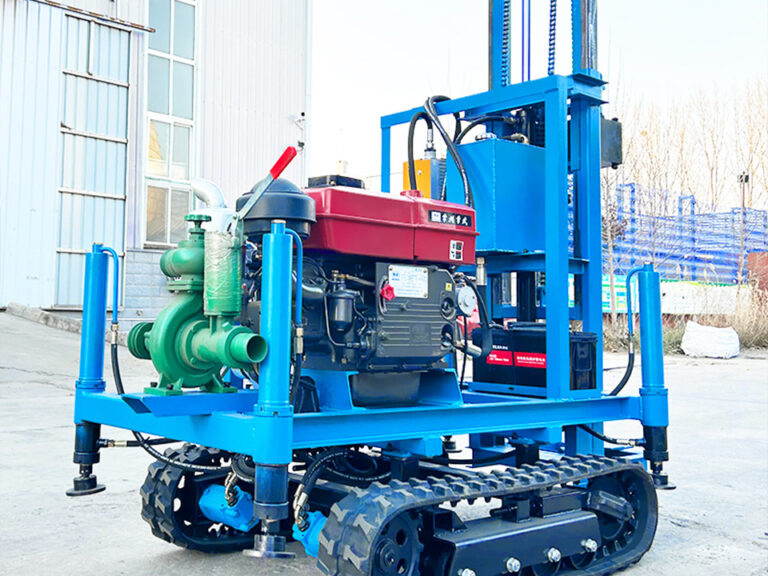
A water well drilling rig compressor is not a spare tire. It is the breathing system of the whole drilling operation. In DTH work, the compressor decides whether the hammer strikes properly, whether cuttings clear the hole, whether the bit stays alive, whether the crew spends four hours drilling or four hours pretending to drill.
Table of Contents
But here’s the ugly truth: many new fleet buyers compare rig depth on paper and compressor price on WhatsApp.
That’s not buying. That’s gambling.
The global need for groundwater access is not theoretical either. The World Bank’s 2023 groundwater work argues that groundwater is the world’s most important freshwater resource, while also warning that poor incentives around pumping and drilling can damage long-term water security. That matters because drilling equipment is not just machinery; it is part of a water infrastructure chain where bad selection becomes bad wells, wasted fuel, and broken trust.
So the real question is not, “How deep can this rig drill?”
The better question is: Can this rig, compressor, hammer, pipe, bit, bore diameter, and local geology work together without choking each other?
Lesson One: Depth Claims Are Cheap; Air Delivery Is Not
Most first-time fleet buyers ask for “100 m,” “200 m,” or “300 m” capacity. Fine. That’s a starting point. But depth alone is a lazy buying metric.
A 150 m borehole in soft overburden with mud rotary behavior is not the same job as a 150 m borehole in fractured granite using a DTH hammer. Same number. Different machine reality.
Compressed-air drilling depends on two linked numbers: pressure and flow. Chicago Pneumatic’s water-well compressor guidance states the compressor choice should be mainly defined by maximum drilling depth and bore diameter, while Atlas Copco’s water-well drilling guidance frames compressor selection around pressure, flow rate, geology, and desired well depth. That is exactly the part many early buyers skip when they chase headline rig depth.
Small mistake? No.
Because in DTH drilling, pressure helps the hammer work downhole, while CFM helps lift cuttings through the annular space. If the air volume is weak, the cuttings don’t clear. If the pressure is weak, the hammer loses energy. If both are weak, the crew starts blaming the bit, the operator, the rock, the supplier, the weather, and sometimes God.
Usually, the compressor was undersized.
The Compressor Is Not “Matched” by Horsepower Alone
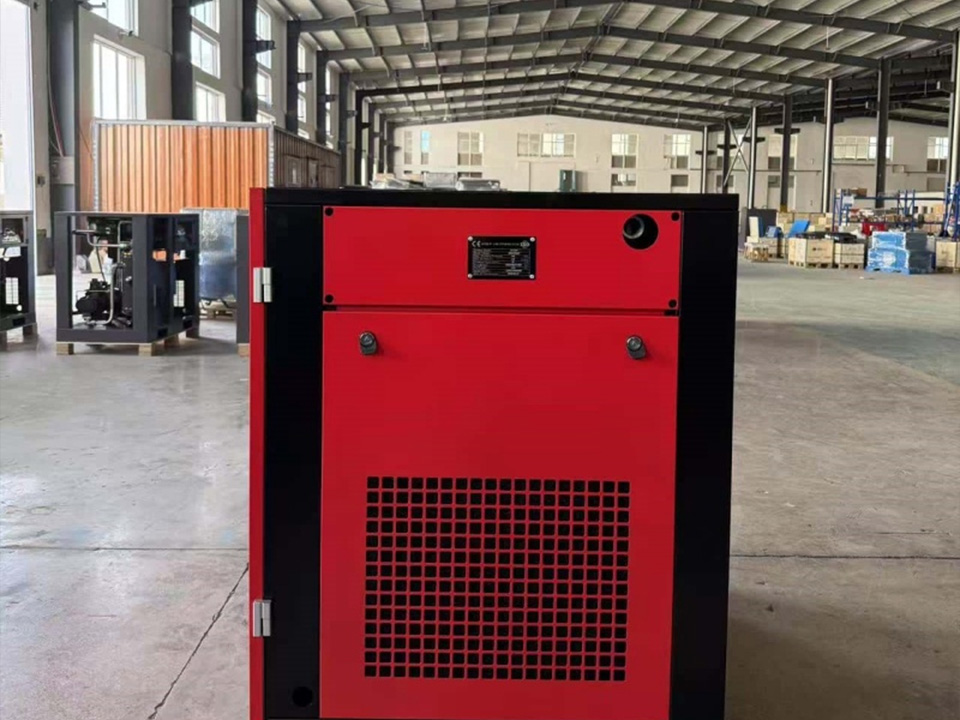
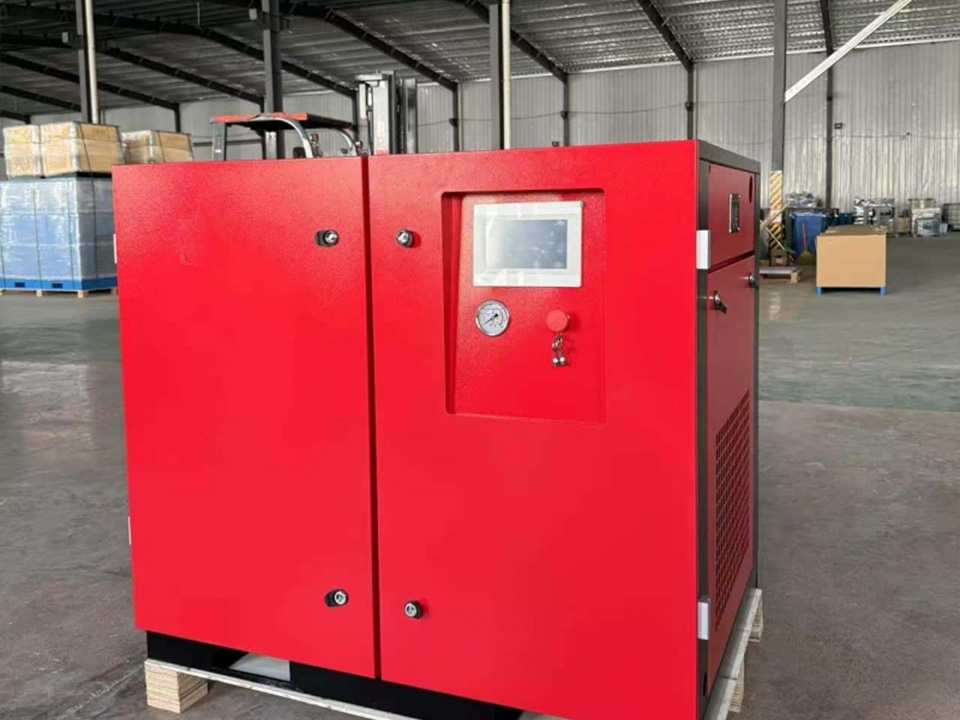
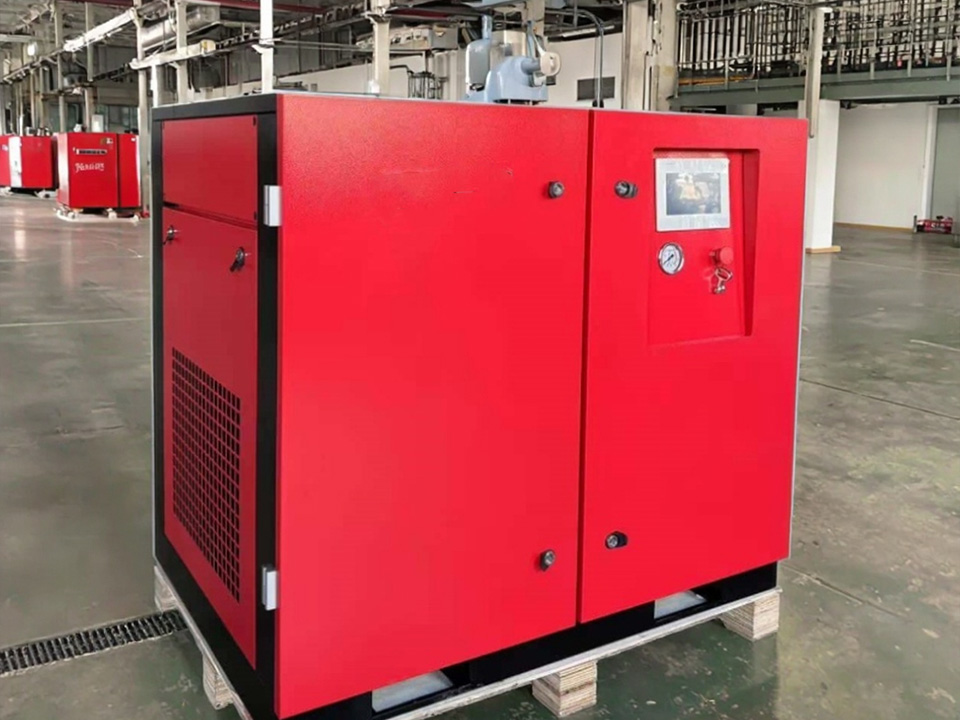
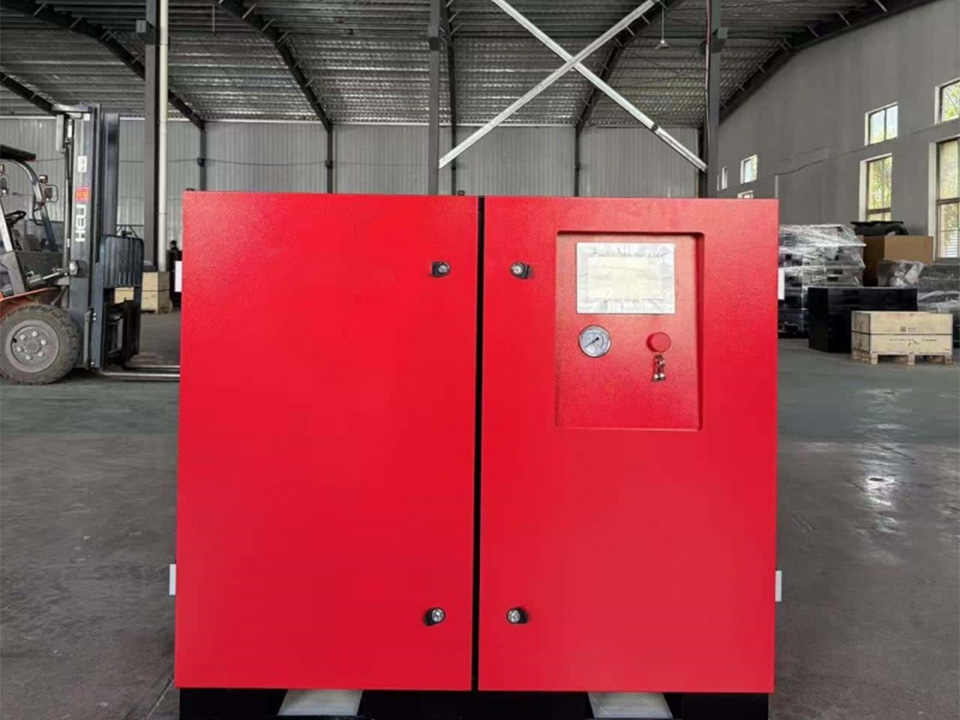
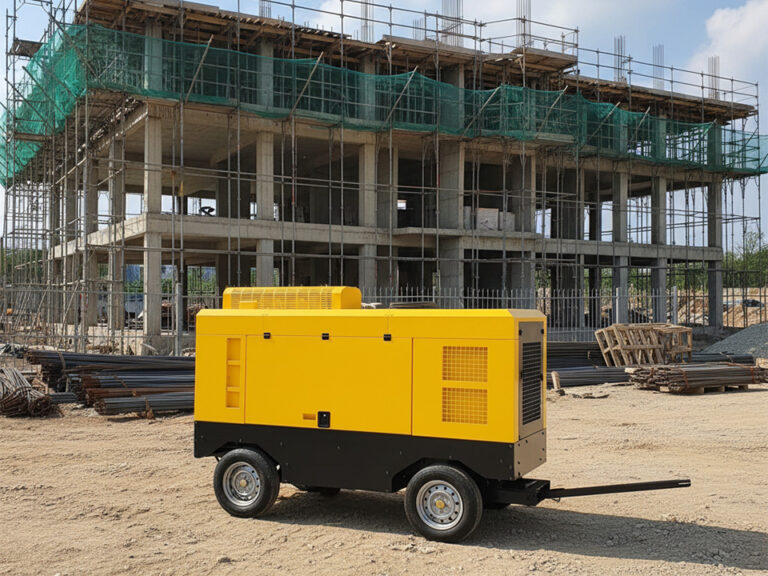
A 55 kW screw compressor, a 75 kW screw compressor, and a large diesel portable DTH compressor are not interchangeable just because they all produce compressed air. Air quality, duty cycle, pressure rating, mobility, cooling, altitude, fuel availability, service access, and actual free air delivery matter.
It isn’t. New buyers mix these categories all the time.
Lesson Two: 8 Bar Air Is Useful, But It Is Not Magic
Let me be blunt: many first-time buyers see “8 bar” and think it sounds powerful. In factory air systems, 8 bar can be perfectly normal. In DTH drilling, it may be nowhere near enough for the job.
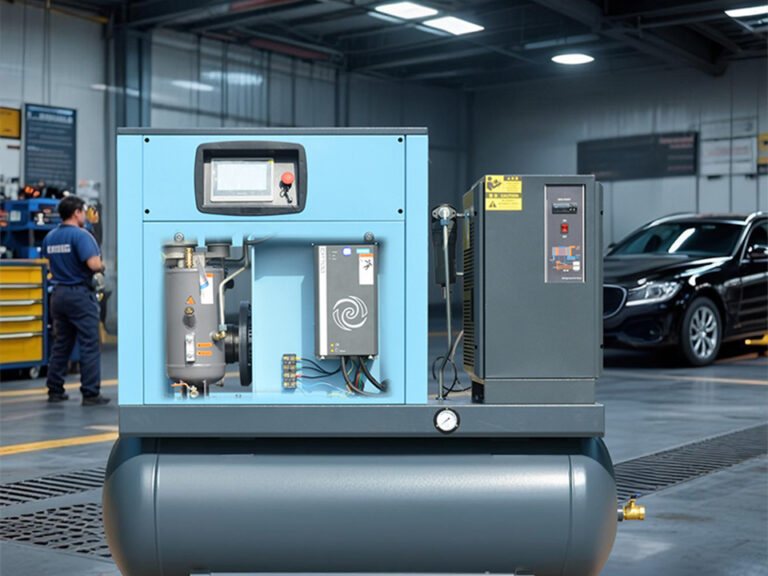
An 8 bar compressor equals roughly 116 PSI. Many DTH hammer setups need higher pressure classes depending on hammer type, hole diameter, and depth target. Some entry-level applications may operate around lower ranges, but once hard rock, water inflow, larger boreholes, or deeper targets enter the picture, a weak pressure/flow match becomes painful fast.
This is why I separate compressors into two mental boxes:
Compressor Type
Typical Pressure Context
Better Fit
Buyer Risk
7.5 kW / 10 HP lubricated screw compressor
Around 8 bar class in many shop-air setups
Workshop tools, light industrial air, auxiliary use
Mistakenly treated as a drilling compressor
55 kW screw compressor
Industrial/stationary or portable plant-air use depending on build
Factory air, site air, selected support operations
Misread as DTH-ready without checking CFM/PSI
75 kW 8 bar industrial screw compressor
Industrial 8 bar air supply
Continuous production air, plant systems
Pressure may be too low for many DTH drilling jobs
High-pressure portable DTH compressor
Often selected around hammer, depth, bore diameter, geology
Lesson Three: CFM Is Not a Decoration; It Clears the Hole
The dirty secret of drilling sales is that everyone loves depth charts and nobody wants to calculate annular velocity.
But annular velocity is where the cuttings either leave the borehole or start causing trouble. The Driller’s compressor selection guidance explains the principle in plain field language: for vertical air drilling, the compressor must provide enough air velocity to lift cuttings out of the hole, and the needed CFM is back-calculated from annular area.
That little sentence kills many fake “matching” claims.
Because the same compressor may behave very differently with:
90 mm drill pipe versus 76 mm drill pipe
115 mm borehole versus 165 mm borehole
Dry granite versus wet fractured basalt
80 m depth versus 220 m depth
New hammer versus tired hammer
Sea-level jobsite versus high-altitude mountain work
So when a first-time fleet buyer asks, “What size compressor for DTH drilling rig?” the honest answer is: tell me the hole diameter, hammer size, drill pipe OD, formation, target depth, water inflow risk, and altitude first.
Without that, the answer is theater.
Lesson Four: Fleet Buyers Don’t Need One Perfect Rig; They Need Repeatable Pairing Rules
A single-machine buyer can sometimes survive an imperfect setup. A fleet buyer cannot. Mistakes multiply.
If your business plan is to run multiple rigs for village water projects, farms, NGO boreholes, mining support, or contractor work, the pairing logic must be standardized. Not overcomplicated. Standardized.
I’d build the first fleet around three hard rules.
Rule 1: Pair by Job Class, Not by Sales Brochure
Create job classes before buying equipment:
Job Class
Typical Work
Pairing Priority
Red Flag
Shallow farm wells
Softer formations, smaller diameter
Lower cost, mobility, simple maintenance
Overspending on compressor class
Mid-depth village boreholes
Mixed geology, moderate depth
Balanced rig torque, pump/mud/DTH flexibility, reliable air
Buying rig first, compressor later
Hard-rock DTH jobs
Granite, basalt, fractured rock
Pressure, CFM, hammer compatibility
Choosing based on lowest compressor price
Program-scale fleet work
Repeated jobs across regions
Standard parts, operator training, spare inventory
Mixed brands/specs with no service plan
The best air compressor for water well drilling is not the biggest one on the internet. It is the compressor that keeps the selected hammer alive, clears the hole, fits the drilling method, and can be serviced locally without waiting three weeks for a seal kit.
Rule 2: Treat Safety and Dust as Fleet Economics
Silica dust is not just a compliance topic. It is downtime, liability, bad crew retention, and reputational damage.
NIOSH updated its silica health information in February 2024 and states that millions of U.S. workers are exposed to respirable crystalline silica; OSHA’s construction silica standard also requires employers to address respirable crystalline silica in hazard communication and training programs. Drilling buyers outside the U.S. should still pay attention because hard-rock drilling, dust, and worker exposure do not respect borders.
And yes, some small contractors ignore this.
They shouldn’t. Dust suppression, proper flushing, PPE, maintenance, and crew training are not “big company luxury items.” They are how a new drilling business avoids becoming the cheapest and most careless operator in the district.
Rule 3: Buy the Service System, Not Just the Machine
This is where I sound harsh: if you cannot get filters, oil, seals, hoses, couplings, hammer parts, and basic troubleshooting support, you did not buy a fleet. You bought future scrap.
A first-time buyer often asks for the discount first. A professional buyer asks:
What compressor oil grade is recommended for local temperature?
What is the maintenance interval under dusty operation?
Are filters stocked?
Can the supplier provide hammer and bit compatibility guidance?
Is there a startup checklist?
What happens when the compressor overheats at 42°C?
What fault codes or gauges should the operator understand?
Can we train two mechanics before the rig leaves the yard?
Boring questions. Profitable questions.
Lesson Five: The Cheapest Pairing Usually Has the Highest Hidden Price
New buyers love “good price.” I get it. Cash is tight. First fleet buyers are often building the business with family capital, bank loans, or one painful upfront investment.
But low initial price can hide four costs:
Slow drilling speed
Excess fuel burn
Hammer and bit damage
Job failure and unpaid invoices
A weak compressor can make a decent rig look bad. A decent compressor can make a modest rig earn money. That is why drilling rig and air compressor pairing should be discussed before the proforma invoice, not after the container is loaded.
But what should a buyer actually ask?
Ask for a pairing sheet.
Not a pretty catalog. A pairing sheet.
It should show:
Buyer Input
Why It Matters
Supplier Should Confirm
Target depth
Pressure loss, drilling method, compressor class
Practical depth by formation, not fantasy depth
Borehole diameter
Air volume and cuttings removal
Recommended hammer/bit/compressor range
Formation
Determines DTH, mud rotary, or mixed method
Rock hardness, fractures, water inflow assumptions
Drill pipe OD
Controls annular area
Air velocity calculation basis
Altitude and temperature
Affects compressor performance
Cooling and derating risks
Fuel and service access
Determines operating reliability
Engine, filters, oil, and spare parts plan
I have a strong opinion here: any supplier who quotes a rig and compressor without asking about formation and bore diameter is not guiding you. They are just selling metal.
The Pairing Framework I’d Give a First-Time Buyer
Let’s make this practical. If I were advising a new fleet buyer, I would not start with model names. I would start with a decision path.
Step 1: Choose the Drilling Method
For soft ground and shallow wells, mud rotary may be more economical. For hard rock, DTH air drilling is often the real tool. For mixed formations, buyers need to think about whether the rig supports both methods or whether the business will specialize.
Step 2: Choose the Hole Diameter
The borehole diameter drives air demand. Bigger hole, bigger annular area, more air needed to lift cuttings. This is why a compressor that “worked fine” for a smaller hole can suddenly perform badly when the buyer changes bit size.
Step 3: Choose Hammer and Bit
The hammer has pressure and flow expectations. Don’t guess. Match it.
Step 4: Choose Compressor Class
Only after the first three steps should the buyer talk seriously about compressor size. This is where water well drilling compressor selection becomes engineering rather than shopping.
Step 5: Check Service Reality
A perfect model on paper becomes useless if the nearest service support is across an ocean and nobody on the crew knows how to read gauges.
FAQs
What is a water well drilling rig compressor?
A water well drilling rig compressor is the air source that powers DTH hammers, clears cuttings from the borehole, supports flushing, and helps maintain drilling efficiency when air drilling is used instead of, or alongside, mud rotary methods. It must be selected around depth, bore diameter, hammer demand, and geology.
In simple terms, the compressor is not “extra equipment.” It is part of the drilling system. If the compressor lacks pressure, the hammer underperforms. If it lacks CFM, cuttings stay in the hole. Either way, the rig looks weaker than it really is.
How do I choose a compressor for a water well drilling rig?
Choose a compressor for a water well drilling rig by confirming the target depth, borehole diameter, hammer size, formation type, drill pipe diameter, altitude, temperature, and expected water inflow before comparing compressor models. The compressor should match real drilling conditions, not just the rig’s advertised maximum depth.
For first-time buyers, I recommend asking the supplier for a written rig compressor matching guide. If they cannot explain why a certain CFM/PSI range fits your hole size and hammer, keep asking. Or find another supplier.
What size compressor is needed for a DTH drilling rig?
The compressor size needed for a DTH drilling rig depends mainly on hammer requirements, borehole diameter, drilling depth, annular space, rock hardness, and flushing demand. There is no universal CFM/PSI answer because a small-diameter shallow hole and a deep hard-rock borehole create very different air requirements.
A practical supplier should ask for your drilling plan first. Be suspicious of instant answers like “this compressor matches 200 m” without bore diameter, hammer size, or formation details.
Is an 8 bar screw compressor enough for water well drilling?
An 8 bar screw compressor may be enough for some workshop, auxiliary, or very limited light-duty uses, but it is often not enough for serious DTH water well drilling where higher pressure and larger air volume may be required. Buyers must separate industrial air supply from drilling air demand.
This is where new buyers get trapped. A compressor can be well-built and still be wrong for the job. Good machine, bad match.
What are the most common first-time drilling rig buyer mistakes?
The most common first-time drilling rig buyer mistakes are buying by advertised depth, ignoring compressor CFM/PSI, underestimating geology, choosing the cheapest quotation, forgetting spare parts, and failing to train operators before the first paid job. These mistakes turn equipment purchases into slow, expensive field lessons.
The biggest mistake, in my view, is buying the rig first and solving the compressor later. Pair the system before payment. Not after delivery.
Final Thoughts: Build the Pair Before You Build the Fleet
If you are buying your first drilling fleet, don’t start with the prettiest rig video.
Start with the borehole.
Depth. Diameter. Formation. Hammer. Pipe. Air. Service. Crew skill. Spare parts. Then price.
That order saves money.
For first-time fleet buyers comparing a water well drilling rig compressor, the smartest next step is simple: send your target depth, borehole diameter, local geology, preferred drilling method, and jobsite country to a supplier before asking for the lowest price. Ask for a written rig-and-compressor pairing recommendation. Ask why. Ask what happens if the formation changes.
And if the answer sounds too smooth, push harder. Good drilling equipment sales should feel a little technical. Because the ground certainly is.