“The Drilling Rig gave us a true one-stop solution. Their team matched the right rig, compressor, and drilling tools for our project, and the engineering support stayed fast and professional from quote to delivery.”
How to Ship Water Well Rigs to Africa, LATAM, and MENA
Cheap quotes lie
I have watched more rig deals go bad in documentation, port handling, and inland transfer than in ocean transit itself, and that is why I distrust any early quote that treats a 12-ton to 35-ton drilling unit like generic machinery instead of out-of-gauge cargo with serial numbers, fluids, lifting points, and country-specific compliance baggage. Why do exporters still buy the cheapest number on the page?
And the pressure was not isolated. According to UNCTAD’s 2024 Review of Maritime Transport, by mid-2024 Suez transits were down 70%, Gulf of Aden tonnage was down 76%, Cape of Good Hope arrivals were up 89%, and more than 80% of world trade by volume still moved by sea. In plain English: your drill rig shipping plan is exposed to chokepoint risk even when the buyer thinks the problem is “just freight.” Isn’t that the first hard truth manufacturers should say out loud?
Pick the shipping mode before you promise delivery
Mode first. Sales later.
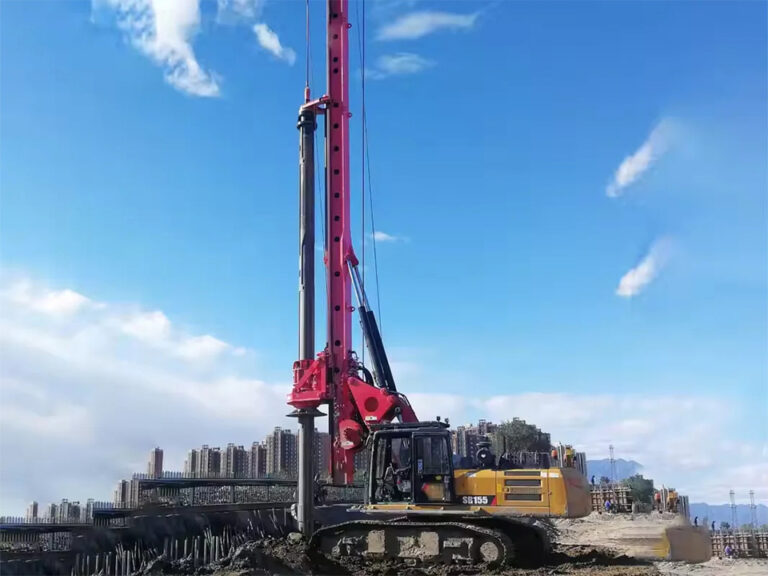
The right mode for international drilling rig shipping depends on the machine’s transport posture, not its brochure weight, because mast-down height, overall width, center of gravity, tire or crawler condition, and whether the unit can safely roll, lift, or sit on a mafi trailer will decide handling cost long before the bill of lading exists. So why do so many quotations still start with destination instead of configuration?
Flat rack works when the rig can be made civilized
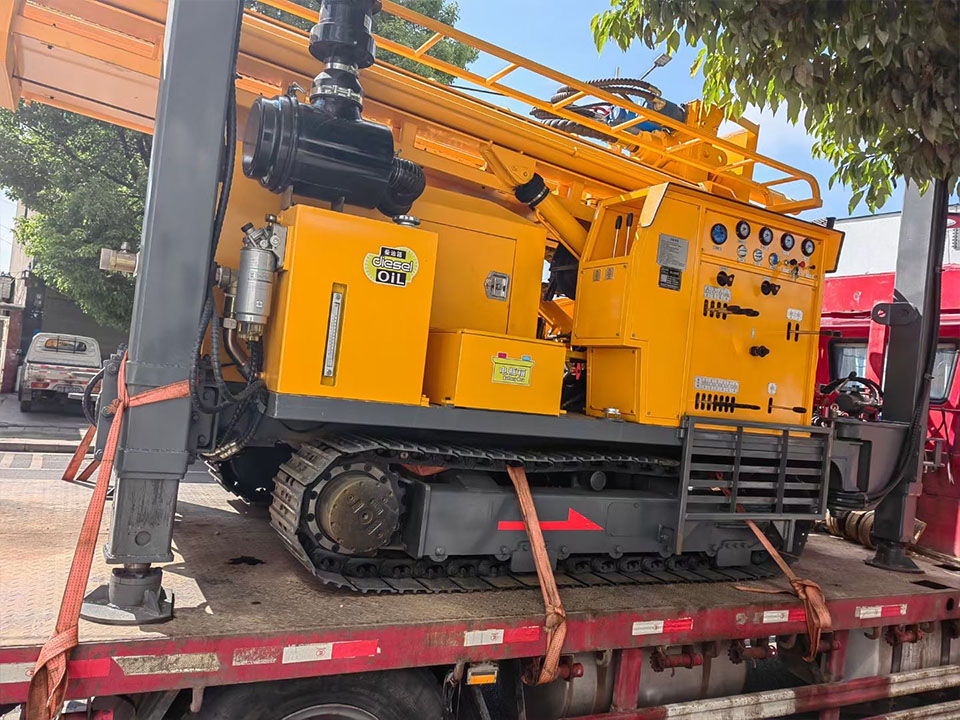
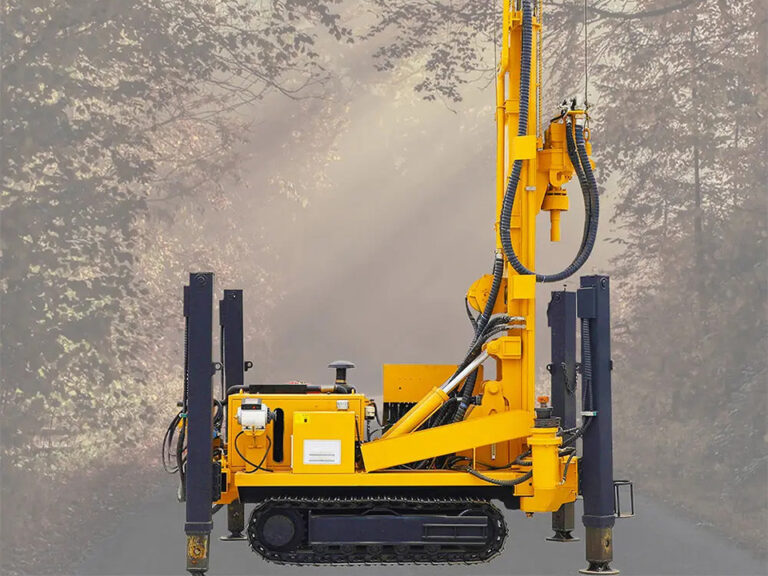
If the mast folds cleanly, the width stays manageable, and the port pair is comfortable with out-of-gauge handling, flat rack is often the least messy answer. I like it for truck-mounted or smaller crawler units that can be secured without theatrical lashing, and for shipments where you want faster handoff into standard terminal processes.
But I do not force it. Once the over-height starts driving special handling at both ends, once detachable parts are being split awkwardly, or once the discharge port has a weak record with OOG cargo, the flat-rack fantasy gets expensive fast.
Breakbulk is ugly, but honest
Breakbulk is what I pick when the rig is telling you the truth and the sales team is not: the mast is long, the deck loading is weird, the unit wants crane lifts, and the destination port handles project cargo better than it handles container exceptions. That is common in heavy equipment shipping to Africa and in some MENA lanes where the ocean leg is manageable but terminal choreography is not.
I would rather explain a breakbulk quote upfront than apologize later for a flat-rack plan that dies in transshipment.
Ro-ro is not automatic
People love to say “it’s self-propelled, so just ship it ro-ro.” I don’t buy that line unless the origin and destination both have reliable ro-ro handling, the unit can actually move safely in loading condition, and the buyer accepts the exposure that comes with terminal driving and open-port handling. Why gamble on convenience if the rig is worth far more than the freight delta?
The World Bank’s 2023 Logistics Performance Index covers 139 countries and benchmarks customs, infrastructure, international shipments, logistics competence, tracking, and timeliness, which is exactly why a region-blind shipping playbook fails here: the gap between port efficiency and border execution is real, measurable, and commercially painful. Why would anyone write one generic global article and pretend that is enough?
A serious water well drilling rig shipping file is not just a commercial invoice and packing list. I want the serial numbers for the rig and major subassemblies, mast-up and mast-down dimensions, center-of-gravity notes if available, engine and chassis identification, declared new-or-used status, attachment list, spare-parts split, fluid status, battery condition, lifting points, and clear photos of the cargo exactly as presented for pickup. Why? Because customs, surveyors, insurers, and terminal operators do not clear ambiguity; they monetize it.
This is also where exporters sabotage themselves with valuation. They bundle drill rods, compressors, mud pumps, consumables, toolboxes, and service kits into one vague invoice line, then act surprised when the importer’s broker asks whether the shipment is one machine, multiple machines, accessories, or mixed industrial goods. I do not like “package deal” language on export invoices for rig shipments. It sounds efficient. It clears terribly.
And then there is the used-versus-new question. I have seen sellers hide behind phrases like “refurbished to export standard,” which may sound polished in marketing copy but can become toxic at the border when the destination authority wants to know the original year, prior usage, rebuild scope, and remaining-life documentation. Is that really the conversation you want to start after the rig lands?
Inland haulage is where margins disappear
This part hurts. It always does.
The buyer says the destination is “near the port,” and then you learn that “near” means a two-day convoy, a poor road segment, one weak bridge, a town curfew, police escort requirements, mobile-crane dependency, and a final approach that cannot take the lowbed with the mast installed. That is why I price inland haulage as an engineering problem, not a trucking add-on.
My bias is simple. For heavy equipment shipping to Africa, for cross-border LATAM rig transport, and for inland desert jobs in MENA, I want route verification before I promise door delivery, and I want the buyer to sign off on the delivery condition: mast down, attachments removed, auxiliary items boxed separately, and unloading responsibility assigned in writing. It is not glamorous. It is profitable.
FAQs
What is water well drilling rig shipping?
Water well drilling rig shipping is the process of exporting a drilling unit and its related components through ocean, port, customs, and inland transport systems, with special attention to oversize dimensions, cargo securing, destination compliance, serial-number control, and the separation of rigs, attachments, spares, and hazardous remnants for lawful import clearance.
In practice, it is project cargo with machinery paperwork, not ordinary freight. Treat it that way from day one.
What is the best way to ship a water well drilling rig overseas?
The best way to ship a water well drilling rig overseas is to match the rig’s real transport condition to the right mode, usually flat rack for manageable OOG cargo, breakbulk for oversized or awkward lifting profiles, and ro-ro only when the unit and both terminals are genuinely suitable for rolling handling.
I would rather choose the honest mode early than defend a cheap mode later. That is how you avoid detention, re-handling, and angry importers.
What documents are needed for international drilling rig shipping?
International drilling rig shipping typically requires a commercial invoice, detailed packing list, bill of lading, rig serial data, dimensions in transport condition, cargo photos, consignee and broker information, and any destination-specific conformity or advance-filing documents required by the importing country before arrival or loading.
Then the country layer kicks in. Kenya may require PVoC, Egypt uses ACID, Saudi Arabia uses Saber, and Mexico expects a compliant pedimento-backed document set.
How long does it take to ship water well rigs to Africa, LATAM, or MENA?
Shipping water well rigs to Africa, LATAM, or MENA usually takes longer than the ocean schedule suggests because transit time is only one component; cargo readiness, conformity approval, port handling, customs review, and inland route execution often add more variance than the vessel itself.
That is why I do not publish one neat transit number for all three regions. The clean answer is: quote by route, mode, and clearance system, not by brochure geography.
Can I ship a used drilling rig into these regions?
Yes, a used drilling rig can be shipped into parts of Africa, LATAM, and MENA, but the real issue is whether the destination treats used industrial equipment as admissible, conditionally admissible, or administratively toxic, which changes the paperwork burden and the likelihood of inspection, delay, or outright rejection.
Algeria is the cautionary example. Used equipment has faced a long history of restrictive treatment, so exporters should never assume that “reconditioned” solves the regulatory question.
Your Next Steps
Do this now.
Build a transport file for the exact machine: serials, mast-down dimensions, gross weight, photos, attachments, spare parts, and new-versus-used status.
Decide the mode after reviewing cargo posture, not before: flat rack, breakbulk, or ro-ro.
Get destination compliance checked before booking: broker review for LATAM, conformity and advance filing for MENA, and pre-shipment verification or used-equipment screening where African markets demand it.
Quote inland separately unless the route has been verified with axle, bridge, crane, and unloading constraints.
That is the hard version of how to ship a water well drilling rig overseas. It is also the version that keeps the rig moving.