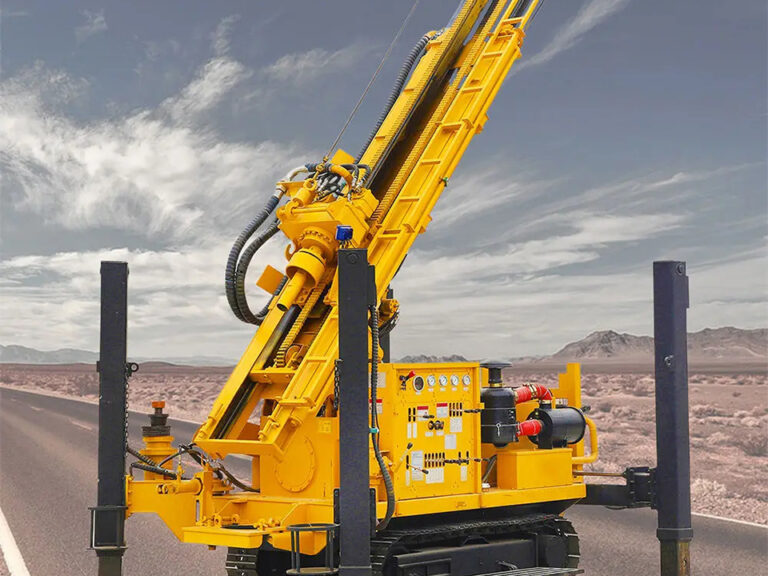
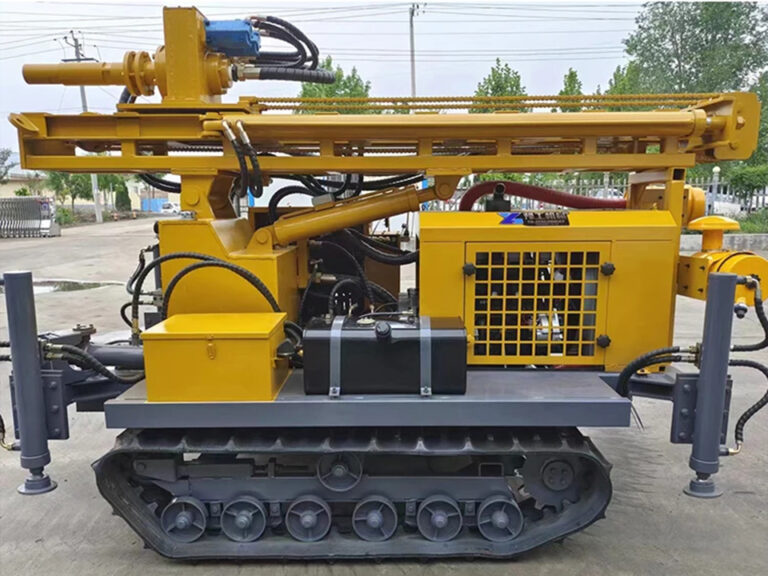
“The Drilling Rig gave us a true one-stop solution. Their team matched the right rig, compressor, and drilling tools for our project, and the engineering support stayed fast and professional from quote to delivery.”
How Many Crew Members Does a Water Well Rig Really Need
The Lie Starts at the Control Panel
Three people wins.
Not always, not everywhere, and certainly not in every brochure-friendly demo where the machine sits on dry concrete, the rods are already stacked, the mud pit doesn’t exist, and nobody is sweating through a bad formation at 90 meters—but for real 150–200m water well drilling, three people is the number I trust first.
Table of Contents
Why?
Because “one-man operation” usually means one man can operate the levers. It does not mean one man can run the whole drilling job.
I’ve seen this sales trick too many times. The operator stands at the valve bank. Nice clean video. The mast rises. The rotary head moves. Maybe a rod goes in. Then the clip ends before the miserable part starts—mixing mud, dragging hose, checking return flow, breaking out pipe, pulling rods, setting casing, refueling, washing cuttings away from the borehole collar, and stopping somebody from stepping where he shouldn’t.
That’s the job. Ugly, mostly.
The U.S. Bureau of Labor Statistics puts “Earth Drillers, Except Oil and Gas” into a skilled occupational category covering rotary, churn, pneumatic, and similar drilling work, including water wells. In the May 2023 OEWS data, this job category showed 18,010 workers, a median hourly wage of $27.24, and a mean annual wage of $60,250. That’s not “cheap helper labor.” That’s paid field risk. The numbers are published in the BLS Occupational Employment and Wage Statistics profile for Earth Drillers, Except Oil and Gas.
And here’s my bias, stated plainly: if a supplier tells you a 150m or 200m rig is a true solo machine, ask for a full uncut jobsite video from site arrival to casing. Not a 14-second TikTok clip. Not a shiny yard test. A real hole.
Crew Size Is Not About Depth Alone
But depth fools buyers.
A 100m hole in loose sand can be nastier than a 180m hole in predictable formation, and a shallow borehole with collapsing walls can eat more labor than a deeper job where the mud program, rods, and casing plan are already dialed in. So no, “How deep can it drill?” is not the smartest first question.
The better question is: when the borehole starts misbehaving, how many hands are still free?
If you’re looking at a 150m electric portable mobile water well drilling rig, don’t judge the machine only by depth rating. Think about the support rhythm. Who handles rods? Who manages cable and power? Who watches the mud return? Who keeps the water source alive? Who cleans the collar area before it turns into soup?
That’s where the crew count hides.
Typical Water Well Rig Crew Size by Job Type
Rig / Job Type
Practical Crew Size
Minimum Crew
What Each Person Usually Does
Where Buyers Miscalculate
Small portable mud drilling rig, shallow farm well
2 people
1 skilled operator + 1 helper
Operator runs rig; helper handles rods, mud, water, site cleanup
Thinking lightweight rods remove all labor
150m electric portable water well rig
2–3 people
2 people
Operator, rod/helper, mud/water support
Ignoring generator, cable, pump, and mud control work
180–200m diesel hydraulic portable rig
3 people
2 experienced people
Operator, rod handler, helper for fluids/casing/tools
Assuming diesel hydraulic means less manpower everywhere
200m deep hydraulic rig with harder geology
3–4 people
3 people
Operator, rod handler, compressor/pump watcher, casing/tool helper
Underestimating stuck pipe and tool-change time
Impact / mud pump mining shaft or heavier borehole work
4+ people
3 people
Rig operator, pump hand, tool hand, safety/logistics support
Treating mining-style drilling like village water drilling
Hydraulics help. Of course they do.
But I don’t buy the fantasy that hydraulics erase labor. A hydraulic feed system reduces muscle. A hydraulic breakout system reduces wrestling. A better mast reduces chaos. Still, somebody has to watch the borehole, the fluid, the hose, the casing, the rods, the ground, and the tired guy who thinks he can stand “just there” for two seconds.
That’s how accidents get invited.
The Three-Person Crew Is Boring. That’s Why It Works
Here’s the ugly truth: good drilling crews look overstaffed until something goes wrong.
One operator. One rod/helper. One mud-site-tool person.
That third worker may look unnecessary during a smooth 20-minute stretch. Then the mud thins out, the return changes color, the pump starts sucking air, the customer wants casing moved closer, and the operator needs to keep the bit alive instead of climbing down to fix five small problems. Suddenly the “extra” person is the one saving your day rate.
For a 180–200m diesel hydraulic portable water well drilling rig, I’d budget three people as the normal working crew. Not because every minute needs three people moving. It doesn’t. Because drilling has nasty workload spikes—rod changes, stuck tool risk, casing prep, fluid correction, repositioning, and end-of-day pullback—where two people start cutting corners.
And corners cut back.
The Operator Is Not Just “the Driver”
A real water well rig operator reads the hole through vibration, pump behavior, return flow, feed pressure, rotary torque, bit chatter, and engine note. That’s not poetic. It’s field language. A good operator can feel when the bit is cutting cleanly, when the hole is washing, when the formation changed, or when the rig is about to get bullied by geology.
One eye on gauges. One ear on the rig.
That’s why I dislike making the operator do everything else too. If he’s mixing mud, dragging rods, clearing cuttings, and arguing over casing size, he’s no longer fully operating. He’s surviving.
The Drill Rig Helper Is Not “Unskilled Labor”
Bad phrase. Delete it from your buying logic.
The helper who handles rods badly can ruin threads, slow connections, create pinch-point exposure, contaminate tooling, and waste time every cycle. A good helper knows where to stand, when to step back, how to prep threads, how to watch the wrench, how to stage rods, and when the operator’s body language means “don’t touch anything yet.”
From my experience, the rod/helper role is where cheap labor becomes expensive fastest.
The Mud, Pump, and Site Worker Is the Hidden Meter-Maker
This third role is not glamorous. Mud pit. Water flow. Bentonite or polymer. Fuel. Hose layout. Casing. Tool staging. Cuttings. Site cleanup. Compressor checks if you’re running DTH air. Pump suction if you’re drilling with mud.
The work looks small until it stops.
On a 200m deep hydraulic portable water well drilling rig, especially where buyers are chasing deeper rural or commercial wells, I would rather see one competent support person than a bigger engine spec. There. I said it.
Manual Rod Handling: Where the Payroll Math Bleeds
Manual rod handling is the part that looks easy in a video and feels brutal by lunchtime.
Lift. Align. Thread. Break out. Stack. Repeat. Add mud, vibration, poor footing, sun, impatience, and a helper who slept badly in the truck. Now repeat it 80 times. That’s not a small detail; that’s the human bottleneck in many portable water well drilling jobs.
Automatic rod handling can reduce fatigue. It can reduce direct lifting. It can make repeated connections cleaner. But don’t confuse automation with zero manpower. The machine still needs trained hands around it, and hydraulic assistance can create its own trouble if the crew doesn’t understand pinch zones, swing paths, and jam points.
I frankly believe many buyers compare manual rod handling vs automatic rod handler the wrong way. They ask, “How many workers can I remove?” Better question: how many mistakes can I prevent when the crew is tired?
NIOSH published a 2023 drill rig safety bulletin after serious incidents involving rig overturns and misuse, including a Philadelphia case where a 75-ton drill rig was used in the wrong configuration for hoisting and toppled, killing a worker and injuring the operator. That bulletin is a good reminder that the danger is not only underground; setup, hoisting, ground condition, and operator qualification matter above ground too. See the NIOSH 2023 drill rig safety bulletin.
So yes, automation matters. But training matters more.
Two People Can Work. Until They Can’t.
A two-person crew is not wrong.
For shallow farm wells, soft sediment, light rods, short working days, prepared sites, and simple mud drilling, two people can be perfectly reasonable. One operator. One helper. Clean enough.
But on export jobs, remote village projects, rough access roads, deeper holes, casing work, or uncertain geology, two people often become a silent tax. They move slower. They miss things. They get tired earlier. They improvise. And improvisation around rotating pipe is not bravery—it’s usually bad management wearing a hard hat.
OSHA’s accident record includes a water well drilling case where a driller used a 60-inch pipe wrench while breaking out drill pipe; after the rotary table engaged, the wrench rotated, struck the worker’s leg, and pinned him between the wrench and the rig, causing fractures. The incident is documented in the OSHA accident report on the water well drilling pipe wrench injury.
Old case? Yes.
Irrelevant? No.
Pipe torque has not become polite. A tired two-person crew still faces the same wrench physics, the same pinch points, the same “just one more rod” mentality that makes people careless at the end of the day.
The 200m Class Needs a Different Labor Mindset
And this is where buyers get trapped.
They buy a rig with a 200m rating, then plan labor like they’re drilling 60m garden wells. Wrong mental model. A 200m class machine may still be portable, but the work around it gets heavier: more rods, more fluid demand, more casing decisions, more tool wear, more borehole behavior to read, more time exposed to fatigue.
If the application moves toward impact drilling, mining shafts, or heavier mud-pump work, then the crew plan changes again. A 200m impact mud pump type mining shaft drilling rig should not be staffed like a small village borehole rig. Different tempo. Different mess. Different tool-hand workload.
Four people may look expensive in the quote stage. After one stuck tool, one damaged rod thread, one collapsed section, or one injury, that “expensive” fourth person starts looking cheap.
Labor Cost per Meter: The Number That Humiliates Cheap Planning
Let’s make the math dirty.
Say you run a three-person crew: operator at $28/hour equivalent, two helpers at $18/hour equivalent, 8 hours per day. That’s $512/day before travel, food, lodging, insurance, overtime, downtime, and tool loss.
If they drill 40 meters, labor is $12.80 per meter.
If poor formation, mud trouble, slow rod handling, and under-crewing drop production to 15 meters, labor jumps to $34.13 per meter.
Same rig. Same crew. Very different bill.
This is why I don’t like crew planning based only on headcount. A two-person crew that drills slowly can be more expensive than a three-person crew that keeps the operation moving. Buyers hate hearing that because “two people” feels cheaper. It isn’t always cheaper. Sometimes it’s just underpowered labor pretending to save money.
My Field Rule: Budget the Crew Before You Celebrate the Rig Price
But here’s the part nobody wants to put in the brochure.
The rig price is visible. The labor leak is not. Buyers argue hard over a few hundred dollars on machine price, then ignore the daily cost of slow rod handling, bad mud control, weak helpers, untrained operators, and field downtime.
So I use this rough rule:
For small private wells, soft soil, and light portable rigs: 2 people can work.
For serious 150–200m water well jobs: 3 people is the sane default.
For heavy casing, DTH air drilling, unstable formations, deep commercial jobs, or impact/mud-pump work: 4 people may be cheaper than the mistake.
Not elegant. True enough.
FAQs
How many crew members does a water well rig need?
A water well rig usually needs two to four crew members, depending on drilling depth, rig size, rod handling method, casing work, geology, and site logistics. For most 150–200m portable hydraulic water well drilling jobs, three people is the most practical crew: one operator, one rod/helper, and one mud or site-support worker.
One person may control the rig, but that does not mean one person can safely manage the full drilling process. Rod handling, mud flow, water supply, casing preparation, tool staging, and site safety are separate jobs once the borehole gets difficult.
Can one person operate a water well drilling rig?
One person can operate some small water well drilling rigs in limited shallow-drilling conditions, especially when rods are light, the formation is predictable, and the site is already prepared. But “one-person operation” usually means one person can run the control panel, not that one person can complete the entire drilling job safely.
I would treat solo operation as a demonstration claim unless the supplier proves it with full jobsite footage. Setup, drilling, rod changes, mud control, casing, pullback, and cleanup all count. A clean control-panel video does not count.
What is the best crew size for a 150m water well drilling rig?
The best crew size for a 150m water well drilling rig is usually two to three people. A two-person crew may work for shallow or moderate-depth wells in soft formations, while three people gives better control when the job includes casing, mud circulation, longer rods, poor access, or higher daily production targets.
My preference is three people when the buyer is new, the site is remote, or the geology is unknown. New crews don’t only need manpower; they need breathing room. That third worker buys time, attention, and fewer stupid mistakes.
Does an automatic rod handling system reduce crew size?
An automatic rod handling system can reduce manual lifting and may reduce the need for constant physical rod handling, but it does not remove the need for trained support workers. The crew still has to manage drilling fluid, casing, tools, hoses, compressor or pump behavior, fuel, and safe movement around the machine.
Automation is fatigue control, not magic. It can improve consistency on repeated rod cycles, especially in deeper drilling. But poorly trained crews can still misuse hydraulic systems, stand in pinch zones, or miss signs of tool binding.
Why does water well drilling labor cost change so much per meter?
Water well drilling labor cost changes because the crew’s daily cost is mostly fixed while drilled meters per day can swing sharply with geology, depth, mud performance, rod handling speed, casing work, equipment condition, and downtime. The same crew may cost $12.80 per meter on a smooth day and over $30 per meter on a slow one.
That’s why I calculate labor by production rate, not just headcount. A cheap crew that loses the hole, damages threads, or drills slowly is not cheap. It’s just a delayed invoice.