“The Drilling Rig gave us a true one-stop solution. Their team matched the right rig, compressor, and drilling tools for our project, and the engineering support stayed fast and professional from quote to delivery.”
Labor Cost per Meter: Crew Benchmarks for Rig Buyers
The Meter Price Lie That Still Fools Smart Buyers
Labor bites first.
I’ve watched buyers stare at engine power, mast height, drilling depth, mud pump flow, compressor pressure, and factory videos as if those numbers alone could predict profit; meanwhile, the crew beside the rig — driller, rod helper, casing hand, mud-pit babysitter — quietly decides whether the contractor makes money or burns it.
So why does the quotation sheet still hide the people?
Here’s the ugly truth: drilling cost per meter is not a machine number. It’s a human-hour number wearing a machine costume. A rig can look cheap on paper and still bleed money every morning because it needs one extra helper, takes too long to level, or forces the driller to climb down again and again to fix layout problems that should have been solved at the factory.
Table of Contents
And labor isn’t getting easier. Associated Builders and Contractors estimated that the U.S. construction industry needed about 501,000 additional workers in 2024, and tied construction labor demand to roughly 3,550 jobs per $1 billion in extra construction spending. That’s not water-well drilling data exactly, fine — but it tells procurement people the same thing field contractors already know: skilled hands are becoming the choke point.
Wages are moving too. The U.S. Bureau of Labor Statistics reported that civilian worker compensation costs rose 3.8% over the 12 months ending December 2024; wages and salaries also rose 3.8%, while union private-industry wages rose 5.5%. That kind of wage pressure matters when a rig crew is paid every day, whether the borehole behaves or not.
Start With the Formula — Then Stop Pretending It’s Clean
The basic formula is almost embarrassingly simple:
Labor Cost per Meter = Total Daily Crew Cost ÷ Finished Meters per Day
Looks neat.
But I don’t trust neat field math unless someone explains what they counted as “finished meters.” Did they count drilled meters before casing? Did they count a section that later collapsed? Did they count lucky footage through soft ground, then average it into harder formation like nobody would notice?
That happens. Often.
Finished meters should mean meters that are drilled, stable, usable, and accepted by the project requirement. If the rig advanced 80 meters but only 45 meters were ready for casing or screen after mud trouble, wall sloughing, or reaming delay, your model uses 45. Not 80. Not the video number. Not the salesman number.
A realistic field model
Crew Model
Daily Crew Cost Assumption
Productive Meters/Day
Labor Cost per Meter
What It Usually Means
2-person compact crew
$120/day
25 m/day
$4.80/m
Good for shallow jobs, simple access, lower handling load
3-person standard crew
$180/day
40 m/day
$4.50/m
Often the best balance for portable hydraulic rigs
4-person heavy support crew
$240/day
50 m/day
$4.80/m
Useful when rod handling, casing, compressor, and mud work overlap
5-person inefficient crew
$300/day
52 m/day
$5.77/m
Looks productive, but labor drag eats the advantage
Notice the nasty bit? The smallest crew is not automatically the cheapest per meter. A 2-person team can look lean and still become slow, overloaded, unsafe, and annoying to manage once rod handling, mud work, and casing start fighting for attention.
A 5-person crew can be worse. More boots, more payroll, more waiting.
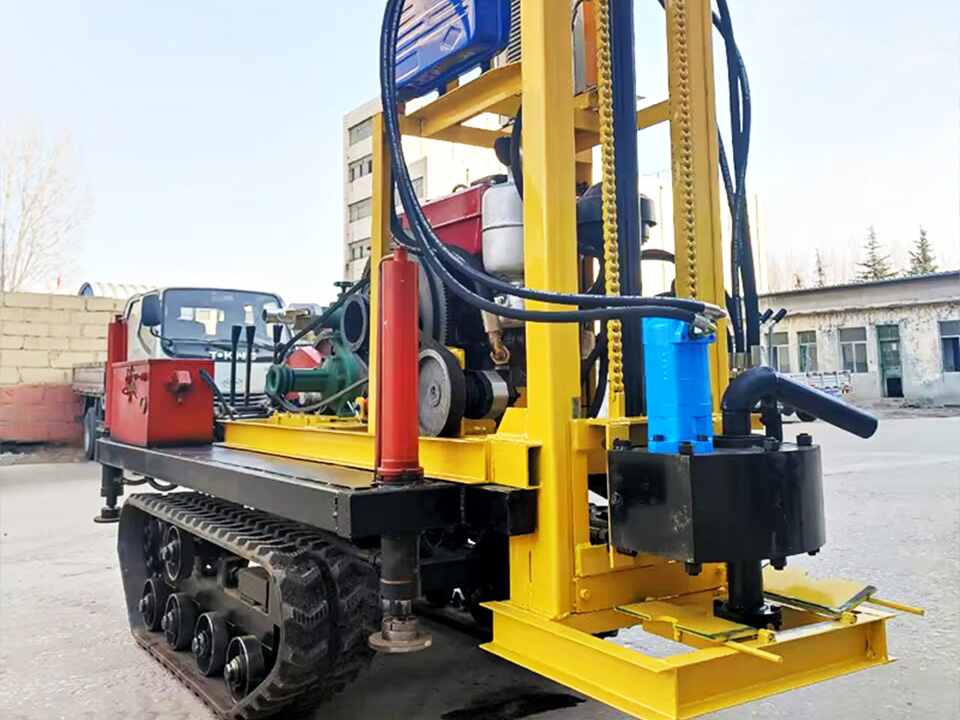
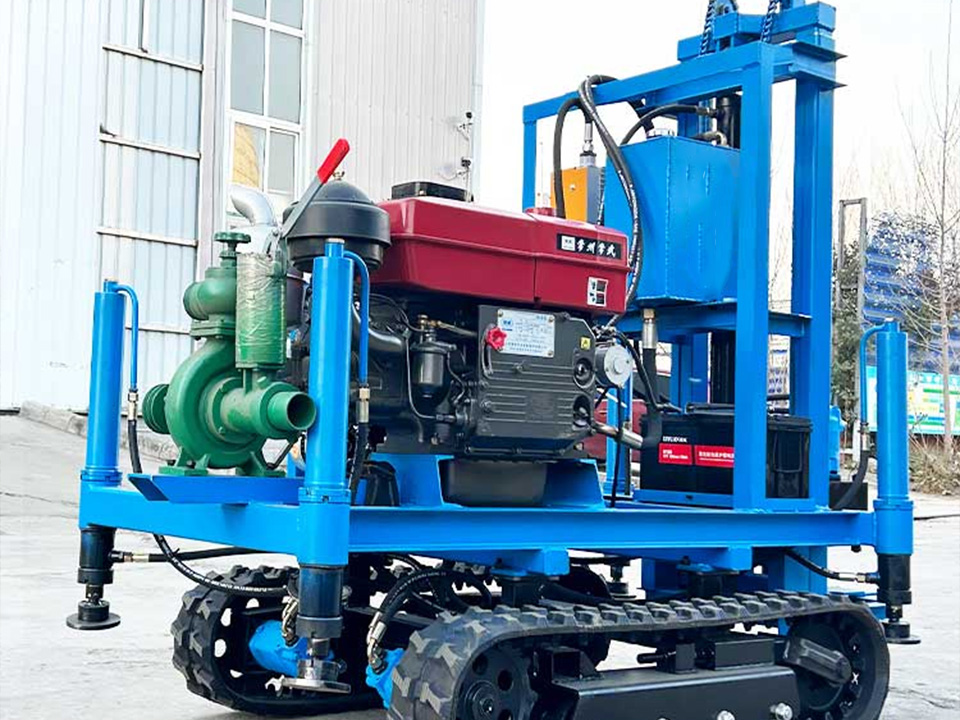
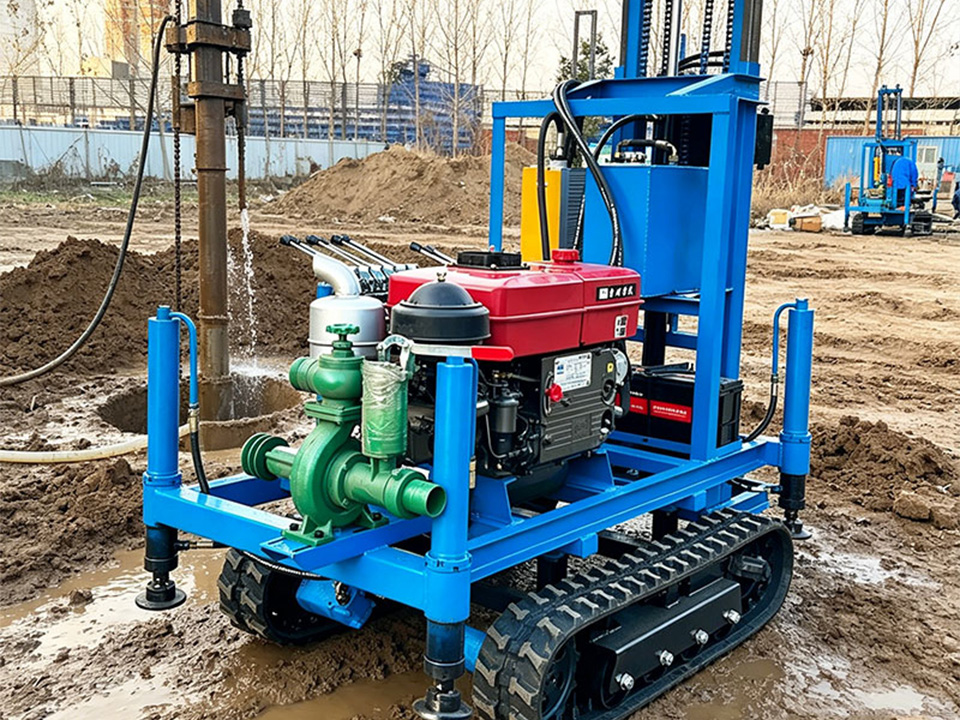
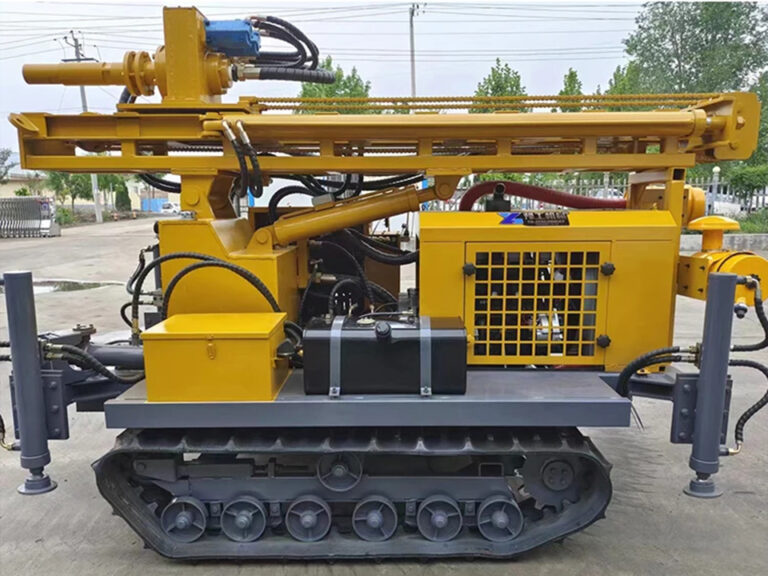
For shallow work where stable power exists, a compact electric machine like the 150m electric portable mobile water well drilling rig deserves to be modeled around fewer handling tasks, lower daily service routines, and lighter site movement. But don’t romanticize electric. If the site power is dirty, unstable, or three villages away, diesel independence beats clean theory every time.
Crew Size Is a Rig Specification — Even When the Catalog Pretends It Isn’t
But here’s what bugs me.
Most catalogs list drilling depth, bore diameter, engine power, torque, travel speed, pump flow, and machine weight. Fine. We need those numbers. But the quote rarely says, in plain language, “This rig is realistically a 3-person machine under normal 100–200 m water well conditions.”
Why not?
Because crew-size truth makes weak designs look expensive.
The BLS May 2024 oil and gas employment analysis gives a useful parallel. In support activities for mining — the category closest to drilling-service field work — employment reached 276,540, and construction and extraction occupations made up 47.4% of employment in that segment. Translation: drilling-adjacent work is still physical, crew-heavy, and dependent on skilled operators, not just machines with nice paint.
So I’d rather see a seller say something uncomfortable but useful:
“Three workers can run this rig under normal conditions. Add a fourth when casing, mud pits, and rod loading overlap.”
That sentence is worth more than a glossy “high efficiency” sticker.
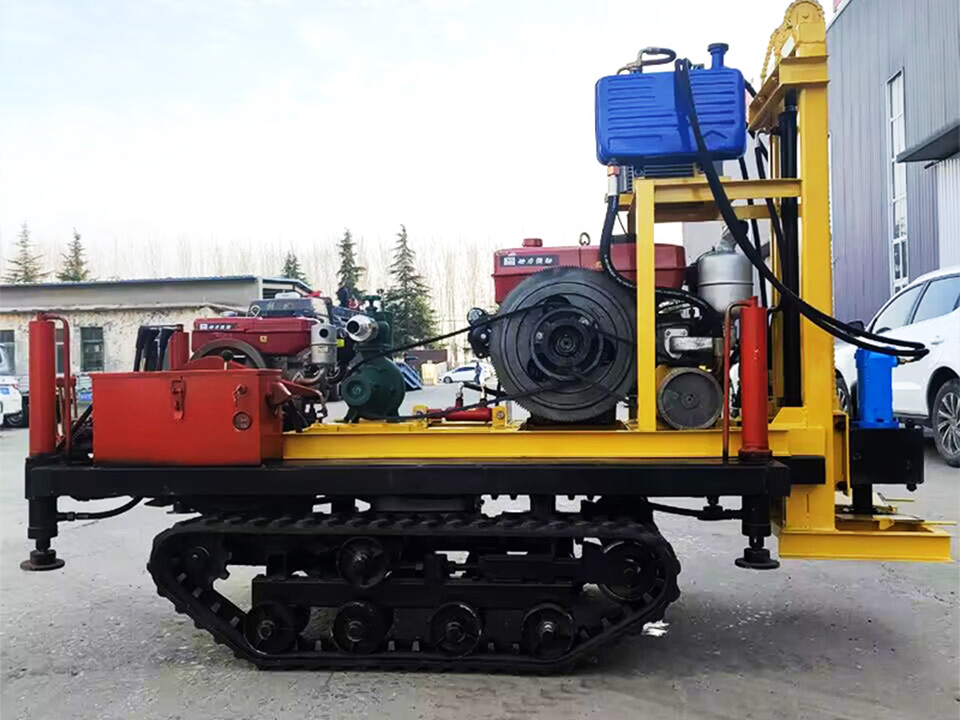
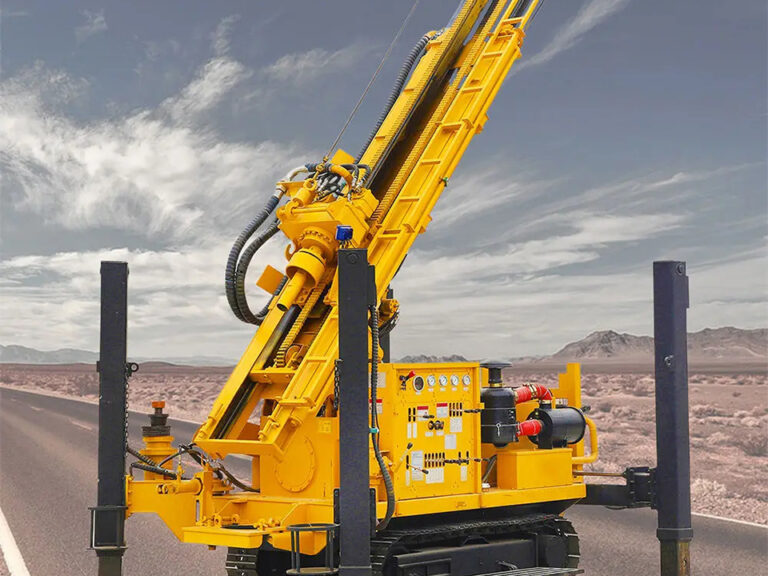
A 180–200m diesel hydraulic portable water well drilling rig should be sold around field independence, not just depth. Diesel power. Hydraulic handling. Portable layout. Fewer site dependencies. Those things decide how many workers stand around waiting for someone else to fix the next bottleneck.
And yes, the bottleneck always appears.
The Four Labor Leaks: Rods, Mud, Setup, and Dumb Waiting
Waiting kills margin.
I don’t mean only dramatic downtime — broken gearbox, snapped cable, collapsed hole, angry project owner. I mean the small waiting: one helper hunting for a wrench, the driller stepping off the platform again, mud suction clogging because the pit was badly arranged, rods stacked where nobody can reach them cleanly.
That’s where labor cost per meter drilling gets ugly.
AGC and Arcoro’s 2024 Workforce Survey found that workforce shortages were affecting project delivery and costs, and AGC reported that 94% of firms had difficulty finding workers. Drilling is its own beast, yes, but when skilled field labor gets scarce, wasted worker-hours hurt more.
Rod handling is where cheap rigs get exposed
A rig can drill well and still be miserable to work around. Poor rod layout, awkward clamps, slow hoist response, bad platform access — these things don’t look dramatic in a brochure, but they add 5 minutes here, 8 minutes there, 12 minutes after lunch when everyone is tired and the borehole starts misbehaving.
That’s real money.
If a machine needs two helpers doing what a better layout lets one trained helper do, the cheaper rig is not cheaper. It’s a payroll trap.
Setup time is a meter cost, not a side note
A rig that drills fast but takes half a day to position is not fast.
It’s theatrical.
Portable rigs should be judged by arrival-to-first-meter time. How long to unload? Level? Raise mast? Set mud flow? Arrange rods? Stabilize the machine? Start actual drilling?
This is where a 200m deep hydraulic portable water well drilling rig needs to be evaluated properly. Not only “Can it drill 200 m?” Better question: “Can a normal 3-person crew move, set, drill, and clean up without dragging a fourth worker to every job?”
That’s the money question.
Mud work quietly steals people
Mud drilling looks simple until the borehole starts acting like a drunk animal.
Bentonite hydration. Pit cleaning. Cuttings removal. Suction loss. Viscosity adjustment. Lost circulation. Collapsing wall. Suddenly your “drilling crew” becomes a mud babysitting team with one guy drilling and everyone else trying to keep the hole from turning into soup.
If greasing, checking oil, changing hoses, tightening bolts, or cleaning filters takes too long because the machine layout is cramped, the contractor pays once in downtime and again in crew wages. Four workers waiting 20 minutes is 80 worker-minutes gone. Twice a day? Now you’ve burned 160 worker-minutes and drilled exactly zero meters for it.
Benchmarks I’d Actually Use Before Recommending a Rig
Forget perfect numbers. Use usable numbers.
Every site has its own geology, crew quality, wage rate, bit life, compressor match, fuel quality, mud discipline, casing plan, and road access. Fine. Still, procurement teams need a baseline or they’ll keep buying machines with their eyes instead of their calculators.
Rig Class
Typical Depth Range
Normal Crew Size
Practical Daily Output
Labor Risk
Best Buyer Fit
Small electric portable rig
50–150 m
2–3 workers
15–35 m/day
Power supply and mud handling
Villages, farms, low-access shallow wells
Diesel hydraulic portable rig
100–200 m
3 workers
25–50 m/day
Fuel, compressor matching, formation change
Contractors needing mobility
200m hydraulic portable rig
150–200 m
3–4 workers
30–60 m/day
Rod handling, casing delays
Commercial borehole teams
Mud pump / impact style rig
100–200 m
4 workers
20–45 m/day
Mud crew load and formation instability
Shaft, mining, mixed soil-rock jobs
Don’t worship the table. Use it.
A buyer in Ethiopia drilling village wells may care more about transport simplicity and low crew count. A contractor in rocky ground may accept a fourth worker because casing and DTH setup need hands. A distributor selling into several countries should probably publish two crew benchmarks per rig: “lean crew” and “recommended commercial crew.”
That would be honest. Rare, but honest.
When Output Drops, Labor Cost Jumps Like a Thief
Let’s use plain math.
A 3-person crew costs:
Driller: $80/day
Helper 1: $50/day
Helper 2: $50/day
Total crew labor: $180/day
If they finish 40 meters:
$180 ÷ 40 m = $4.50/m
Clean enough.
Now the same crew hits slow setup, ugly mud circulation, and rod-handling delays. Output drops to 28 finished meters.
$180 ÷ 28 m = $6.43/m
Same crew. Same rig. Same wage rate. Labor cost per meter jumps 42.9%.
That’s why I don’t get excited when sellers claim “fast drilling speed” without telling me setup time, rod cycle time, mud burden, and normal crew size. Speed without crew math is just noise with better lighting.
Public well-cost references also show why meter-based modeling matters. A California public flood-control document compiling well-cost information lists drilling-only costs around $15–$25 per foot and complete systems around $25–$65 per foot, depending on well type, diameter, and application. It’s not export-contractor pricing, and I wouldn’t use it directly for Africa or LATAM. But it proves the broader point: water-well markets already think in depth-based cost, so labor waste eats margin meter by meter.
The Procurement Error: Buying FOB Price Instead of Crew Efficiency
But procurement loves FOB price.
It’s easy. It fits in an email. It gives the boss something to compare. One rig is $X, another rig is $Y, and everyone pretends the cheaper number has already won.
Nope.
The better question is this:
Which rig gives the lowest 12-month operating cost per usable meter with the crew I can actually hire?
Buying Question
Bad Procurement Version
Better Procurement Version
Drilling speed
How many meters per day?
How many accepted meters per day with a normal crew?
Crew size
How many workers are needed?
How many workers are needed for drilling, casing, mud, and relocation?
Rig price
What is the FOB price?
What is the 12-month cost per usable meter?
Maintenance
Is it easy to maintain?
How many paid labor minutes are lost per service cycle?
Mobility
Can it move?
How long from arrival to first productive meter?
Training
Is operation simple?
How many days before a new crew reaches stable output?
Ask the seller uncomfortable questions.
Really. Do it.
Ask: “With a 3-person crew, medium-hard formation, 150 m target depth, and a normal casing plan, what daily accepted-meter output should I model?”
If the answer is vague, you have your answer.
A competent supplier may not give a perfect number — nobody honest can — but they should give a range, the assumptions behind it, and the weak points. If they only say “high efficiency,” close the tab.
How I’d Calculate Labor Cost per Meter Before Signing the Order
Start messy. Then refine.
Step 1: Split the crew by job, not by headcount
Don’t write “3 workers” and move on. That’s lazy.
Break it down:
Lead driller
Assistant driller
Rod/casing helper
Mud or compressor support
Driver/mechanic, if shared across sites
A driller and a helper do not cost the same. They also don’t protect output the same way. A good driller can save a borehole before a bad helper even understands the problem.
Step 2: Use loaded labor cost
Wage is not labor cost.
Loaded labor cost includes food, transport, accommodation, insurance, local compliance cost, idle-day pay, supervisor allocation, bonus pay, and sometimes “please don’t quit before the project ends” money. Anyone who has managed remote drilling work knows exactly what I mean.
So if the helper earns $35/day but costs $50/day after food and transport, use $50.
Step 3: Count accepted meters only
This part annoys people.
Count meters that are useful:
Correct bore diameter
Stable hole
Ready for casing or screen
No immediate rework
Accepted by the project owner or contractor standard
If the hole collapses and you spend tomorrow fixing yesterday’s “progress,” those meters were not free. They were debt.
Step 4: Track non-drilling time like it matters
Setup. Relocation. Fueling. Mud preparation. Bit changes. Hose replacement. Rod loading. Cleaning. Waiting for the site owner to bring water. Waiting for the tractor. Waiting for the mechanic.
All of it.
This is where compact, well-laid-out rigs sometimes beat larger machines. Not because they drill harder. Because they waste fewer paid minutes around the hole.
One Extra Worker Must Earn His Place
I use a crude test.
If one extra helper costs $50/day, that helper must increase finished meters enough to lower labor cost per meter or protect higher revenue. If not, he’s not support. He’s drag.
Crew
Daily Labor Cost
Output
Labor Cost per Meter
3 workers
$180
35 m
$5.14/m
4 workers
$230
48 m
$4.79/m
5 workers
$280
50 m
$5.60/m
The fourth worker works. The fifth doesn’t.
Usually.
There are exceptions — heavy casing, poor access, unstable formations, long water-haul distance, mixed soil-rock conditions — but the buyer should force the math. Don’t let “more professional crew” become an excuse for uncontrolled payroll.
FAQs
What is labor cost per meter in drilling?
Labor cost per meter in drilling is the loaded daily cost of the drilling crew divided by the number of finished, accepted meters completed in the field, including setup delays, rod handling, mud control, casing work, maintenance, and paid idle time.
In normal language: it shows how much human labor is hiding inside each meter. If a 3-person crew costs $180/day and completes 40 accepted meters, labor cost is $4.50/m. If output falls to 28 meters, the same crew costs $6.43/m.
How do you calculate drilling cost per meter?
Drilling cost per meter is calculated by adding labor, fuel, consumables, maintenance, transport, depreciation, finance cost, and overhead, then dividing that full operating cost by the number of usable meters completed during the measured job period.
For labor-only analysis, use daily crew cost divided by accepted meters. For full rig operating cost per meter, add diesel, compressor use, bits, mud chemicals, casing handling, spare parts, and truck movement.
What is the best crew size for water well drilling rigs?
The best crew size for water well drilling rigs is the smallest team that can maintain safe drilling, rod handling, mud management, casing support, relocation speed, and daily output without increasing downtime, rework, or accident risk.
For many 100–200 m portable hydraulic rigs, I’d start the model with 3 workers. Add a fourth when casing, mud, compressor work, or awkward access requires parallel tasks. A fifth worker needs proof.
Why does drilling crew cost matter more than rig purchase price?
Drilling crew cost can matter more than rig purchase price because wages repeat every working day, while the machine purchase price is spread across months or years of production, making poor labor efficiency a permanent cost-per-meter penalty.
A cheap rig that needs one extra helper may become expensive after enough meters. A better-designed rig that saves one worker, one hour of setup, or several rod-handling delays per day can recover its higher purchase price faster than the quotation suggests.
What labor benchmarks should rig buyers request from suppliers?
Rig buyers should request labor benchmarks that state recommended crew size, expected accepted meters per day, setup time, rod-handling workload, mud or compressor support needs, daily maintenance minutes, and assumptions by depth, bore diameter, drilling method, and formation hardness.
A serious answer sounds like this: 3 workers, 150 m target depth, medium-hard formation, 115–140 mm borehole, 30–45 accepted meters per day after training. Not perfect. But useful.
Your Next Steps: Don’t Buy the Rig Until the Crew Math Works
Before you compare quotations, build the labor sheet first.
Put these numbers into it:
Crew size
Loaded daily wage
Setup time
Finished meters per day
Expected downtime
Rod and casing labor
Mud or compressor support
Labor cost per meter
Full operating cost per meter
Then compare the machines.
If you’re choosing between a shallow electric unit, a diesel portable hydraulic rig, a 200 m hydraulic machine, or a mud-pump style drilling rig, don’t start with the lowest price. Start with the crew you can realistically hire, train, feed, transport, and keep working under bad field conditions.
Send the target depth, bore diameter, formation type, power condition, drilling method, and expected crew size before buying. A proper rig recommendation should include the machine — yes — but also the labor math behind every meter.