“The Drilling Rig gave us a true one-stop solution. Their team matched the right rig, compressor, and drilling tools for our project, and the engineering support stayed fast and professional from quote to delivery.”
ISO 9001 Is Not Product Approval: What Importers Must Know
Some buyers still believe an ISO 9001 certificate works like a magical customs passport that automatically proves a drilling rig, air compressor, hydraulic crawler, or DTH hammer package is “international standard quality,” even though the document itself says absolutely nothing about metallurgy, structural integrity, pressure containment, safety compliance, or real-world field reliability under brutal site conditions.
Table of Contents
That’s nonsense.
I frankly believe this misunderstanding has probably cost importers tens of millions of dollars over the last decade — especially in mining and water well drilling equipment, where a shiny PDF certificate often distracts buyers from the ugly stuff that actually matters: weld penetration, steel sourcing, hydraulic cleanliness, rotary head backlash, heat-treatment consistency, and whether the factory quietly swaps branded components after the deposit lands.
Happens constantly.
What ISO 9001 Actually Covers (And Why Sales Teams Twist It)
Here’s the ugly truth.
ISO 9001 is a management system standard. Not a product approval framework. Not a legal compliance system. Not a machine safety certification. And definitely not proof your crawler rig won’t split a mast weld after 600 drilling hours in fractured basalt.
Yet sales reps blur these lines every single day because — honestly — many importers don’t know the difference between process certification and product conformity assessment.
Huge gap.
The standard mainly checks whether a company has documented procedures for:
corrective action,
supplier traceability,
internal audits,
calibration logs,
document control,
management reviews,
and process consistency.
That’s basically it.
No auditor is load-testing every rotary head gearbox. Nobody is ultrasonically scanning every mast weld. Nobody is tearing apart hydraulic pumps to verify internal tolerances.
Different universe.
The U.S. FDA itself separates quality systems from actual product regulatory compliance under its Quality Management System Regulation framework. (fda.gov)
And aerospace? Same pattern. Boeing openly states supplier quality systems complement — not replace — actual regulatory or contractual verification. (boeingsuppliers.com)
That sentence alone destroys half the marketing copy floating around industrial B2B platforms.
The Audit Passed. The Parts Were Still Bad.
This part matters.
A lot.
In March 2025, Reuters detailed how an Italian aerospace supplier allegedly pushed substandard titanium and aluminum parts into Boeing 787 production while still clearing multiple ISO-based aerospace quality audits between 2017 and 2021. According to the report, auditors reviewed systems and paperwork — but didn’t physically verify the metal composition of critical parts.
And buyers expect a random drilling rig workshop on an industrial estate to somehow become trustworthy because they emailed over an ISO PDF with a gold logo in the corner?
Come on.
From my experience, weak factories love hiding behind paperwork because paperwork is cheap. Real process control isn’t.
ISO 9001 vs Product Certification
Importers confuse these constantly — especially newer procurement teams trying to move fast before competitors grab dealer rights in Africa, LATAM, or Central Asia.
That’s where expensive mistakes begin.
Factor
ISO 9001 Certification
Product Certification
Main Focus
Company management systems
Specific machine/product compliance
Checks Physical Product?
Rarely
Yes
Confirms Product Safety?
No
Usually
Covers Legal Import Compliance?
No
Often yes
Applies To
Factory processes
Specific models or product families
Example
Internal audit system
CE, UL, ASME, API
Guarantees Performance?
Absolutely not
Still no guarantee, but far stronger
Verifies Structural Integrity?
No
Often partially
And this is where sales language gets slippery.
A supplier can legally say:
“Our factory is ISO 9001 certified.”
while simultaneously selling a drilling rig with:
recycled hydraulic hose,
fake bearing markings,
poor heat treatment,
thin-wall feed beams,
or non-compliant electrical systems.
Technically? They didn’t lie.
They just let the buyer assume things.
The Drilling Industry Has Its Own Dirty Secrets
I’ve walked factories where the “inspection area” looked perfect during audit week — spotless floors, calibrated torque tools lined up beautifully, workers wearing fresh PPE — then came back three weeks later and found oil-contaminated hydraulic assemblies sitting uncovered beside rusted scrap steel.
Night and day.
Some shops borrow inspection tools before audits. Others temporarily install premium components for factory visits, then quietly downgrade production batches later. The old-timers in heavy equipment sourcing know this trick immediately. New importers usually don’t.
That’s why I care more about consistency than showroom appearance.
What hardness range do you target after heat treatment?
That’s real due diligence.
Not certificate collecting.
And honestly? The best factories usually answer quickly because competent operations managers already track this data internally.
Weak factories stall.
Or dodge.
The Second-Hand Rig Market Is Worse
Way worse.
A trading company can hold ISO 9001 certification while selling rebuilt crawler rigs assembled from mixed salvage inventory, aftermarket hydraulic parts, and questionable engine rebuilds — and many buyers still psychologically relax once they see the certificate hanging on the office wall.
Even Boeing Struggled With “Certified” Supply Chains
And this is the part procurement managers hate admitting publicly.
Complex supply chains break down constantly — even inside elite industries with mature audit systems.
Reuters reported in 2024 that FAA audits found multiple manufacturing quality-control failures involving Boeing and Spirit AeroSystems, including process control and product handling issues.
That’s aerospace.
Now imagine heavy equipment exports where oversight is often weaker, margins are thinner, and subcontracting chains are harder to trace.
Exactly.
This is why I frankly believe too many buyers use ISO certificates as emotional comfort blankets rather than investigative starting points.
How Serious Importers Verify Suppliers Beyond ISO 9001
Here’s the checklist experienced buyers actually use.
Not the LinkedIn version. The real one.
Verify the Certification Body
Some ISO certificates are backed by serious accreditation systems.
Others? Barely worth printing.
Look for accreditation chains tied to:
UKAS
ANAB
DAkkS
CNAS
And verify them independently.
Don’t trust screenshots.
Demand Production Evidence
Not polished drone videos.
Real production evidence:
CNC machining,
hydraulic pressure testing,
load testing,
welding stations,
paint thickness checks,
torque verification,
calibration records,
incoming QC logs.
Messy reality tells you more than polished marketing footage ever will.
Match Product Complexity to Factory Capability
A tiny workshop with 12 workers probably isn’t truly manufacturing high-performance deep-hole crawler rigs internally.
They’re assembling outsourced systems.
Very common.
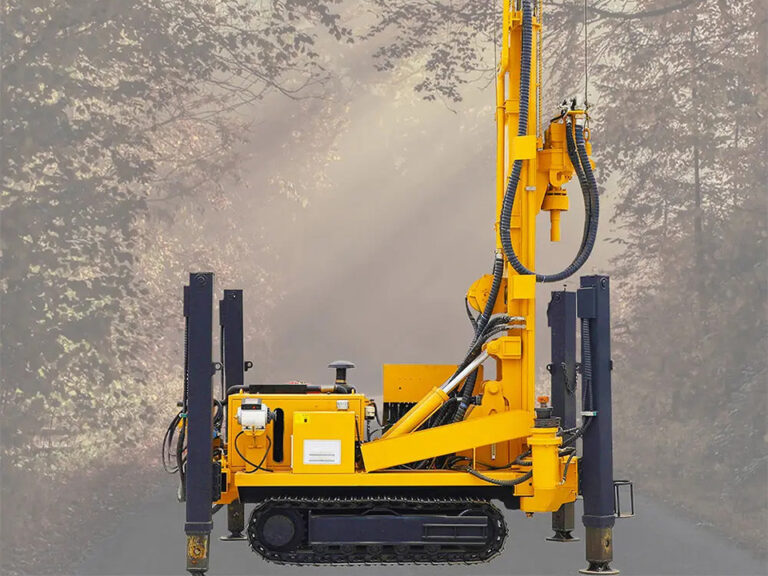
When reviewing equipment like the KG310 rotary diesel crawler mine drilling rig, buyers should verify whether key assemblies — rotary heads, hydraulic manifolds, crawler systems, compressors — are actually engineered and controlled in-house or sourced from multiple outside vendors with inconsistent QC.
That difference becomes painful later when spare parts stop matching.
Ask for Product-Specific Compliance
This matters more than ISO 9001 itself.
Depending on the destination market, request:
CE documentation,
pressure vessel approvals,
emission certifications,
load calculations,
material certificates,
electrical test reports,
third-party inspections,
and factory acceptance testing records.
Now you’re evaluating products.
Not paperwork theater.
Procurement Laziness Is the Real Problem
I’m going to say something unpopular.
Some importers don’t actually want transparency. They want reassurance.
A framed ISO certificate provides psychological relief because it simplifies risk into something easy to understand. Procurement departments under pressure love shortcuts. But manufacturing doesn’t reward shortcuts for long — eventually the field failures arrive, the hydraulic leaks start, the mast cracks appear, and suddenly everyone realizes a management-system certificate never guaranteed machine integrity in the first place.
Too late then.
Usually expensive.
FAQs
Does ISO 9001 certify products?
No. ISO 9001 certifies a company’s quality management system rather than the physical products themselves, meaning the standard evaluates procedures, documentation, corrective actions, and operational controls instead of directly approving drilling rigs, compressors, electrical systems, or industrial equipment safety.
That misunderstanding causes massive confusion in international sourcing.
What is the difference between ISO 9001 and product certification?
ISO 9001 focuses on organizational management processes, while product certifications such as CE, UL, API, or ASME relate to whether a specific product meets defined technical, safety, or regulatory requirements for legal market access and operational compliance.
Completely different purpose.
Is ISO 9001 proof of product quality?
No. ISO 9001 is not proof that a product is defect-free, durable, compliant, or high-performing in real-world use because the certification mainly evaluates documented management systems rather than destructive testing, field durability, or engineering validation.
A disciplined factory can still ship junk.
Happens every year.
Why do importers misunderstand ISO 9001 certification?
Many importers misunderstand ISO 9001 because suppliers market the certificate as broad evidence of “international quality,” even though the standard itself mainly measures process organization, documentation discipline, and audit structures rather than actual product conformity or engineering performance.
Sales language blurs the line intentionally sometimes.
How should buyers verify suppliers beyond ISO 9001?
Importers should verify suppliers through factory audits, production inspections, component traceability checks, third-party testing, welding validation, material certifications, load testing, and direct examination of manufacturing capability instead of relying only on management-system certificates.
Paper alone isn’t enough.
Never was.
Your Next Steps
If you’re sourcing drilling rigs, compressors, crawler systems, or mining equipment internationally, stop treating ISO 9001 like some universal anti-failure shield.
It isn’t.
Use it as one signal — maybe a useful one — but only one.
The factories worth trusting usually talk openly about:
rejected parts,
supplier traceability,
repair records,
QC bottlenecks,
hydraulic cleanliness,
weld procedures,
and real production limitations.
That honesty matters more than polished certificates.
Honestly? I trust slightly messy factories with brutally transparent engineering managers more than pristine sales offices overloaded with framed paperwork and rehearsed marketing language.
Because eventually the steel tells the truth. The hydraulics do too. And the field always exposes fake quality systems in the end.