“The Drilling Rig gave us a true one-stop solution. Their team matched the right rig, compressor, and drilling tools for our project, and the engineering support stayed fast and professional from quote to delivery.”
Startup Rig Buying Guide: Build the Right Entry-Level Fleet
Stop buying horsepower. Buy fit.
Most fleets fail.
I keep seeing founders shop for a drilling rig the way new restaurant owners shop for ovens: they buy the thing that looks serious, sounds expensive, and photographs well for lenders, while ignoring the ugly variables that decide whether the machine earns anything at all, namely geology, hole diameter, depth range, compressor demand, parts availability, crew skill, and how fast a field breakdown turns into a revenue blackout.
Table of Contents
Why finance your ego before you finance your uptime?
The hard truth is that more steel does not mean more margin, and 2024 gave us a clean reminder: in Reuters’ March 2024 analysis of record U.S. production with fewer rigs, U.S. output kept climbing even as oil-directed drilling slowed; then, in Reuters’ August 2024 Baker Hughes rig-count report, the U.S. oil and gas rig count fell to 586, down 56 rigs year over year, while producers kept squeezing more production from fewer crews through longer laterals and better efficiency. That is the market telling you, very plainly, that utilization beats collection-building.
So I would not start with “What is the biggest rig I can afford?” I would start with “What is the narrowest drilling equipment package that can finish my first 20 jobs without embarrassing me in front of customers?”
Pick the revenue model before the drilling rig
Business model first.
A founder who plans to win groundwater, irrigation, and heat-pump work should not buy like a quarry contractor, and a blast-hole startup should not buy like a municipal water-well bidder, because the money sits in repeatable hole specs, mobilization logic, and service response time, not in the universal greatness of any one machine.
Is that obvious? It should be. It usually is not.
Water well work rewards versatility, not bragging rights
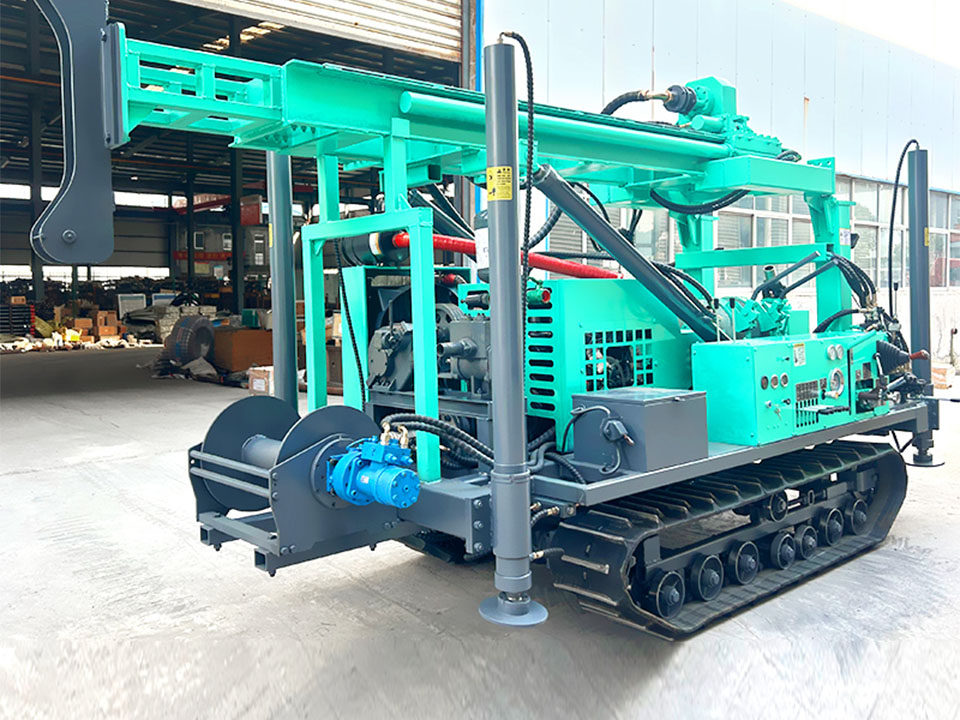
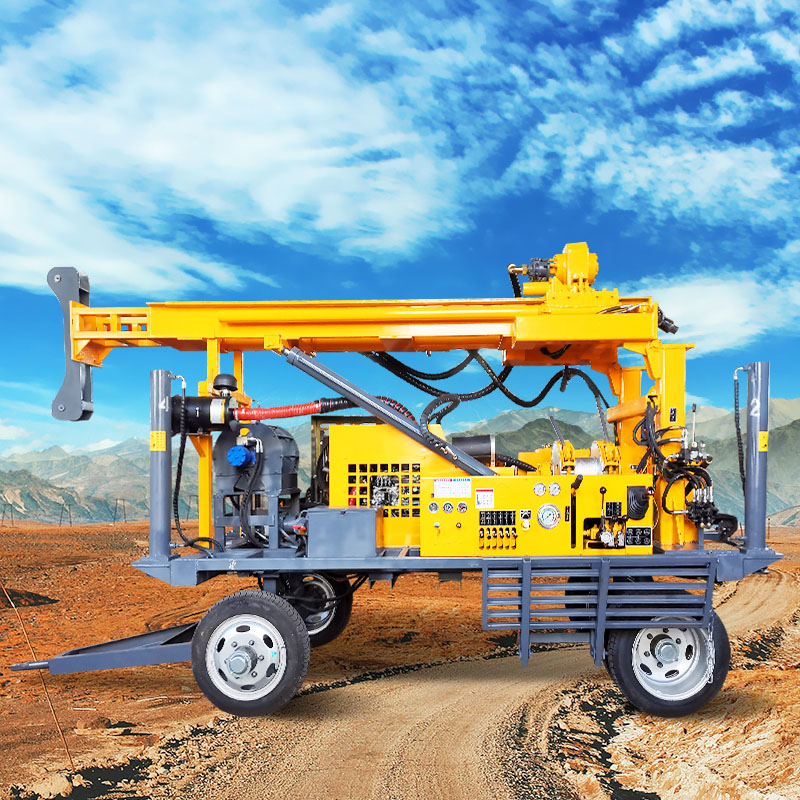
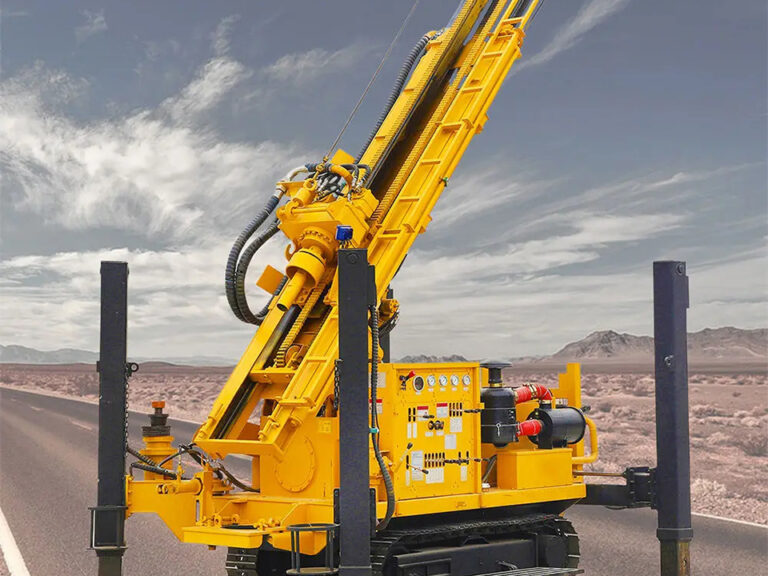
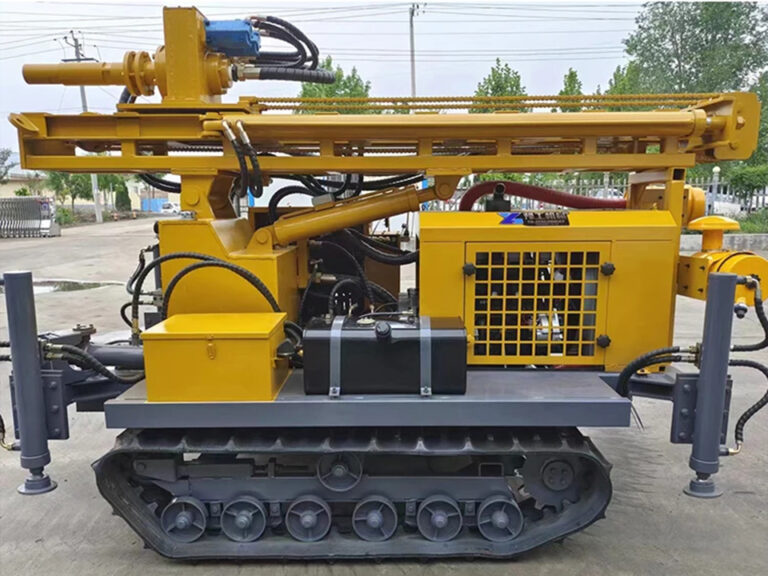
For a startup chasing groundwater and irrigation jobs, I would rather begin with a proven mid-range unit than a deep-capacity monster that spends half its life parked. The 300m hydraulic water well borehole drilling machine is presented for groundwater wells, irrigation wells, and ground-source heat-pump drilling, with a stated 300 m depth range, 140–350 mm drilling diameter, diesel power, and overseas after-sales service availability. That profile fits the founder who needs broad commercial coverage more than headline depth.
My bias is simple: entry-level drilling rig buyers should favor the machine that covers the middle 70% of likely jobs, because the overspec rig does not merely cost more upfront, it also drags transport, fuel, tooling, and idle-capital costs into every quote.
Blasting and quarry work punish the wrong hole-size assumption
Rock drilling is different.
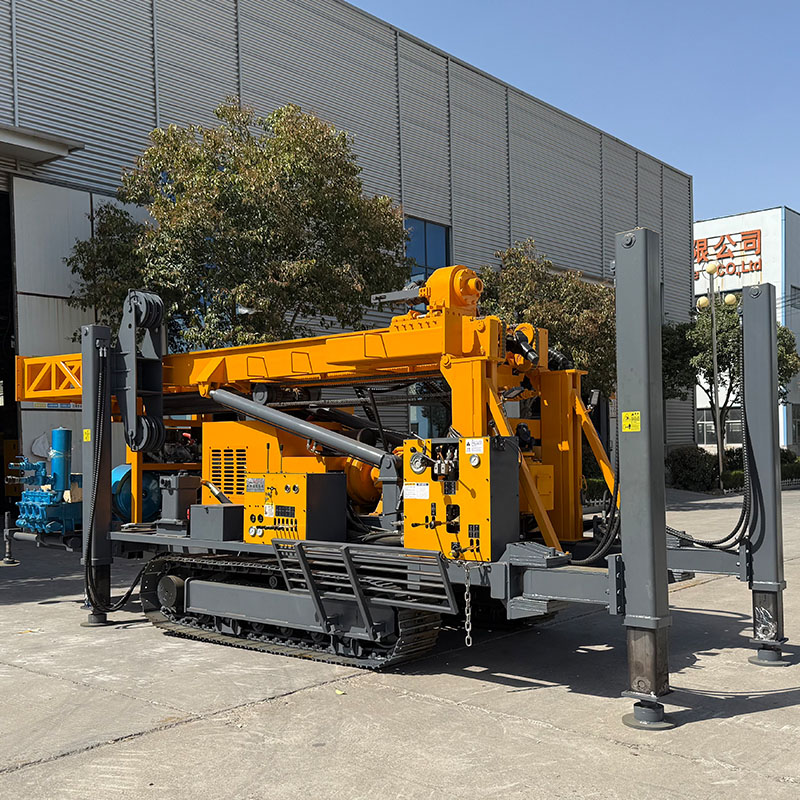
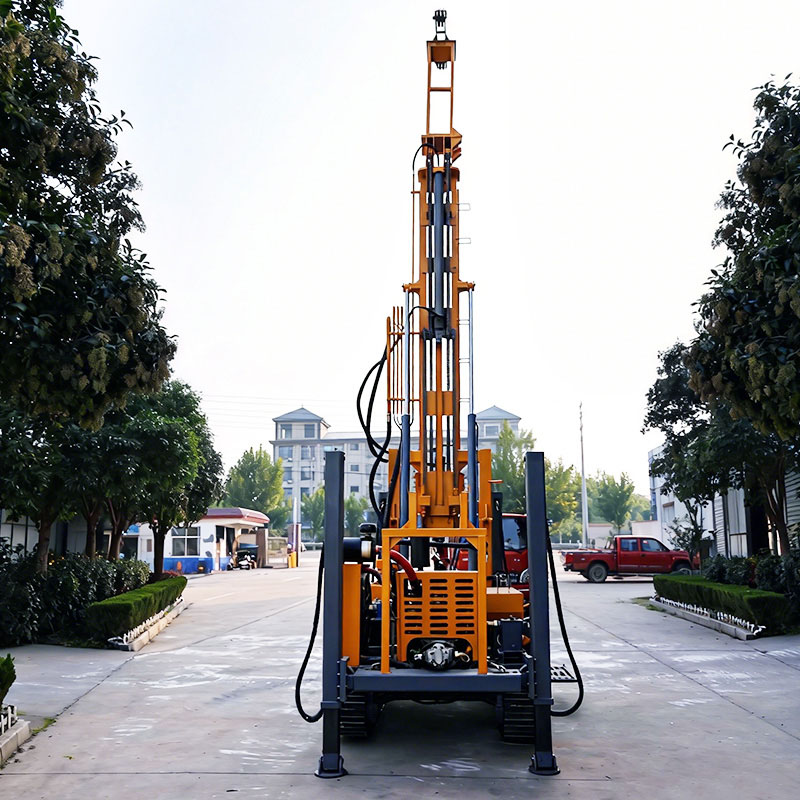
If your first contracts are quarry, bench, or controlled blasting work, a general-purpose water-well setup can become an awkward compromise, while an integrated blasting drilling rig aimed at 80–130 mm holes and a maximum 40 m drilling depth makes much more operational sense for repetitive rock-drilling and blasting cycles. That is not “smaller” thinking. It is narrower, and narrower is how startups stay alive.
I have a blunt rule here: if the customer pays for meter output in consistent rock conditions, do not let a romantic idea about “future expansion” push you into a rig class designed for someone else’s contract book.
The air compressor is not an accessory
Founders underrate air.
In real drilling operations, especially where pneumatic performance, mobility, and tool compatibility decide penetration rate and site efficiency, the compressor is part of the production system, not a side purchase, and treating it like a catalog add-on is one of the fastest ways to build a drilling rig package that looks complete on paper and fails in the field.
Why do so many buyers still do it?
The BK30-8G portable frequency screw air compressor is listed with a 30 kW motor, 5 m³/min airflow, and selectable 8 bar or 13 bar pressure for mobile compressed-air supply, while the Kaishan BK15-8G 15kW direct-drive screw air compressor is positioned as a stationary shop unit with 2.4 m³/min air capacity at 0.8 MPa. I would read those as two different business roles: one for field mobility and rig support, the other for workshop base-load and maintenance air.
And support equipment now sits under tighter health scrutiny than many startups admit. OSHA’s fact sheet on vehicle-mounted drilling rigs for rock and concrete says these rigs can generate respirable crystalline silica dust and points to dust collection with water sprays or operator isolation in an enclosed cab with water on the drill bit as engineering controls; meanwhile, MSHA’s April 2024 silica final rule took effect on June 17, 2024, and MSHA says metal and nonmetal mine operators must comply by April 8, 2026. Buy the wrong air-and-dust strategy now, and you are buying tomorrow’s retrofit bill.
The starter fleet I would actually fund
Keep it lean.
I would rather fund one earning rig, one matched air system, one disciplined tooling package, and one service plan than watch a founder burn working capital on a mini-museum of underutilized assets that each need transport, maintenance, operators, and excuses.
What does that look like in practice?
Startup profile
First revenue target
Rig class I would start with
Compressor logic
Non-negotiable support gear
What I would refuse to buy first
Water well / irrigation startup
Fast local contract turnover
Mid-range hydraulic water well rig
Mobile air package only if drilling method truly requires it
Rods, consumables, mud/water handling, spare wear parts, service truck
Deep-capacity prestige rig
Quarry / blasting startup
Repetitive rock-hole output
Integrated blast-hole / rock-drilling rig
Portable compressor sized to actual hammer and duty cycle
Dust control, hose management, rod handling, crawler maintenance kit
A “universal” fleet built for every geology
Mixed early-stage contractor
Survival through job variety
One versatile primary drilling rig, not two mediocre ones
One field compressor plus one small workshop unit
Filters, seals, hydraulic spares, safety stock, operator training
Second rig before utilization proves demand
Founder planning rental + service backup
Margin from uptime and support
Simplified rig configuration with common parts
Stationary shop compressor for maintenance and prep
Diagnostics, parts shelf, response protocol, documentation
Exotic configurations with long parts lead times
That table is intentionally conservative because the first mission is not domination. It is survivability. And survivability in drilling means that when the rig stops, somebody answers the phone, parts exist, and the repair does not eat the month.
Where startups get punished
Compliance bites.
The founders who tell me they will “sort out dust, respirators, and documentation later” are announcing, in public, that they plan to pay for the lesson the expensive way, because regulators have already moved from polite reminders to visible enforcement and the record is sitting there for anyone willing to read it.
Still think support equipment is optional?
In Cal/OSHA’s August 2024 enforcement action in Sun Valley, nine employers were cited for silica-related health and safety violations totaling more than $168,000, and the agency specifically said the employers failed to use effective dust-suppression methods and failed to provide full-face, tight-fitting powered air-purifying respirators. The announcement also tied the risk directly to tasks such as grinding, drilling, and cutting. That is not background noise for a new drilling business. That is a purchase specification.
And the point is not limited to stone shops. OSHA records show that a planned health inspection opened on March 27, 2024 at Helmerich & Payne International Drilling Co.’s Rig 426 in Andrews, Texas, later closing with three current violations and $21,000 in penalties; one citation carried a $10,000 current penalty and stated that an employee used a respirator that had not been properly stored while conducting oil and gas activities. Small support failures are not small when they become enforcement documents. See OSHA’s inspection detail.
Then there is the field-risk problem that founders love to file under “crew issue.” In OSHA’s November 2024 accident report on a drill-rig electrocution, a rig mast contacted an overhead power line while being raised, energizing the rig and fatally shocking a worker nearby. I am not being dramatic here: your first fleet choice includes transport geometry, setup clearance, site planning, and training discipline whether you budget for them or not.
The ugliest cost is not purchase price
Downtime compounds.
A cheap rig with weak drilling rig service support can destroy your margin faster than an expensive rig with a clean parts chain, because the invoice the customer sees is only one side of the story, while your real P&L also carries dead crew time, remobilization, emergency parts freight, lost rebooking, and reputation damage that lingers long after the failed shift.
So I price fleets backward. Revenue per shift first. Productive meters second. Repair response third. Sticker price fourth.
My own rule of thumb for a first drilling equipment package is aggressive but rational: keep roughly half to three-fifths of the budget in the rig-and-power system, reserve a meaningful chunk for tooling and spares, and protect cash for service, training, and compliance from day one. Founders hate that advice because spare filters and hoses do not look heroic in photos. Bank statements disagree.
FAQs
What is an entry-level drilling rig package?
An entry-level drilling rig package is the smallest complete equipment system that can complete your first contract mix safely, repeatedly, and profitably, usually including one primary rig, one matched air or fluid system, essential tooling, transport support, wear parts, and a workable service plan.
The mistake is thinking the drilling rig alone is the package. It is not. A rig without matched support is a parked asset with invoices attached.
How do I choose between a water well rig and a blasting rig?
The right choice is the rig class whose normal hole diameter, depth range, mobility, and ground-condition behavior most closely match the jobs you can actually sell in the next 6 to 12 months, not the jobs you hope to chase after buying bigger equipment.
I would map the first 20 target jobs on paper before signing anything. If most of them are groundwater and irrigation work, buy for that. If they are repetitive rock holes in quarry conditions, buy for that.
What size air compressor for a drilling rig should a startup buy?
The right air compressor for a drilling rig is the unit whose airflow, pressure, duty cycle, mobility, and serviceability match the hammer, drilling method, and site logistics of your real contracts, because undersized air kills penetration rate and oversized air inflates capital, fuel, and maintenance costs without adding billable meters.
That is why I separate field air from shop air. Mobile drilling air and stationary maintenance air are not the same job, and pretending they are usually produces a weak compromise.
Is drilling rig service support more important than purchase price?
Drilling rig service support is more important than purchase price whenever a breakdown can idle your crew, miss a contract milestone, or force emergency parts freight, because the true cost of an unsupported machine includes lost revenue, damaged customer trust, and the compounding effect of every dead day.
This is the hardest lesson in the business. The cheapest machine on quote day can become the most expensive machine by month three.
How much geology should shape a startup fleet decision?
Geology should shape nearly every startup fleet decision because rock hardness, water yield expectations, hole diameter, overburden behavior, dust generation, and required penetration rate determine rig configuration, compressor demand, consumable wear, transport strategy, and even whether your crew can keep production consistent across different sites.
I would never buy from spec sheets alone. Buy from the geology you expect to invoice.
Your next move
Decide with math.
Before you buy a single drilling rig, build a one-page fleet memo with five lines only: your first 20 target jobs, expected hole diameters, expected depths, required air or fluid support, and the nearest realistic service response for the machines you are considering.