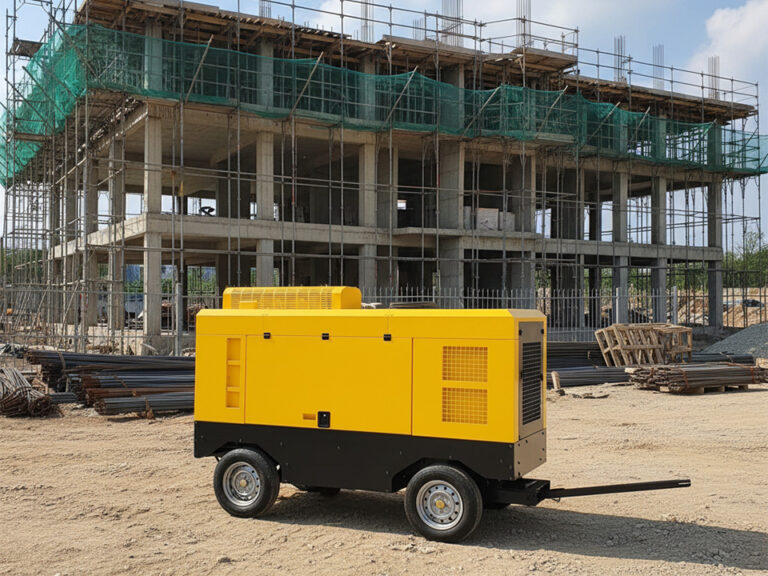
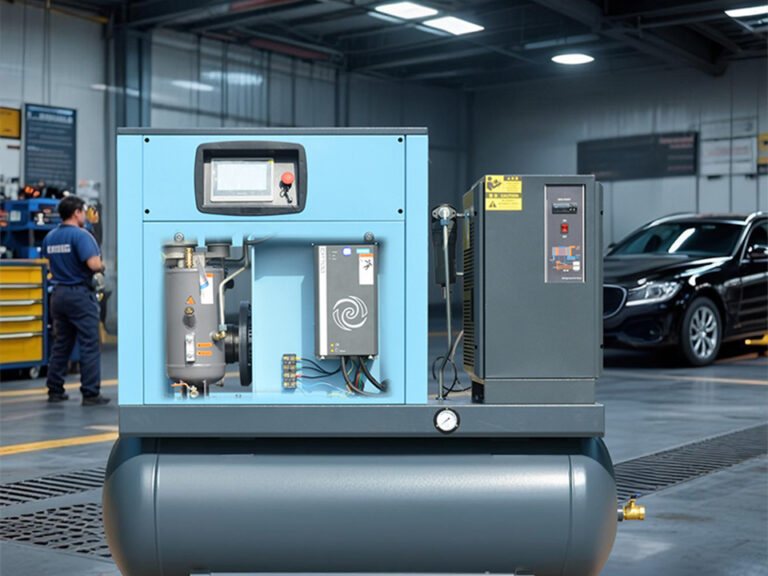
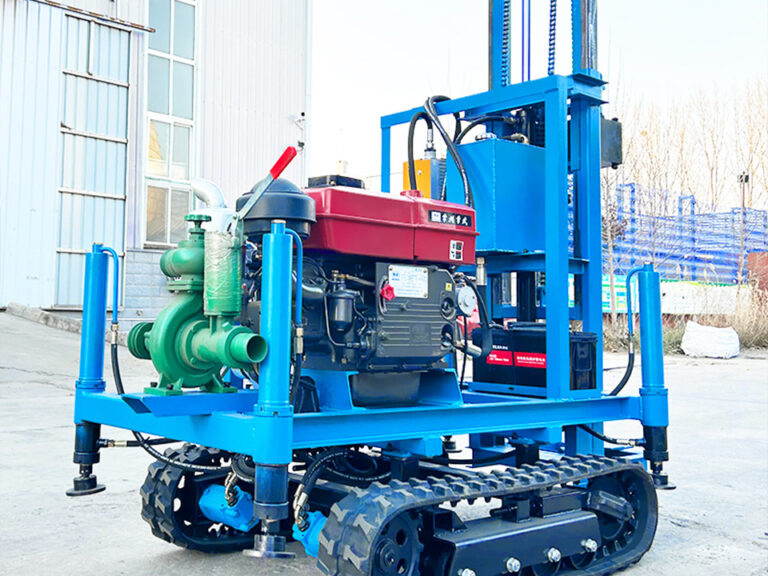
“The Drilling Rig gave us a true one-stop solution. Their team matched the right rig, compressor, and drilling tools for our project, and the engineering support stayed fast and professional from quote to delivery.”
Case Study: Municipal Borehole Programs with Multi-Rig Fleets
The Ugly Truth About Municipal Borehole Program
Most failed municipal borehole drilling programs don’t collapse at the drilling site.
They collapse earlier.
Inside the tender file. Inside the equipment schedule. Inside the quiet assumption that five rigs, ten drillers, three districts, and one underpowered monitoring team can somehow produce identical boreholes just because the contract says “standard design.”
I’ve seen this pattern too often in public water supply boreholes: the mayor wants speed, the donor wants numbers, the contractor wants mobilization advance, and the hydrogeologist—usually the only person trying to slow the train down—gets treated like an expensive signature on a report. That’s the trap.
Table of Contents
A borehole drilling program is not a collection of random wells; it is a production system where siting, rig class, compressor match, casing plan, drilling fluid control, development time, pump testing, chlorination, yield verification, and handover documentation must repeat across villages, wards, schools, clinics, and peri-urban settlements with almost boring discipline. Why do so many programs still manage it like emergency road repair?
The demand pressure is real. The WHO/UNICEF JMP reported in its 2023 update that 2.2 billion people still lacked safely managed drinking water in 2022, including 115 million people using surface water directly. That is the kind of number that pushes donors and municipalities to chase fast borehole counts instead of boring, audit-proof quality systems.
But here’s my strong opinion: speed is not the enemy. Uncontrolled variation is.
Case Evidence: What Recent Programs Are Really Telling Us
Look at the 2024 drought pressure in Southern Africa. Reuters reported that nearly 68 million people, about 17% of the region’s population, needed aid during the 2024 drought shock, with livestock and food systems hit hard. In that environment, boreholes stop being “infrastructure.” They become political oxygen.
And once water becomes political oxygen, bad drilling decisions get forgiven too easily.
The USAID-supported water supply system launched in Ethiopia’s Somali Region in June 2024 is a better signal: the project was framed around safe drinking water for more than 14,200 households in Adadle and surrounding areas. That number matters because it is household-level service logic, not just “we drilled X holes.”
Then there is the World Bank’s Groundwater for Resilience work in the IGAD region. In 2024, project training covered resilient boreholes, groundwater data, borehole drilling contracts, and rural water management models across Ethiopia, Somalia, and Kenya. Boring? Maybe. But that is exactly the stuff that keeps a multi-rig drilling fleet from becoming a diesel-burning lottery.
One procurement detail is even more revealing. A World Bank procurement plan for Ethiopia lists rural water supply construction packages with civil works, pipe laying, electromechanical supply, installation, and water-point construction, with signed or completed 2024 packages around USD 860,000 and another package around USD 1.72 million. That tells us something buyers often miss: the rig is only one part of the cost stack. Pipes, pumps, power, storage, testing, and supervision eat the budget too.
So no, the winning move is not always “buy the biggest rig.”
Sometimes it is buying three consistent rigs, one shared spare-parts platform, two competent supervisors, and a test-pumping protocol nobody is allowed to skip.
Fleet Standardization: The Quiet Difference Between 20 Wells and 200 Wells
Municipal borehole drilling rewards repeatability.
Not glamour.
For shallow village wells, a small portable diesel unit may be enough. For harder formations, deeper static water levels, collapsing overburden, or DTH hammer work, you need heavier steel, better feed force, stable mast geometry, and an air package that doesn’t wheeze after 90 meters.
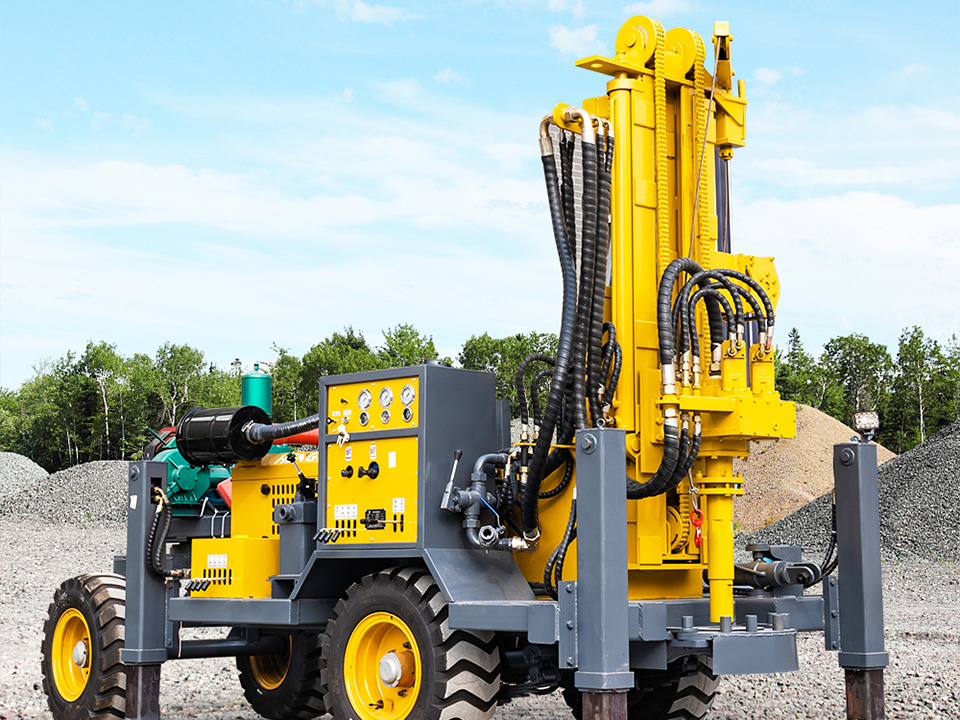
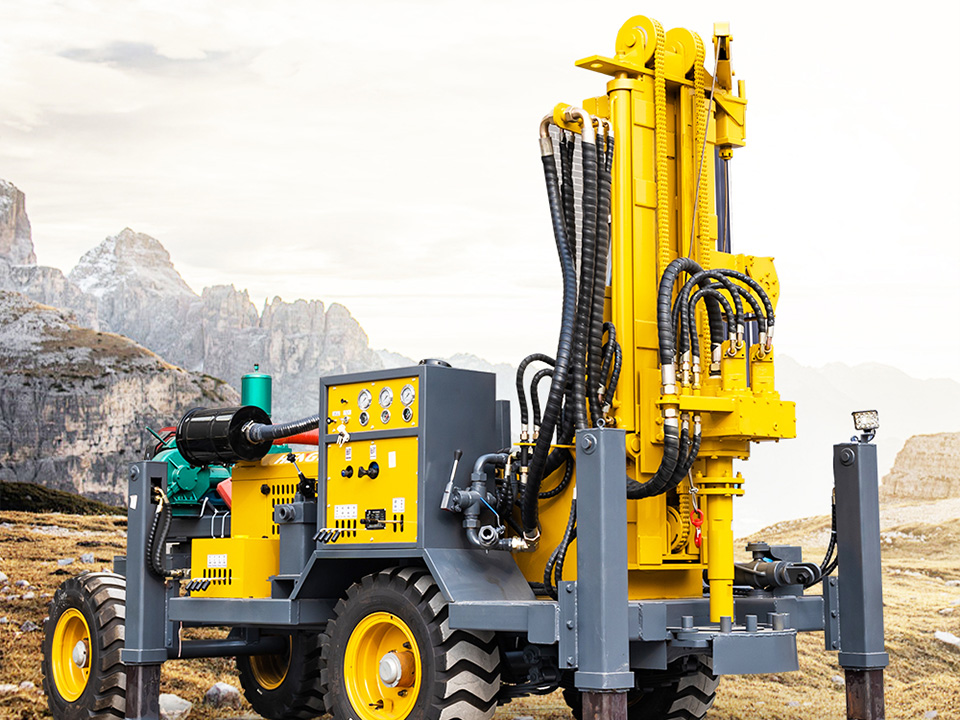
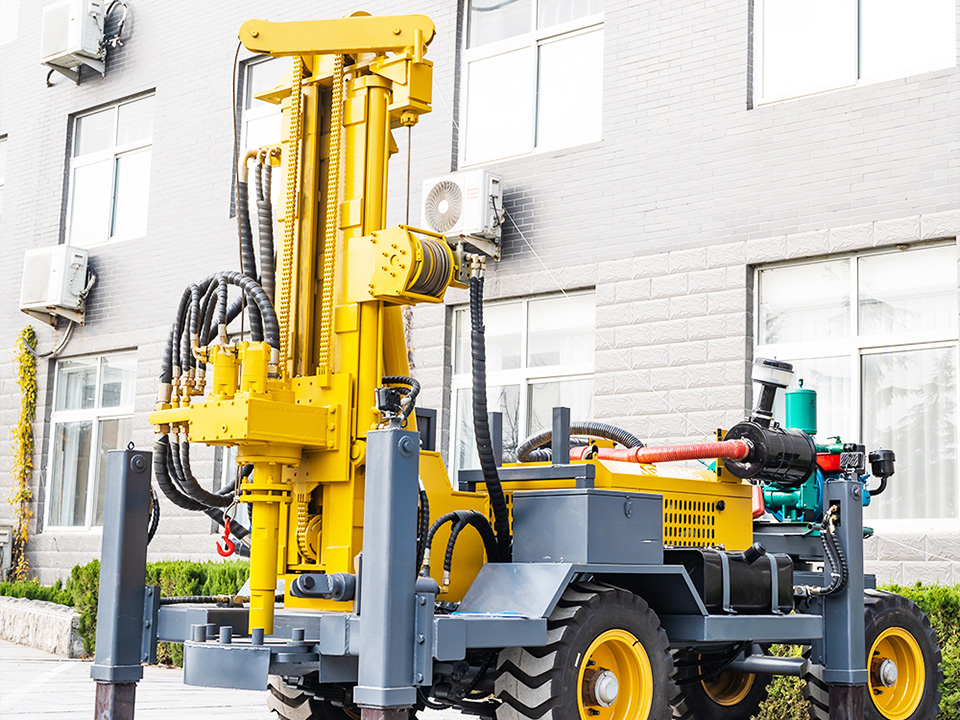
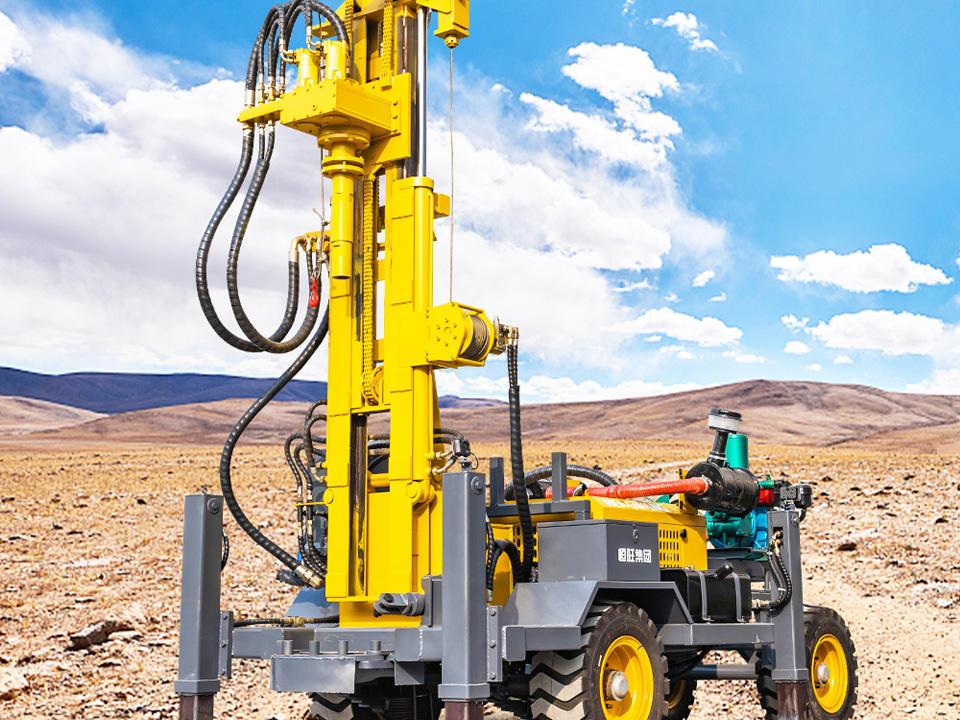
That is why I would rather see a program standardize around a practical depth class than scatter-purchase whatever each district requested last week. For 300-meter rural and peri-urban work, a 300 meter portable diesel water well drilling rig can make sense where transport access is narrow, sites are scattered, and crews need mobility more than brute mass.
But in broken rock, basalt, granite shoulders, or harder upland zones, the program should not pretend a light rig can do the same job all season. A 300m double-cylinder lifting steel crawler rock drilling rig fits better when the borehole program needs mast stability, crawler movement, and more forgiving structure under repetitive DTH drilling cycles.
And when the water table drops, the committee gets nervous, and the contractor starts asking for variation orders? That’s where a deeper-capacity package such as a 450m 70kW portable diesel water well drilling rig becomes more than a spec-sheet upgrade. It becomes insurance against “almost reached water” failures.
For mining-edge communities or hard-rock reconnaissance tied to public water planning, a compact DTH-focused unit like a 58kW diesel crawler DTH drill rig for mining and rock drilling may also support pre-testing or hard formation work where water well rigs alone are stretched.
The Multi-Rig Fleet Management Table Nobody Wants to Print
Here’s the boring table I’d force into every municipal borehole drilling program file before mobilization.
Step test plus constant-rate test where budget allows
Yield claims without drawdown curve
Handover
Photo, ribbon, goodbye
GPS, as-built drawing, pump curve, water quality test, O&M contact
No owner, no fee plan, no repair chain
Hard Lesson: Donor-Funded Water Projects Fail When “Standardization” Becomes Copy-Paste
Borehole program standardization does not mean every borehole gets the same depth, casing, screen, gravel pack, pump, or platform.
That’s lazy standardization.
Real standardization means every site follows the same decision logic. If static water level is deeper, the pump changes. If fracture yield is low, test duration changes. If the formation collapses, casing design changes. If the borehole sits near latrines or livestock pressure, sanitary sealing gets stricter.
The World Bank’s 2024–2025 groundwater resilience reporting shows why this matters: Somalia’s planning shifted away from shallow and manually drilled wells toward deeper boreholes because shallow systems were less reliable under climate stress. That is not a small technical tweak. That is a whole program design correction.
But the procurement machine often hates corrections.
Why? Because corrections create paperwork. Paperwork creates delay. Delay creates angry officials. Angry officials push contractors to drill anyway.
And then everyone acts surprised when public water supply boreholes fail after the ceremony.
The Real Case Study Model: How I’d Run a 60-Borehole Municipal Program
Let’s say a municipality or donor-funded water project needs 60 boreholes across mixed terrain: 25 shallow sedimentary sites, 20 medium-depth fractured rock sites, 10 deeper drought-resilience sites, and 5 replacement wells for failed public systems.
I would not send one “universal” rig fleet.
I’d split the borehole drilling program into three operating lanes.
Lane 1: Fast Rural Access Wells
These are lower-risk sites with better access, moderate borehole depth, and known aquifer behavior. The priority is speed, fuel control, and clean handover. One or two portable diesel rigs can work here, but only if they carry enough drill pipe, casing tools, mud control equipment, and backup wear parts.
The trap is underestimating logistics. A rig that drills fast but waits three days for PVC casing, bentonite, fuel, or a replacement bit is not fast. It’s parked iron.
Lane 2: Hard-Rock DTH Production
This lane needs stricter compressor discipline. DTH drilling is not magic; it is air volume, pressure, hammer size, bit condition, flushing velocity, and operator feel. Get the compressor wrong and the borehole becomes a slow, hot, expensive hole.
A municipal borehole drilling program should track penetration rate by formation. If Rig A drills 12 meters per hour in similar rock while Rig B averages 5 meters, don’t blame geology first. Check bit wear, feed force, air leakage, hammer size, operator behavior, and compressor health.
Lane 3: Drought-Resilience Deep Wells
These sites deserve the strongest supervision. They usually cost more, take longer, and attract more political attention because they serve larger populations or multi-village schemes.
Deep wells should not be rushed into production without serious pump testing and water quality checks. A borehole that looks productive during airlift can still disappoint under real pump operation. Drawdown tells the truth.
Usually.
The Insider Checklist for Borehole Program Standardization
I’d put these controls into the contract, not into a friendly WhatsApp message after problems start.
First, define rig classes by geology and target depth. Don’t let the contractor swap a lighter rig without written engineering approval.
Second, require daily drilling logs with GPS, depth, lithology, bit size, casing depth, water strikes, air pressure, compressor hours, fuel use, and stoppage reason.
Third, separate drilling supervision from contractor reporting. If the driller controls the truth, the program has already lost.
Fourth, standardize acceptance tests. Minimum yield, drawdown behavior, turbidity, sand content, water quality, sanitary seal, apron construction, drainage, and photos should all be checked before payment.
Fifth, create a spare-parts matrix. Same engines, same hydraulic filters, same hammer sizes, same common wear parts where possible. Mixed fleets look flexible on paper and become a customs-clearance headache later.
Sixth, hold back payment for failed documentation. Not failed optimism. Failed documentation.
Why Multi-Rig Drilling Fleet Management Is Really a Data Problem
People talk about rigs like they are the whole program.
They aren’t.
The program is a data factory with steel attached.
A serious drilling rig fleet management system tracks meters drilled per day, cost per meter, successful borehole ratio, dry-hole ratio, downtime by cause, compressor fuel burn, hammer failure, casing consumption, pump-test yield, water quality pass rate, and post-handover functionality.
Without those numbers, “progress” becomes a photo album.
With those numbers, the municipality can see which crew is underperforming, which geology zone needs a heavier rig, which supplier’s PVC casing is cracking, which pump installer is creating failures, and which supervisor is signing nonsense.
That is the difference between a water well drilling program and a donor-funded theater show.
FAQs
What is a borehole drilling program?
A borehole drilling program is a planned, multi-site water supply operation that manages siting, drilling, casing, pump testing, water quality, handover, and maintenance under one coordinated system rather than treating each borehole as a separate construction job. It is common in municipal, NGO, donor-funded, and public water supply projects.
In plain English: it is not “go drill wells.” It is a controlled production model for turning groundwater targets into functioning water points. The best programs use standard documents, repeatable test methods, verified drilling logs, and clear responsibility for long-term operation.
How do you manage multi-rig borehole drilling programs?
Managing multi-rig borehole drilling programs means assigning rig classes by geology and depth, standardizing reporting, supervising each crew independently, tracking downtime and yield data, and enforcing acceptance tests before payment. The goal is to make several rigs produce consistent, auditable boreholes across different sites.
The dangerous mistake is letting every crew improvise. One crew uses more casing, another skips development, another overstates yield, and suddenly the municipality has 40 “completed” boreholes but only 25 dependable water points.
Why do donor-funded water projects often struggle with borehole quality?
Donor-funded water projects often struggle with borehole quality because procurement pressure rewards low bid prices and fast completion counts, while hydrogeology, supervision, pump testing, and post-handover maintenance receive less attention. The result is a program that looks successful during reporting but weak during real community use.
The fix is not more ceremony. It is better acceptance control: drilling logs, yield verification, water quality testing, sanitary sealing, community management, spare-parts planning, and payment linked to proven performance.
What equipment is best for a municipal borehole drilling fleet?
The best equipment for a municipal borehole drilling fleet is a standardized mix of rigs matched to depth, formation hardness, road access, bore diameter, and compressor demand. A good fleet may include portable diesel rigs for scattered sites, crawler rigs for hard rock, and deeper-capacity rigs for drought-resilience wells.
One universal rig sounds simple, but it usually creates compromises. Fleet planning should start with geology zones, target depth bands, casing design, DTH requirements, and local repair capacity—not only headline drilling depth.
What data should every public water supply borehole record include?
Every public water supply borehole record should include GPS location, drilling date, rig model, crew name, bore diameter, final depth, lithology log, casing and screen depth, water strike depth, test yield, drawdown, recovery, water quality result, pump specification, and handover contact.
If that data is missing, the borehole becomes almost impossible to audit later. And when pumps fail, sand appears, yield drops, or water quality complaints start, nobody can separate drilling failure from pump failure, aquifer decline, or poor maintenance.
Final Thoughts: Build the Fleet Before You Chase the Borehole Count
A municipal borehole drilling program should not be judged by how many rigs are mobilized.
Judge it by how many water points still work after the cameras leave.
We can supply the rig package, but the smarter conversation is this: What depth range? What geology? What bore diameter? What compressor class? What casing plan? How many crews? How many spare parts? How will the municipality test yield and accept the work?
Send your planned borehole depth, formation type, target diameter, country, and project quantity. We’ll help you match the right drilling rig fleet for a public water supply program instead of guessing from a catalog page.