“The Drilling Rig gave us a true one-stop solution. Their team matched the right rig, compressor, and drilling tools for our project, and the engineering support stayed fast and professional from quote to delivery.”
Case Study: NGO Well Drilling Where Logistics Drove Equipment
The Rig Wasn’t the Hero. The Road Was.
Bad roads decide.
I’ve watched procurement teams spend two weeks arguing about drilling depth, compressor pressure, rotary head torque, and whether the mast looks “professional enough,” while nobody in the room can answer one filthy little field question: can this machine actually get across the last 17 kilometers after rain?
That’s the job.
And that’s also where NGO well drilling gets exposed. Not in the PowerPoint. Not in the supplier’s shiny video where the rig is working on flat factory concrete. It gets exposed at the washed-out culvert, the soft shoulder, the village track, the missing hydraulic fitting, the operator who knows mud drilling but has never tuned a DTH hammer properly.
Table of Contents
Here’s the ugly truth: a lot of NGO borehole drilling failures are not geology failures.
They’re logistics failures wearing a geology mask.
A 2024 Science study estimated that more than 4.4 billion people in low- and middle-income countries lacked safely managed drinking water, with fecal contamination affecting almost half of the population in those regions; that number is exactly why I get annoyed when people treat drilling equipment selection like a catalog beauty contest instead of a public-health supply chain problem. Science mapping of safe drinking water use
So, no. The question isn’t just, “Can this rig drill 200 meters?”
The real question is nastier: Can it arrive, drill, break, get repaired, move again, and still be useful after the donor team flies home?
A Composite NGO Case: Eight Villages, Thin Roads, One Bad Assumption
But let’s not pretend this is theoretical.
The project looked simple from the outside: eight villages, expected boreholes around 80–180 meters, a mix of weathered overburden and fractured rock, and one NGO team trying to serve communities where tanker water was already eating the budget. Nice objective. Messy ground.
Very messy.
The first shortlist looked familiar. A crawler rig. A truck-mounted hydraulic rig. A tractor-mounted drilling rig. The crawler looked strongest on paper, obviously. More off-road bite. Better for rough ground. More serious-looking in photos, too — and yes, procurement people pretend that doesn’t matter, but it does.
Then the road survey landed like a bucket of cold mud.
Some sites had seasonal access only. Some tracks were narrow enough that a large truck would need spotters all day. Bridge loading was unclear. A few villages had local tractor mechanics, but almost no one had the parts or confidence to work on specialized imported crawler hydraulic systems.
UNICEF reported that its 2024 WASH work enabled 33.3 million people to gain access to safe water and reached 41 million people with water services in emergencies; scale like that doesn’t forgive fragile equipment choices, because one weak link — transport, fuel, spare parts, compressor mismatch — can slow the whole humanitarian water chain. UNICEF Global Annual Results Report 2024
The Equipment Matrix Nobody Wants to Put in the Sales Brochure
Spec sheets are useful.
Barely.
I mean that. A spec sheet tells you what the rig can do when the ground, crew, fuel, compressor, drill pipe, logistics, and maintenance all behave themselves. Field work asks a colder question: what happens when two of those things fail at once?
Decision Factor
Tractor Mounted Rig
Truck Mounted Hydraulic Rig
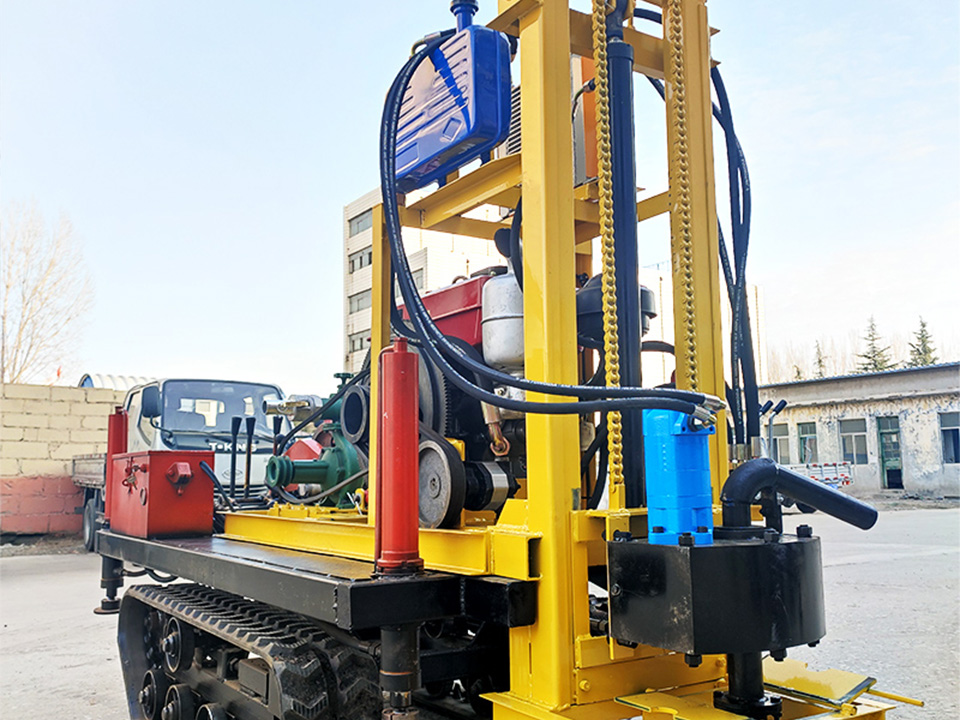
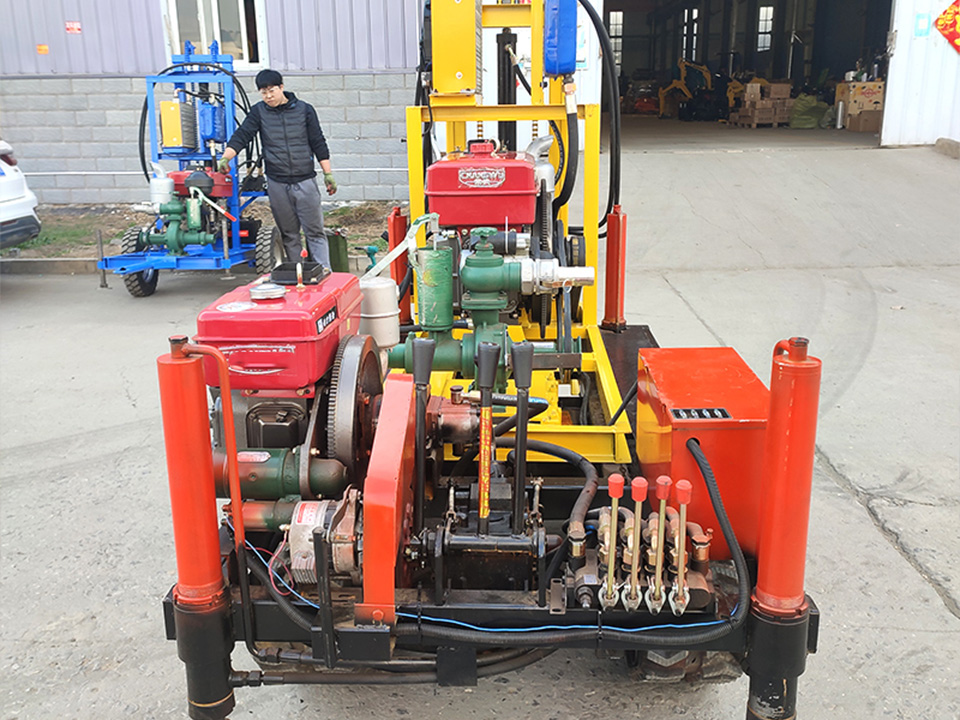
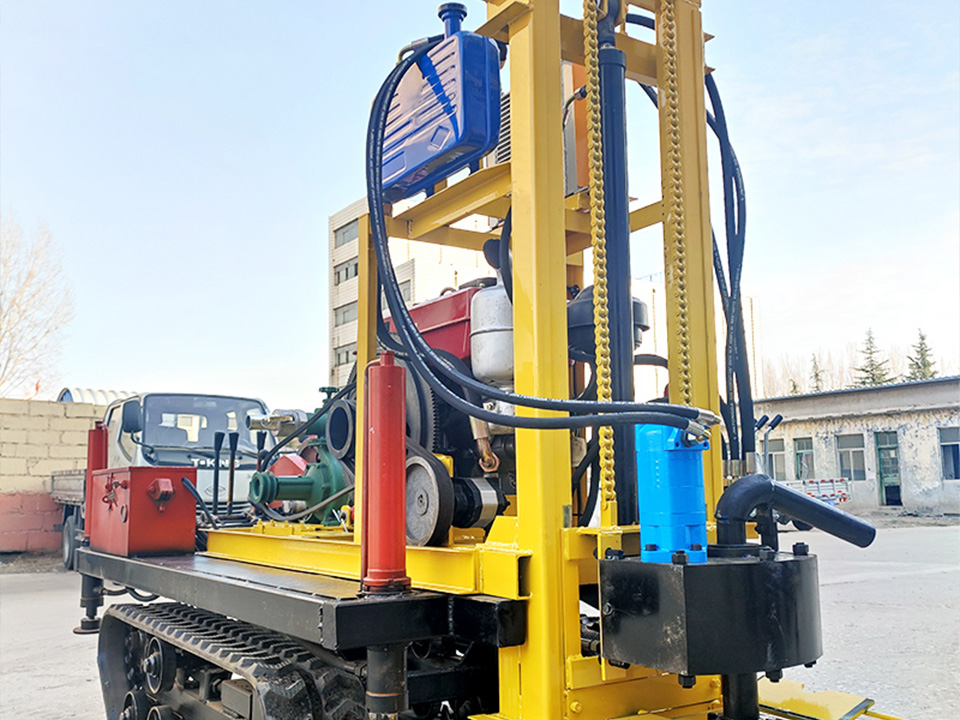
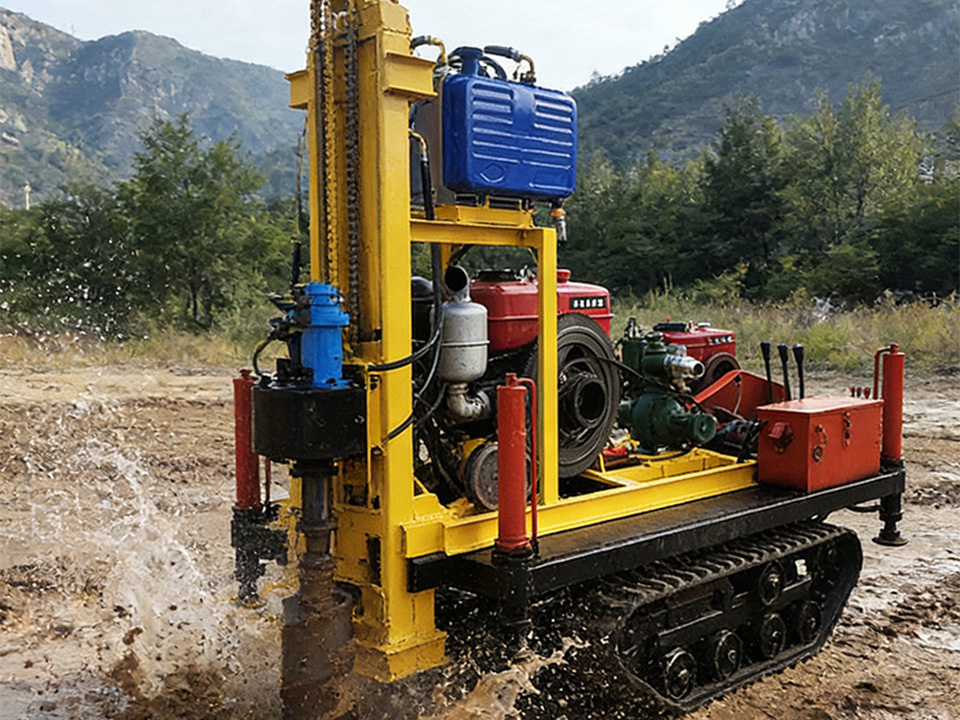
Crawler Pneumatic Rig
Best use case
Rural access, moderate depths, simpler local support
Higher transport burden but better jobsite mobility
Operator skill demand
Moderate
Moderate to high
High, especially with compressor/DTH setup
Service access
Easier in agricultural regions
Depends on truck and hydraulic service network
Requires stronger spare parts planning
NGO procurement fit
Good for budget-sensitive projects
Good for multi-village programs
Good for difficult geology and poor ground
Main danger
Underpowered for hard rock
Stranded by bad last-mile access
Overbought if geology is soft or crews are weak
See the problem?
The “best drilling rig for infrastructure-constrained regions” is not always the biggest rig. Sometimes it’s the machine that looks boring enough to survive. If local mechanics understand tractors, then tractor-mounted equipment can be a serious logistics advantage. If villages are connected by hard roads, a truck-mounted hydraulic rig may get more holes completed per month. If the ground is nasty and DTH drilling is unavoidable, crawler pneumatic equipment earns its keep.
But buying crawler capacity for soft formations just because the brochure feels safer?
That’s lazy procurement.
Transport Beat Depth. Again.
However, depth still seduces buyers.
A 300-meter rig feels safer than a 200-meter rig in a meeting, because nobody wants to be the person who under-bought. I get it. I also think it’s one of the most common ways NGOs waste money on remote area well drilling equipment.
If seven of eight boreholes are likely under 180 meters, and only one may push deeper, should the entire project carry the transport burden of a heavier machine?
Maybe. Maybe not.
From my experience, the smarter move is to split the operating logic: use lighter and more serviceable equipment where mud drilling and moderate depths work, then reserve crawler pneumatic drilling equipment for hard-rock zones where the compressor, hammer, and ground contact actually justify the extra machine weight.
It works. Usually.
And when it doesn’t, at least you know why: formation data was wrong, local roads were worse than reported, or someone ignored the boring field notes because a bigger rig looked more “professional.”
Service Access Is Not a Detail. It’s the Whole Fight.
And then there are spare parts.
The thing buyers love to ignore until a hose bursts.
A hydraulic rig with excellent power is still dead iron if the nearest fitting supplier is 300 kilometers away and the NGO field office has no seal kit, no hose crimper, no filter stock, and no mechanic willing to touch a system he doesn’t recognize. Fancy valves don’t impress me much in remote drilling work. Available valves do.
Here’s my bias: I’d rather see a slightly less powerful rig with a clean parts plan than a high-spec imported unit that needs a miracle every time a coupling fails.
Because failure is not rare. It’s normal.
The World Bank’s GWSP 2024 Annual Report noted that 83% of GWSP grants addressed climate adaptation, mitigation, or both, which matters because climate-stressed water projects usually come with tougher access, stressed aquifers, deeper targets, and damaged rural infrastructure — exactly the kind of conditions where weak service planning turns into downtime. World Bank GWSP 2024 Annual Report
So when an NGO asks how to choose drilling rigs for NGO water projects, I don’t start with “maximum depth.”
I start with the breakdown list.
Filters. Hoses. Seals. Mud pump wear parts. DTH hammer bits. Compressor oil. Air line fittings. Rotary head service points. Starter motor. Alternator. Tracks or tires. Grease. Grease again, because nobody greases enough.
That’s where the project survives.
Local Operator Skill: The Quiet Machine Killer
But the crew matters more than buyers like to admit.
You can ship a beautiful rig into a weak-operator environment and watch it get abused in three days. Wrong feed pressure. Wrong rotation speed. Hammer starved of air. Mud too thin. Mud too thick. Drill rods mishandled. Compressor run dirty. Filters ignored because “we’ll clean it tomorrow.”
Tomorrow is expensive.
Operator skill is not a soft factor. It’s mechanical risk with a human face.
A crew trained on shallow mud drilling may not understand DTH drilling behavior. A crew that has never managed high-pressure air may burn through consumables and blame the supplier. A team without maintenance discipline can destroy a rig that was technically correct for the formation.
That’s why I like simple rigs in certain NGO contexts. Not because simple is always better — it isn’t — but because a machine that matches the crew’s actual skill level can outperform a stronger rig that nobody operates properly.
Harsh? Yes.
Accurate? Also yes.
Compressor Pairing: The Accessory That Isn’t an Accessory
Yet the compressor gets treated like a side item.
Big mistake.
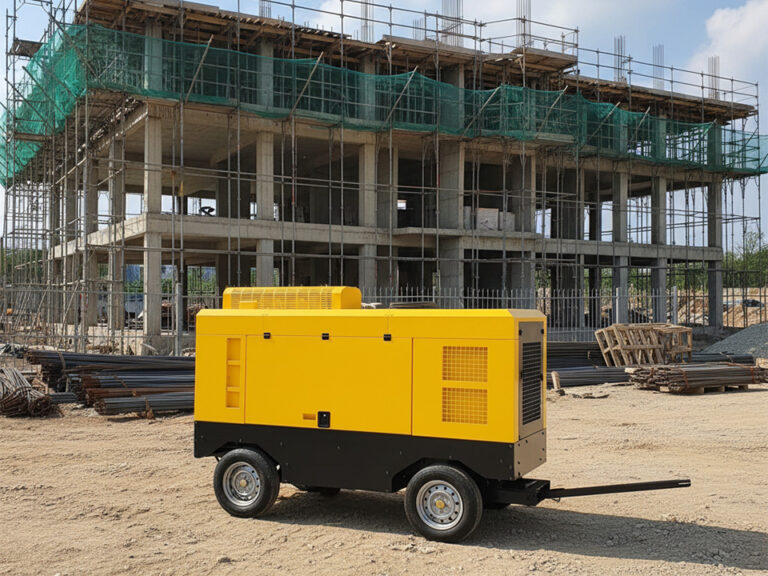
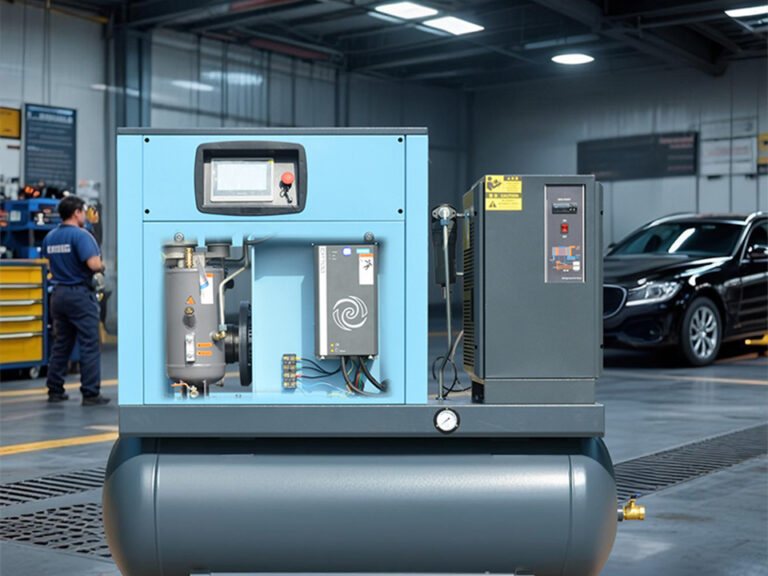
In DTH water well drilling, the compressor is not an accessory. It’s the heartbeat. Air volume, pressure, hose length, leakage, altitude, hammer size, borehole diameter, and formation condition all gang up on performance. If that air package is under-sized, the crawler rig becomes a noisy disappointment.
I’ve seen buyers obsess over the rig model and then accept a “good enough” compressor match because the quotation looked cleaner.
Don’t do that.
For humanitarian water well drilling projects in mixed geology, a conservative rig-compressor match is not overspending. It is insurance against stuck tools, poor flushing, slow penetration, and half-finished boreholes.
Reuters reported in July 2024 that more than 30 water wells were destroyed in southern Gaza’s Rafah and Khan Younis areas, according to a municipal official and residents; in fragile humanitarian settings, water infrastructure can disappear fast, which makes repairability, redundancy, and fast redeployment more than just procurement language. Reuters coverage of destroyed water wells
A rig without the right air is not a drilling system.
It’s a photo prop.
The Final Decision: Buy a Drilling System, Not a Hero Machine
So the final equipment logic was not “one rig rules all.”
Good.
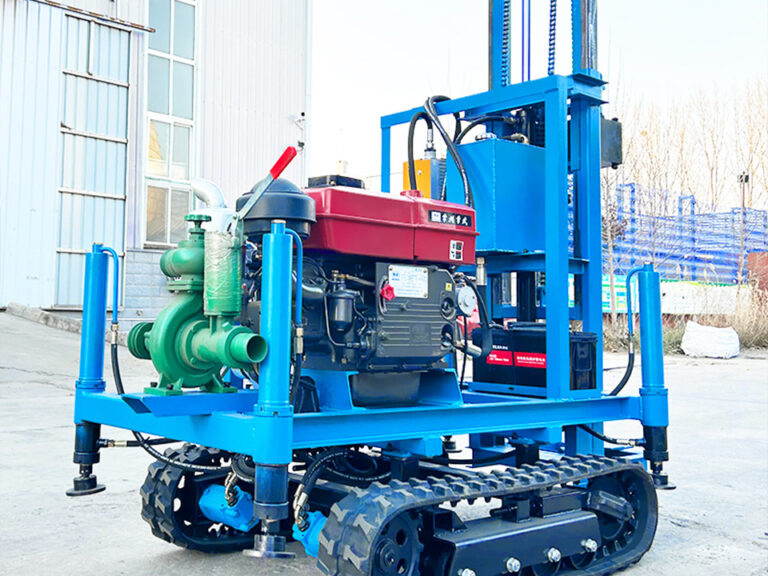
For moderate-depth wells with easier access, the tractor-mounted rig had a real argument. For multi-village movement along workable roads, the truck-mounted hydraulic rig made sense. For harder rock and ugly ground, crawler pneumatic drilling equipment became worth the added transport pain.
That’s how drilling equipment selection for remote regions should work.
Not by ego. Not by brochure depth. Not by who has the most dramatic factory video.
By failure mode.
The final package should include the rig, compressor match if needed, drill pipes, starter bits, DTH consumables, casing strategy, mud pump support, spare filters, hose kits, seal kits, basic electrical spares, operator training, daily service sheets, and a recovery plan for stuck equipment.
Tiny paperwork.
Huge difference.
A serious supplier of export drilling equipment for development programs should be willing to talk about the ugly stuff: customs clearance, road limits, local mechanics, tool wear, compressor fuel consumption, filter intervals, welding repair, operator handover, and what happens when a machine stops 40 kilometers from pavement.
If they only talk about drilling depth, be careful.
FAQs
What is NGO well drilling?
NGO well drilling is the planning, funding, drilling, and handover of water wells by non-governmental organizations for communities, schools, clinics, refugee settlements, or rural areas where clean water access is limited, unsafe, damaged, or too expensive for local people to secure alone.
In real field work, it’s not just drilling a hole. The NGO must match geology, borehole depth, casing, pump choice, rig type, transport route, local repair capacity, operator skill, and long-term maintenance. A well that fails after handover is not a success. It’s just a delayed complaint.
How do you choose drilling rigs for NGO water projects?
Choosing drilling rigs for NGO water projects means matching the rig to site access, expected depth, formation type, spare parts availability, compressor demand, local mechanic support, and the real skill level of the operators who will run the machine after delivery.
I’d start with roads and service access before maximum depth. If the road is weak, weight matters. If mechanics are limited, simplicity matters. If the formation needs DTH, compressor matching matters. The “best” machine is the one that keeps working after the easy assumptions fail.
What is the best drilling rig for infrastructure-constrained regions?
The best drilling rig for infrastructure-constrained regions is usually the machine that offers the strongest balance between mobility, repairability, drilling capacity, fuel practicality, operator simplicity, and spare-part support under remote field conditions rather than the machine with the biggest advertised depth rating.
Sometimes that’s a tractor-mounted rig. Sometimes it’s a truck-mounted hydraulic rig. Sometimes it’s a crawler pneumatic rig with a properly sized compressor. Anyone giving one universal answer is probably selling inventory, not solving the site problem.
Why does logistics matter so much in NGO borehole drilling?
Logistics matters in NGO borehole drilling because rigs, compressors, casing, drill pipes, fuel, water supply, spare parts, operators, and recovery equipment must all reach remote sites in usable condition before a borehole can be completed, tested, and handed over.
A missing hose fitting can stop the same project as effectively as bad geology. So can a flooded road, wrong compressor package, weak fuel supply, or operator who cannot maintain the rig. In NGO work, downtime is public. The village sees it.
Should NGOs buy portable water well drilling rigs?
NGOs should buy portable water well drilling rigs when borehole depth, formation hardness, road access, budget, crew skill, and local service support all fit the realistic working range of smaller, easier-to-move drilling equipment.
Portable does not mean magic. A small rig won’t replace a heavy crawler in serious hard rock or deep DTH work. But in the right geology, portable rigs reduce transport stress, simplify deployment, and make local support easier. That’s valuable. Very valuable.
Your Next Steps: Stop Buying the Catalog Fantasy
Start with the worst site.
Not the average site. Not the easiest village. The worst one.
If you are planning NGO well drilling, write down the deepest expected borehole, weakest road, wettest season, least experienced operator, longest spare-parts delay, poorest fuel quality, and hardest formation. Then choose the rig package around that reality.
For export-focused humanitarian and development programs, compare tractor-mounted, truck-mounted, and crawler pneumatic rigs before committing. Send the expected depth, borehole diameter, geology, access road condition, country, compressor plan, and operator experience — then build the equipment package like a field survival system, not a showroom purchase.